Growing Impact of AI Dubbing on the Movie Industry



Key Takeaways
- Film dubbing recreates a movie in another language while preserving emotion and cultural nuance, helping productions reach global audiences and fueling steady market growth.
- AI dubbing automates translation, voice synthesis, lip sync, and quality control to deliver faster, scalable localization without removing human oversight.
- Key advantages include lower production costs, faster release timelines, emotional accuracy, multilingual scalability, and consistent character voices.
- AI systems can preserve iconic voices and adapt humor, tone, and wordplay to fit different cultures while maintaining the original performance intent.
- Major challenges include cultural sensitivity, accurate voice matching, capturing nuanced acting, and handling emotional voice variation.
- Future developments point toward smarter cultural adaptation, deepfake-assisted visual syncing, voice banks, real-time dubbing, and personalized viewer experiences.
- The industry must also address ethical and employment impacts as AI expands, with voice professionals likely shifting toward training and supervising AI systems.
- AI dubbing is positioning film as more accessible and inclusive worldwide, expanding storytelling beyond language boundaries.
Dubbing is an intricate art that involves voice actors, directors, and sound engineers working in concert to deliver a seamless audio experience. It’s a transformative process that can redefine a film’s reach, turning a local production into an international sensation.
Dubbing in the film industry is more than just translating dialogues into a foreign language; it’s about recreating the movie experience in a new language, with all the emotional beats and cultural nuances intact.
The benefits of dubbing movies are multifaceted: it not only breaks language barriers but also enriches the cinematic landscape by making content accessible and inclusive. According to a LinkedIn article, the global film dubbing market size was valued at USD 3519.35 million in 2022 and is expected to expand at a CAGR of 7.19% during the forecast period, reaching USD 5339.61 million by 2028. This growth trajectory underscores the commercial viability and increasing demand for dubbed content globally. By offering films in multiple languages, producers can tap into new markets, viewers can enjoy a broader range of content, and the movie industry thrives on the diversity of its offerings.
As the exploration of free AI dubbing tool progresses, it becomes evident how this technology is revolutionizing the industry, rendering the dubbing process more efficient and accessible than ever before.
What Is AI Dubbing in Movies?
AI dubbing in movies refers to the use of artificial intelligence to replace a film’s original dialogue with speech in another language. The goal is not just translation, but to make it sound natural and emotionally-accurate.
Here’s what actually happens during the dubbing process:
- The system analyzes the original voice, tone, pacing, and pauses.
- It studies lip movement to improve lip sync.
- It translates the dialogue into a different language.
- It generates synthesized speech that fits the timing of the original performance.
- It creates a new audio track that replaces the old one in post production.
In traditional dubbing, voice actors work inside a dubbing studio and spend hours re-recording dialogue. It is a detailed and sometimes a slow post-production process. AI dubbing technology uses machine learning and deep learning models to handle much of this technical work.
The result is high-quality dubbed versions in multiple languages. For the film industry, this reduces language barriers. For foreign audiences, it means watching foreign language films in their native language without losing the emotion of the original actors.
How Does the AI Dubbing Process Work?
AI dubbing follows a clear post-production process that combines artificial intelligence with human review. Each step matters because the goal is simple: keep the original performance intact while making it work in another language.
Here's how the dubbing process usually unfolds.
Data Collection and Machine Learning
Before anything is dubbed, the system needs training.
- Deep learning models are trained on large volumes of audio content across different languages.
- The system studies pronunciation, pacing, emotional tone, and speech rhythm.
- It learns how dialogue shifts when translated into a foreign language.
- It analyzes lip movement patterns to prepare for lip sync later.
This foundation allows the AI technology to handle film dubbing at scale without repeating the same complex duplication process every time.
Voice Profiling and Synthesis
Once the system understands speech patterns, it focuses on the original actors.
- It analyzes the original voice, including pitch, tone, and delivery style.
- It builds a voice profile that reflects the original performance.
- Generative AI produces synthesized speech in a different language.
- A new audio track is created to replace the original voice in post production.
The aim is not to copy blindly, but to preserve emotion while adapting to multiple languages.
Lip-Sync and Emotional Adaptation
This is where many dubbed versions fail, if done poorly.
- The AI adjusts timing to match lip sync on screen.
- It modifies phrasing so it fits natural lip movement.
- It adapts emotional intensity based on cultural context for dubbing.
- It ensures the dubbed voices still reflect the intent of the scene.
When this step works well, viewers stop noticing the dubbing. They focus on the story.
Quality Control
Artificial intelligence handles much of the technical work. But humans still play a role.
- Language experts review translations for accuracy.
- Editors check tone, clarity, and emotional consistency.
- The final audio track is tested before release on streaming services or in local cinemas.
This final review protects quality. And for the film industry, that balance between AI dubbing technology and human oversight is what makes the whole system reliable for foreign audiences.
Benefits of AI Dubbing in Movies
AI dubbing is all about solving practical problems in the dubbing process. Studios want speed, audiences want quality, and both want consistency across different languages. Here's where AI dubbing technology fits in.
Cost Efficiency
Traditional dubbing often requires a full dubbing studio setup, multiple voice actors, and repeated re-recording dialogue for every new market. All of this adds up fast.
AI dubbing reduces much of that overhead. Once the system is trained, creating dubbed versions in another language becomes more scalable. For the film industry, that means managing budgets more effectively, especially when releasing films across multiple languages.
Quality Enhancement
Early automated dubbing sounded flat and unnatural. This is no longer the case.
Modern artificial intelligence uses deep learning models to study tone, pacing, and emotion. The result is high-quality synthesized speech that stays closer to the original performance. Better lip sync and improved emotional alignment also increase viewer engagement, especially for foreign language films.
Speed And Efficiency
Time matters in post production. Especially in modern times.
Streaming services expect faster global releases. AI dubbing can shorten the post-production process by handling translation, voice-profiling, and new audio track generation in less time than traditional dubbing alone. Studios can release films in different languages without long delays.
Consistency
Human voice acting varies by region, studio, and schedule. While this is normal, it can engender uneven results, especially when producing localized versions in languages such as English, Mandarin, or Spanish.
AI dubbing technology helps maintain consistency in dubbed voices across sequels, episodes, and franchise films. It follows the same voice profile and delivery style, which protects continuity and supports the original actors’ intent.
Multilingual Capabilities
Reaching foreign audiences means working across various languages. This has always been a complex duplication process.
AI dubbing makes it easier to produce versions in multiple languages without rebuilding everything from scratch. This expands access in local cinemas and on streaming platforms while reducing language barriers.
Voice Preservation
The ability of AI to preserve an actor’s voice is particularly poignant. For example, if an iconic voice actor retires, AI can use previous recordings to continue their legacy in new projects. This was the case with the sci-fi saga “Rogue One: A Star Wars Story” (2016) and “Star Wars: The Rise of Skywalker” (2019), where the voice dubbing of the character Grand Moff Tarkin, originally played by Peter Cushing, was recreated using a combination of CGI and voice mimicry after Cushing’s death.
Challenges of AI Dubbing
AI dubbing can handle scale, process dialogue quickly, and generate a new audio track in another language without repeating the entire traditional dubbing setup. But films are emotional, and emotion does not always follow rules. This is where things get complicated. Let's see what this implies.
Cultural Sensitivity
Words rarely mean just one thing. They carry tone, history, and local references.
When dialogue moves from one foreign language to a different language, some meaning can shift. A joke might land flat or a dramatic line might sound too strong/soft. Artificial intelligence can translate structure with accuracy, but it does not truly understand cultural context. This is why the localization process still needs human input before dubbed versions reach foreign audiences.
Voice Matching
The original voice of the original actors shapes how we see a character. Tone and delivery become part of their identity.
AI dubbing technology uses deep learning models to study pitch, rhythm, and pacing. It can create synthesized speech that sounds close, this "close" is not always the same. Small changes in emphasis or timing can affect viewer engagement more than people expect.
Nuanced Acting
Capturing the subtleties of nuanced voice acting is, perhaps, one of the most daunting challenges for AI dubbing. Human actors convey a wealth of information through slight inflections, pauses, and tone changes. An AI system may not always interpret the emotional weight behind a whispered line or a choked sob, potentially impacting the depth of performance.
For example, in a tense thriller, the protagonist’s whispered confessions are as crucial as the dialogue itself, and any failure to capture this nuance can diminish the scene’s intensity.
Voice Variation
Handling voice variations within a single actor’s performance is also complex for AI. An actor’s voice may change significantly when portraying different emotions or characters. In a film where an actor plays a character undergoing a dramatic transformation, their voice might need to reflect this change. AI dubbing systems must be adept at adjusting the voice model to reflect these variations without losing the thread of consistency that anchors the character’s identity.
Future of AI Dubbing
The AI dubbing tools being used today will look basic a few years from now. The shift is already visible across streaming services, post production workflows, and even casting decisions. As the demand for global content rises, video localization is becoming a core part of media strategy. Here’s where things seem to be heading.
Advancements in Machine Learning
Machine learning models are getting better at understanding context, not just words. This means dubbed voices are starting to feel less mechanical and more aligned with the original performance. The gap between traditional dubbing and AI dubbing continues to narrow.
Deepfake Technology
Deepfake voice and facial tools are entering film dubbing conversations. This can raise serious questions about consent. Original actors and voice actors want control over how their voice or likeness is used.
Voice Banks
Studios are building licensed voice banks using recorded material from actors who agree to participate.
Real-Time Dubbing
Real-time dubbing is moving from concept to early deployment. As processing power improves, real time AI dubbing could become standard for global live streaming.
Personalized Experiences
Future systems may allow users to select accent preferences or voice styles while keeping the original performance structure intact. This level of personalization could reshape viewer engagement, especially for foreign language films distributed worldwide.
Ethical and Employment Considerations
This is where the conversation gets serious. Voice actors and unions are now pushing for clear agreements about how their recordings train deep learning models when generative AI is involved. Without strong guidelines around ownership and transparency, the technology risks losing support from the very talent it relies on.
How Murf’s AI Dubbing Tool Fits Into Real Workflows
If you have ever managed film dubbing across different languages, you know how quickly things can get complicated. Multiple voice actors, tight post production timelines, and endless re-recording dialogue. And every new market adds another layer to the dubbing process.
This is where Murf’s AI Dubbing tool becomes a practical choice. Here's how.
- Wide Language Support: Dub movies and audio content into 40+ languages. This helps productions reach foreign audiences without repeating a full traditional dubbing setup for every different language.
- Voice Cloning and Consistency: Create consistent dubbed voices that reflect the original voice and emotional tone of the original actors. This helps preserve character identity across multiple languages.
- Built-In Lip Sync and Timing Control: The tool aligns synthesized speech with lip movement, helping the new audio track feel natural inside the original video.
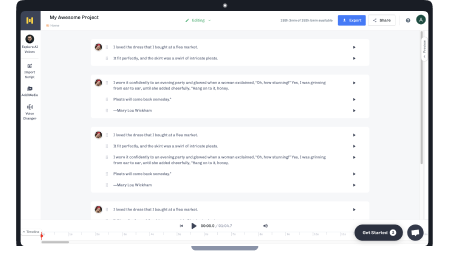
- End-to-End Localization Process: Translation, voice generation, editing, and export happen in one workflow. That reduces friction during the post-production process.
- Scalable for Studios and Creators: Whether it is a short film, series, or large content library for streaming services, the system supports high volume projects without turning into a complex duplication process.
Murf’s AI dubbing technology does not remove human oversight. Instead, it supports the film industry with faster, more controlled localization while keeping the original performance at the center.
Final Take
AI dubbing in movies is no longer an experiment. It is becoming part of the standard post-production process in the film industry. What once required a full dubbing studio, multiple voice actors, and repeatedly re-recording dialogue can now be supported by artificial intelligence and machine learning.
This shift matters because language barriers can limit reach greatly. With AI dubbing technology, studios can create high quality dubbed versions in multiple languages without repeating a complex duplication process for every market. This means foreign language films can travel further, and foreign audiences can experience stories in their native language while still feeling the weight of the original performance.
As generative AI and deep learning models improve, the dubbing process will become more precise. Lip sync will feel tighter and synthesized speech will sound more natural. For streaming services and local cinemas alike, AI dubbing will expand access and strengthen viewer engagement across different languages.
Frequently Asked Questions
What Is AI Dubbing for Movies?
.svg)
AI dubbing in movies uses artificial intelligence to replace the original voice with dialogue in another language. It studies tone, pacing, and lip movement, then creates a new audio track that tries to preserve the original performance for foreign audiences.
Can AI Be Used for Dubbing?
Yes, AI is already being used in the dubbing process. Studios rely on machine learning and generative AI to produce dubbed versions in multiple languages. It helps speed up post production while keeping the audio consistent across releases.
How Is AI Used in Movies?
AI technology does more than dubbing movies. It supports editing, improves visual effects, cleans up audio content, and helps studios understand viewer engagement patterns. Many streaming services use it to assist with localization for foreign language films.
What Are the Benefits of AI Dubbing in Films?
AI dubbing reduces the time and cost linked to traditional dubbing studios and repeated re-recording dialogue. It allows films to launch in different languages faster, while helping preserve the emotional tone of the original actors.
Does AI Dubbing Replace Voice Actors?
AI dubbing changes how voice acting fits into the film industry, but it does not remove it completely. Artificial intelligence handles technical tasks, yet human review remains important for emotional nuance, cultural sensitivity, and overall quality control.
.webp)

.webp)

.webp)