How Does an Audiobook Work? Everything You Need to Know



Most people experience audiobooks the same way: they press play and listen. What’s less obvious is how much structure sits behind that experience.
Audiobooks follow specific production and technical standards that shape how they’re recorded, edited, and delivered to listeners. And this meticulous process behind audiobooks is what makes it such a unique experience for the audience.
For writers and creators, understanding this structure matters. The choices made during audiobook production affect sound quality, platform approval, and even how your audiobook is consumed.
However, you need to know what goes into producing an audiobook and how you can use it to reach a larger audience for your work.
That's what we are discussing in this beginner's guide to audiobooks. At the end of the read, you will understand:
- What is an audiobook?
- How are they created?
- What are the types of Audiobooks?
Let’s get started.
What Is an Audiobook?
An audiobook is a recorded version of a written book, read aloud by a narrator. In simple terms, they are talking books. In technical terms, an audiobook is a complete, unabridged audio performance of written text that meets certain technical and distribution standards.
Today, audiobooks are digital files distributed through apps and platforms, like the Audible app or the Spotify Web App. These platforms let you download or stream audiobooks with a subscription.
It is also possible to buy audiobooks through Audible membership and subscription services. There are also public-domain audiobooks that users can listen to without paying. These apps have made it easier for you to carry them in your pocket wherever you go, like a mobile local library.
While planning to create audiobooks, audiobook publishers and creators must understand the following:
- Audio quality matters: Platforms require clean recordings with specific loudness, noise, and consistency levels
- Narration style affects the final product: Solo narration, dual narration, or full-cast recordings can impact and change cost and listener experience
- Chapter structure is required: Audiobooks are divided into tracks that match the book’s chapters for a better experience
- Runtime impacts pricing and approval: Length of the audiobooks influences royalties, listener expectations, and platform acceptance
- Playback is app-based: Audiobooks are designed for listening on phones, tablets, and car systems, and not raw audio players
How Are Audiobooks Created: Behind the Scenes
Creating an audiobook involves more than recording a voice. Behind every finished title is a structured workflow that turns written content into audio that sounds consistent, clear, and ready for distribution across platforms.
Here is a quick breakdown of the process of creating audiobooks:
1. The Narration Process: Who Reads the Book?
Narration is the foundation of all audiobooks. It is the part listeners notice first, and it shapes how people listen and stay engaged.
Most projects by major publishers hire professional voice actors. They don't just read aloud the text, but they perform the text in a way that sounds natural over long listening sessions. Some authors narrate their own books. While this may work for certain genres, like memoirs, it may not work in fiction.
A few elements to keep in mind while planning the narration of your audiobook or hiring talent are given below:
- Select a narrator whose voice fits the book’s genre, audience, and overall tone
- Maintain steady pacing and clear delivery to match the expected reading time
- Differentiate characters clearly, especially when using different narrators or a full cast
- Use sound effects sparingly, only when they support the story and don’t distract from the narration
The choice of narrator also affects budget, production time, and the overall listening experience. This makes it vital for production houses to plan the narration process well.
2. Recording and Production: Studio, Editing, and Proofing
Once narration starts, production follows a structured workflow. You can record audio in a professional studio or a well-equipped home studio, as long as it meets platform standards.
In the production, there are five key stages:
Step #1: Recording the book
In this first stage, the narrator reads the book chapter by chapter in a controlled environment. This approach makes it easier to manage retakes, maintain consistency, and organize files for editing.
Step #2: Audio engineering for quality
An audio engineer captures the recording with clean sound and balanced levels. This stage focuses on microphone setup, noise control, and ensuring consistent audio quality across sessions.
Step #3: Editing process for a better listening experience
In this step, the raw audio is reviewed to remove mistakes, repeated lines, long pauses, and unwanted sounds. The goal of the stage is to ensure a smooth, uninterrupted listening experience for audiobook listeners.
Step #4: Proofing the audio files to remove errors
Here, the edited audio is checked against the printed book, word-for-word. Proofers listen carefully to catch missing lines, misreads, or timing errors that need correction.
Step #5: Mastering the audio narration
In the last stage, the final audio files are adjusted to meet platform specifications. This includes loudness, file structure, choosing the right audiobook format, and preparation of longer recordings for distribution and approval.
This phase is where most quality issues are caught. Skipping steps often leads to rejections by platforms or poor reviews once people listen.
3. Format and Distribution: From Physical Media to Digital Files
If you check the history of the audiobook industry, you can see that they didn’t always live on apps. Early versions were sold alongside physical books as tapes and CDs. Today, distribution is almost entirely digital.
This has more to do with changes in technology and user preferences than with the industry.
Now, most modern audiobooks are:
- Distributed through retail platforms and the library system as an audiobook collection
- Accessible with monthly and yearly plans or on rentals on apps like Libby apps
- Available on platforms like Audible and audiobook apps like Apple Books
- Optimized for streaming and digital downloads on digital devices
- Structured into chapter-based tracks, not single files
Like ebooks, audiobooks must follow platform-specific rules before they are approved. Understanding this flow from narration to final files helps creators release audiobooks that meet industry expectations.
Different Types of Audiobooks: What Variants Exist
While audiobooks may sound similar on the surface, how they are produced and delivered can vary a lot. These differences influence production effort, costs, and how people listen from start to finish.
For writers and creators, understanding these formats early helps set the right expectations.
1. Unabridged, Abridged, and Dramatised Versions
The most common format today is the unabridged audiobook. In this version, the narrator reads aloud the entire printed book, without cuts or summaries.
The reading time stays close to the original text, which makes this format easier to approve and distribute across platforms.
They typically:
- Include the full text, word for word
- Match the structure and pacing of the original book
- Meet standard expectations within the audiobook industry
On the other hand, abridged audiobooks take a shortened approach. Instead of recording the full manuscript, selected sections are condensed or removed. This format reduces production time, but it’s far less common today since many listeners expect the complete work.
Compared to the unabridged version, the bridged versions of audiobooks are:
- Shorter than the original book
- Used for older titles or special editions
- Less favored by modern audiobook publishers
Dramatised audiobooks focus more on performance than pure narration. These versions use a full cast, with different narrators voicing different characters. Music and sound effects are added to shape scenes and pacing.
While this creates a more immersive listening experience, it also makes production more complex and expensive.
2. Digital vs. Physical Audiobooks: From Discs to Streaming
Audiobooks were once distributed much like physical books, using cassette tapes and CDs. Longer recordings often required multiple discs, limiting portability and complicating distribution.
Today, audiobooks are released almost entirely in digital form. They are delivered as digital downloads or streamed through audiobook apps and designed for use on digital devices.
This shift has changed how audiobooks work behind the scenes. It also places greater emphasis on audio quality, file structure, and metadata rather than physical packaging.
Here are a few differences between digital and physical audiobooks:
3. Single-Voice vs. Multi-Voice Narration
Some audiobooks use a single narrator from beginning to end to work with the audio content. This approach keeps production simpler and works well for nonfiction and straightforward storytelling.
Single-voice narration
- Uses one consistent voice throughout
- Requires less coordination and editing
- Keeps production timelines shorter
Other audiobooks use different narrators or a full cast. Multiple voices help distinguish dialogue and characters, but they also increase production effort and lead to longer recordings.
Multi-voice narration
- Improves clarity in dialogue-heavy stories
- Adds complexity during editing and coordination
- Shapes the overall listening experience
Choosing the right audiobook type depends on your content, budget, and how you want listeners to engage with your work.
Top Platforms to Listen to Audiobooks in 2026
Where people listen to audiobooks shapes how they discover, consume, and finish titles. Each major platform works a little differently, especially around pricing, access, and catalogs.
1. Audible
Audible remains one of the largest platforms in the space. It runs on a monthly subscription model and is known for hosting many audiobooks, with claims of a million titles across genres.
New users are often drawn in through free trials, which lowers the barrier to entry. While Audible focuses on digital audio, it’s sometimes compared to older media like vinyl records in terms of ownership culture. Once you buy a title, it stays in your library.
2. Kindle
Kindle sits at the intersection of reading and listening. Through Kindle Unlimited, users can access select titles for free, often bundled with ebooks.
Some plans include monthly credits that can be used on Audible works linked to Kindle titles. This setup appeals to users who switch between reading and listening without changing platforms.
3. Google Play Books
Google Play Books offers a more flexible approach. Instead of locking users into subscriptions, it allows them to access audiobooks individually.
Integration with a library card in some regions makes borrowing easier, and the platform still offers many titles for direct purchase without long-term commitments.
4. Apple Books
Apple Books operates through monthly subscription services or one-time purchases, depending on the region. Users typically pay a monthly fee for access, with tight integration across Apple devices.
The experience is streamlined, especially for those already inside the Apple ecosystem.
Other Top Audiobook Apps
Beyond the major players, there are other audiobook apps, such as Spotify Web Player, Libby App, Everband, Chirp, and Downpour. While many are free, some use a credit system where users exchange credits for titles.
These apps also focus on accessibility features for visual impairments and curated selections, such as a plus catalog or partnerships with public libraries.
Due to the growing demand, most of these platforms are expanding by adding more titles to their collections and adding new features.
Recent Trends and Innovations in Audiobooks
Audiobooks have changed over the last few years, and the pace hasn’t slowed. Here are a few trends in audiobooks worth knowing.
- Free audiobooks are becoming more prevalent, especially as platforms use them to attract new listeners.
- As the audience takes only a few minutes to decide whether to continue or jump to the next title, creators now focus more on strong hooks and faster engagement.
- Apps for buying and borrowing audiobooks are becoming increasingly popular, challenging the idea that one platform can do everything.
- Audiobooks are now treated more like on-demand media than as long-term downloads, due to the growth of digital, streaming-first audiobook services.
- Listening to audiobooks is now customizable, making the industry audience-centric rather than platform- or audiobook-centric.
As audiobooks gain more audiences, they are seen as a vital part of reaching more audience. This shift helps creators plan releases, budgets, and distribution from the start with audiobooks in mind.
Murf Dubbing and AI-Powered Audiobooks
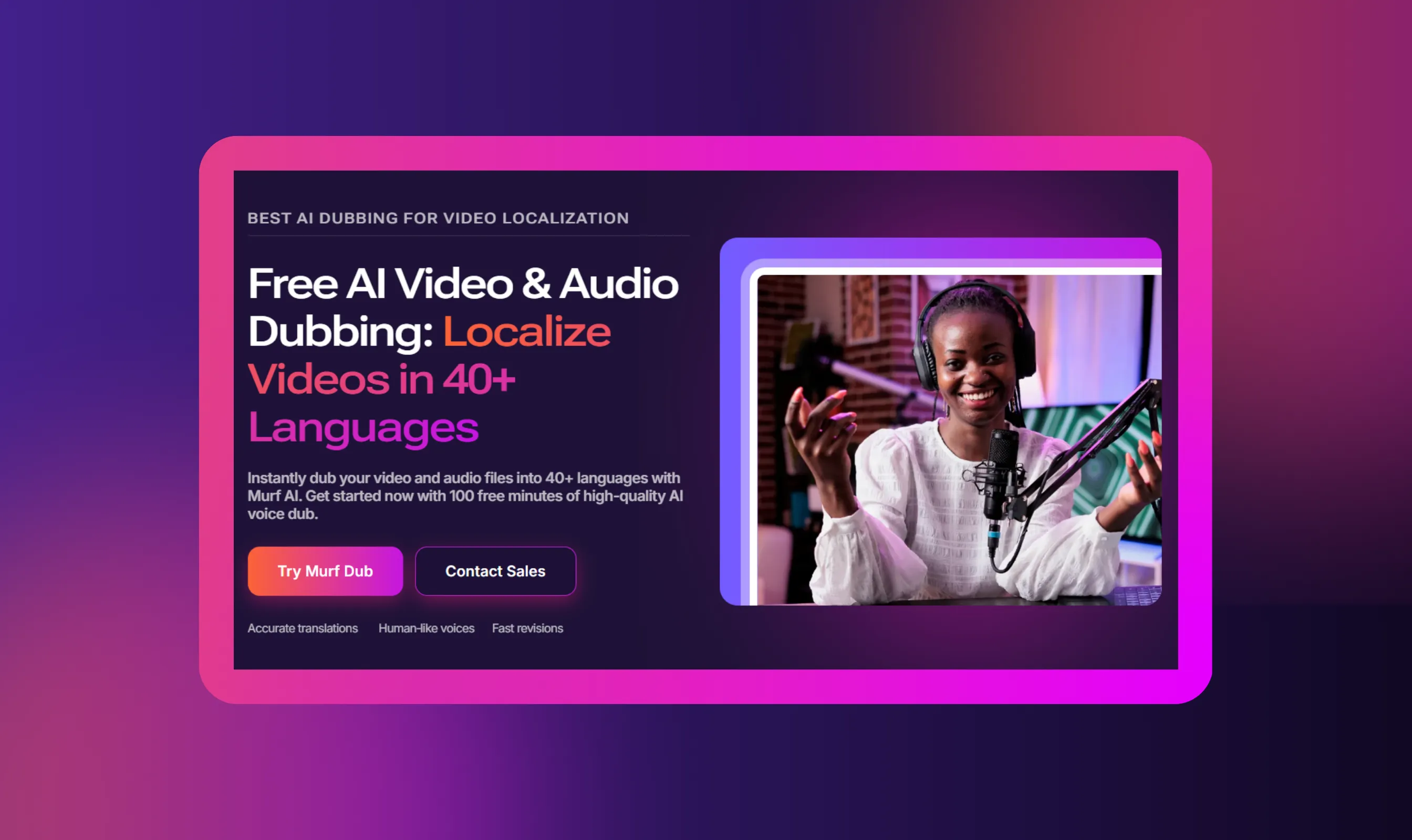
AI-powered audiobooks are rapidly reshaping how written content is turned into audio, and tools like Murf AI are at the forefront of that shift.
Instead of relying solely on human talent, creators can now generate high-quality voice narration with advanced AI.
While there are many video dubbing online free tools in the market, Murf AI stands apart as one of the best with a range of features, such as:
- AI voice narration: Convert text into natural-sounding audio using a wide range of realistic voices, without recording in a studio
- Multiple voices and languages: Choose from hundreds of voices across accents and languages, making it easier to produce audiobooks or localized versions for different markets
- Voice customization controls: Adjust pacing, tone, emphasis, and pronunciation to better match the style and flow expected in audiobook narration
- AI dubbing and voice replacement: Replace or translate audio of the existing content into new voices or languages without re-recording, useful for repurposing content at scale
- Built-in script editor and audio export: Edit text and audio in the same interface, then export finished files ready for distribution or further post-production
With tools like Murf AI, you can save time and fast-track the audiobook creation process without investing in expensive human talent.
Conclusion
Audiobooks have become an essential format for writers and publishers. They help extend a book’s reach and connect with audiences who prefer listening to reading. The audiobook industry is expected to grow from $12.73 billion in 2025 to $86.69 billion by 2033 at a CAGR of 27.1%.
But traditional audiobook production is slow and expensive. Hiring narrators, booking studios, and managing edits can take weeks, sometimes months.
Even after production, one major challenge remains: reaching a wider audience. Single-language audiobooks limit growth, and translating them usually means starting over.
This is where AI-powered tools help. Murf AI makes it easier to create and translate audiobooks without the cost and time of traditional workflows:
- Generate natural-sounding narration without a studio recording
- Translate and dub audiobooks into multiple languages
- Customize pacing, tone, and voice style
- Edit and export audio in one place
If you want to scale your audiobooks and reach new markets faster, try Murf AI for free and see how simple AI-powered audiobook creation can be.

Frequently Asked Questions
Is listening to audiobooks good for learning?
.svg)
Yes, audiobooks can be effective for learning, especially for people who learn best by listening. They work well for understanding concepts and revisiting material during commutes or while doing other tasks.
Is an Audible membership a good option to start listening to audiobooks?
For beginners, Audible can be a convenient starting point because it offers a large catalog and a simple subscription model. The monthly credit system makes it easy to get full-length titles. However, there are many options, such as Apple Books, Google Play Books, and Kindle.
What is an audiobook, and how does it differ from an ebook or printed book?
An audiobook is a spoken recording of a book that you listen to instead of reading. They focus on audio delivery and narration, while ebooks and printed books rely on reading.
Can anyone produce an audiobook?
Yes. Anyone can produce an audiobook, including independent authors and content creators. You can work with professional narrators, record your own voice, or use AI-powered tools depending on your budget and goals.
Can I listen to audiobooks using an Apple Watch?
Yes, many audiobook apps support playback on Apple Watch.
What's the best platform to publish my first audiobook?
There is no single best platform for everyone. While Audible is popular for reach, the right choice depends on your goals, budget, and your content distribution plan.
.webp)

.webp)