Audiobook vs Text to Speech: Choosing the Best Listening Option



Audiobooks and text-to-speech differ in many ways, including narration quality, listeners' experience, and control over how they affect a creative workflow.
If you are a writer or creator, the right choice is vital not just for the quality of listening or the convenience of your audience. It impacts how you review drafts, repurpose content, and deliver audio versions of your work.
Audiobooks are built for immersive, finished experiences, while text-to-speech is designed for speed, flexibility, and iteration. Each works better in different situations, whether you are editing long-form writing, studying your own material, or publishing audio content.
In this blog post, we help you understand:
- What Audiobooks and text to speech are and how they are different
- Advantages and limitations of Audiobooks and text-to-speech
- When Audiobooks are suitable vs text to speech technology
- How AI-powered tools like Murf AI fit into your production process
Audiobooks vs. Text-to-Speech: What Are They?
Audiobooks and text-to-speech are often grouped together, but they work very differently. Before comparing use cases, let's try to understand what Audiobooks and text-to-speech are.
What is An Audiobook?
An audiobook is a professionally produced audio version of a written book. The text is recorded by a human narrator and edited into a finished listening experience. While this usually means a longer production cycle and higher costs, you can ensure a more polished result.
Creating an audiobook is a lengthy and tedious process. It includes script preparation, voice recording, editing, and mastering. While authors or creators can narrate the book, often narrators are trained voice actors or industry professionals.
Here are a few key characteristics of audiobooks:
- Human narration with natural tone and emotion
- Fixed pacing and interpretation of the text
- Higher production time and cost
- Best suited for long-form, finished content
- Available via platforms like Audible and Apple Books
Those who seek an immersive listening experience can find it in audiobooks. This makes audiobooks ideal for long-form storytelling, fiction, memoirs, etc., where voice, emotion, and pacing are part of the experience.
What is Text-to-Speech Technology?
Text-to-speech (TTS) technology converts written text into spoken audio using software instead of human narrators. It speaks aloud digital text to the users instantly without any production process.
Here, you need to paste or upload text, choose a voice, and the system generates audio in seconds. There’s no recording session, no studio work, and no post-production in the traditional sense.
Modern TTS uses AI voice models trained on human speech. These voices can sound natural, but they still follow rules set by the system. TTS technology generates intonation, pacing, and emphasis algorithmically from training and does not interpret them creatively.
Here are a few characteristics of text-to-speech technology:
- AI-generated narration, not human performance
- Instant audio generation
- Low cost or free at scale
- Easy to edit, regenerate, and update
- Widely used for drafts, articles, scripts, and notes
Text-to-speech prioritizes speed and flexibility over immersion. It is also designed for quick feedback and fast revisions. For creators, it is a practical way to hear their words without committing to a finished audio product.
Audiobooks vs. TTS: Pros and Cons
As a creator, you need to understand the pros and cons of audiobooks and TTS technology to determine when one is more suitable than the other.
Here is a quick comparison between the two:
Advantages of Traditional Audiobooks (Human-Narrated)
Even in 2026, human narration delivers depth and connection that automated voices struggle to match. This immersive storytelling matters to creators when the listening experience is the product.
Since you want to take your audience through an emotional rollercoaster, human narration is vital.
Advantages of human narration that make audiobooks immersive:
- Natural narration quality: Human voices bring natural inflection, timing, and emotional variation that make listening feel effortless and engaging
- Stronger emotional impact: Skilled narrators convey tension, humor, vulnerability, and subtext that written words alone can’t carry
- Clear character distinction: Essential for dialogue-heavy and multi-character stories where voice differentiation drives clarity and immersion
- Higher listener trust and preference: Many audiences still expect and prefer human narration, especially for paid or premium content
- Better fit for fiction and storytelling: Particularly effective for literary fiction, genre fiction, memoirs, and children’s books
Audiobooks excel when performance matters, such as in fiction, emotionally nuanced writing, and author-led memoirs. Even for children’s and premium or flagship titles, human narration adds value.
Advantages of Text-to-Speech
Text-to-speech is built for speed, control, and iteration. For writers and creators, it functions less like a finished product and more like a utility for efficiency. Today, TTS is deeply integrated into writing, editing, and accessibility workflows.
Key benefits of using TTS:
- Instant audio generation: Convert text to audio in seconds without recording or production delays
- Low cost at scale: Create audio without narrator fees, which is ideal for frequent use
- Easy iteration and updates: Edit text and regenerate audio instantly without the need for extensive edits
- Consistent, neutral delivery: Helpful for catching awkward phrasing, pacing issues, and repetition
- Flexible voice and speed control: Adjust narration style, playback speed, and tone to match different tasks
- Accessibility support: Enables audio access for users with visual impairments or reading difficulties
All the benefits underscore that TTS works best for drafting, proofreading, internal reviews, and accessibility.
Limitations of Audiobooks and Text-to-Speech
While both audiobooks and text-to-speech have their benefits, they also have inherent limitations. Here are a few limitations of both technologies that creators need to know:
Limitations of audiobooks:
- High production cost: Hiring narrators, booking studio time, and editing audio requires a real budget
- Slow turnaround: Production can take weeks or months, which doesn’t suit fast publishing cycles
- Difficult to revise: Even small text changes may require re-recording and re-editing
- Fixed interpretation: The narrator’s pacing and tone are locked in, even if your intent changes later
Limitations of TTS:
- Limited emotional range: AI TTS software still struggles with subtle emotion, humor, and dramatic tension
- Less engaging for long listens: Extended sessions can feel flat with uniform narration
- Lower perceived value: Audiences may see TTS audio as a utility, not a premium product
- Inconsistent pronunciation or emphasis: Especially noticeable with names, creative language, or dialogue
When Traditional Audiobooks Are Preferable: Use Cases and Audience Benefits
While both formats have their place, traditional audiobooks still outperform text-to-speech in specific scenarios. The following use cases demonstrate the clear advantages of human narration for listeners and creators alike.
Fiction, Stories, Emotional or Dramatic Content
Human-narrated audiobooks excel in story-driven genres where emotion and performance are crucial.
Narrators add emotion, pacing, and character voices that AI still can’t replicate. For fiction, memoirs, and dramatic works, this human delivery shapes meaning beyond the written text.
This is the biggest benefit of Audiobooks. While TTS is accurate, it cannot convey a story as effectively as audiobooks can.
Premium Listening Experience
Audiobooks are built for listeners who value a refined listening experience. Most audiobooks go through professional recording, editing, and mastering to ensure natural-sounding voices and consistent quality.
Many listeners value quality and an immersive experience in fiction and mythology-based stories, where world-building is vital.
Calm, Relaxed Listening Experience
Audiobooks also excel when listeners want to slow down. Human narration creates a calm, immersive rhythm. They also work well for long sessions, bedtime routines, or reflective storytelling.
This means listeners can simply press play and focus, unlike TTS, which is often used alongside other tasks.
Hence, if your story demands an immersive, relaxed experience, audiobooks are the way to go.
When TTS Makes Sense: Use Cases and Audience Benefits
TTS is designed for access and efficiency. It converts digital text to audio quickly. This is useful for people who struggle with traditional reading or don’t have time to sit with a physical book.
Here are a few scenarios where TTS is the better choice than audio narration:
1. Budget-Friendly and Speed-Oriented
TTS is often the fastest way to turn text into audio. There’s no need to produce full audiobooks or invest in professional narration, which keeps production costs low. Many tools work through a simple app and do not need a yearly fee.
You can also choose different voice options, including different accents, based on individual preferences.
As technology improves, these voices continue to sound more natural, making TTS a great choice for diverse works.
2. Versatility with Any Type of Content
One of TTS’s biggest strengths is flexibility. It is not limited to books or finished manuscripts. You can listen to web pages, research papers, drafts, and long-form articles across various genres.
As such, it is useful for students, professionals, and researchers who work with a lot of text. Audiobooks and text serve different roles here.
3. Multitasking and Practicality
TTS fits easily into everyday life. People use it while commuting, exercising, or handling other tasks.
For readers with reading difficulties or learning disabilities, hearing speech instead of processing visual text can reduce strain.
Yes, TTS doesn’t add emotion the way human narration does. But it makes reading more accessible, portable, and easier to fit into busy schedules.
Enhance Audiobook Production with AI-enabled TTS Voices
Both audiobook and TTS technology have their own purposes, benefits, and limitations. As a creator, you need to pick the one that makes the most sense to your creative efforts and goals. At the same time, the platform or software that you use matters as much as the selection of technology. Once you pick a platform, you are supported or limited by what that platform can do.
That's why you need to pick a tool that enables you to explore the possibilities of audiobook narration or text-to-speech. Platforms like Murf AI can help you immensely in this stage of your creative endeavors by offering both options.
However, you need to remember that Murf AI is not just another TTS or audiobook narration app. It helps creators experiment with sound before investing in studio recordings or voice actors, with a variety of features.
Power Your Modern Audiobooks with Murf AI
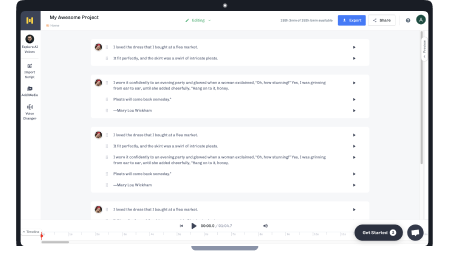
Murf is built on advanced text-to-speech technology that turns text into professional audio across desktop and mobile devices. With Murf AI, you can generate a polished audio version in just a few steps. There is no need for human narration and costly audio recording.
It blends simple workflows with powerful tools, helping creators spend less time on setup and more time on storytelling.
Murf focuses on features that support real audiobook production needs:
- Text-to-speech: Convert your text into 200+ natural-sounding text-to-speech voices in multiple languages with great control over reading speed, emotions, pause, etc.
- AI dubbing: Dub videos or audios into 40+ languages across the world and reach a wider audience in their native language
- AI voice changer: Change your voice into your preferred AI voice without losing any of the nuances from a library of 200+ computer-generated voices made with an AI engine
In the modern audiobook industry, where speed and flexibility are vital, Murf AI enables faster, more efficient content production.
Try Murf AI and improve your current audio recording and production process.
Frequently Asked Questions
What is the difference between an audiobook and text-to-speech?
.svg)
Audiobooks use human narration for a polished, immersive experience. On the flip side, text-to-speech converts text instantly using software, prioritizing speed, flexibility, and accessibility over performance.
Is TTS-read content as good as a real narrated audiobook?
While we cannot call the output equal, TTS helps creators release audio versions quickly when polish is not a requirement.
Is it better for your brain to read or listen to audiobooks?
Both work. Reading builds focus, while listening suits natural places like commuting, chores, or rest, letting stories fit daily routines without screens, and reduces strain.
Is AI better than human narrators when creating audiobook narration?
AI is not better for performance. But it’s useful for drafts, scale, and democratizing access. On the other hand, human narrators still win for emotion, character work, and premium audiobook narration where audiences expect immersion, polish, and lasting listening impact.
.webp)

.webp)