Get in touch with us
Create voiceovers, build AI voice agents, and dub content into multiple languages. Powering 10 million+ developers and creators worldwide.
AI Glossary
Browse our AI glossary for clear definitions of artificial intelligence, machine learning, and large language model terms, complete with use cases and examples to understand each concept in practice.
Dialog management is a key component of a chatbot that controls how the conversation flows between the user and the system. It decides what the chatbot should say next based on:
Instead of responding to each message independently, dialog management maintains the state and flow of the conversation. This allows the system to understand follow-up questions and manage multi-step interactions.
In simple terms, dialog management helps chatbots:
Without dialog management, chatbots would only respond to single messages and struggle to maintain meaningful conversations.
A dialog management system controls how a chatbot manages conversations and decides the next response.
Here is how it interacts with other elements in the system:
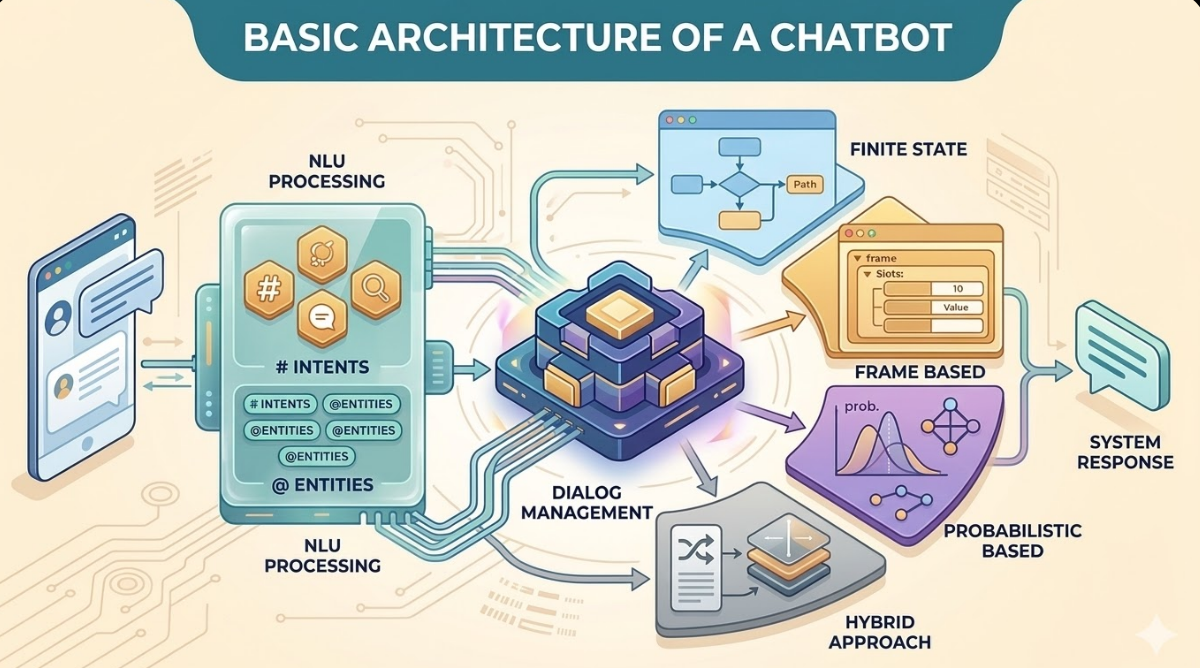
It uses information from earlier steps, like intent detection and entity recognition, to keep the interaction organized and relevant.
In most conversational systems, dialog management works through a few key steps:
This process helps chatbots manage multi-turn conversations, guide users through tasks, and maintain a natural flow throughout the interaction.
Often, the right approach to dialog management determines the system's effectiveness. Let's compare the most common approaches to dialog management systems below:
Dialog management is critical in different types of chatbots, such as:
As the central component of many dialog systems, a dialog management system helps generate appropriate responses during natural language interactions.
Dialog management systems create several opportunities for improving conversational technologies:
Despite its benefits, implementing a dialog management system can be complex:
Chatbots on ecommerce platforms like Shopify or Wix
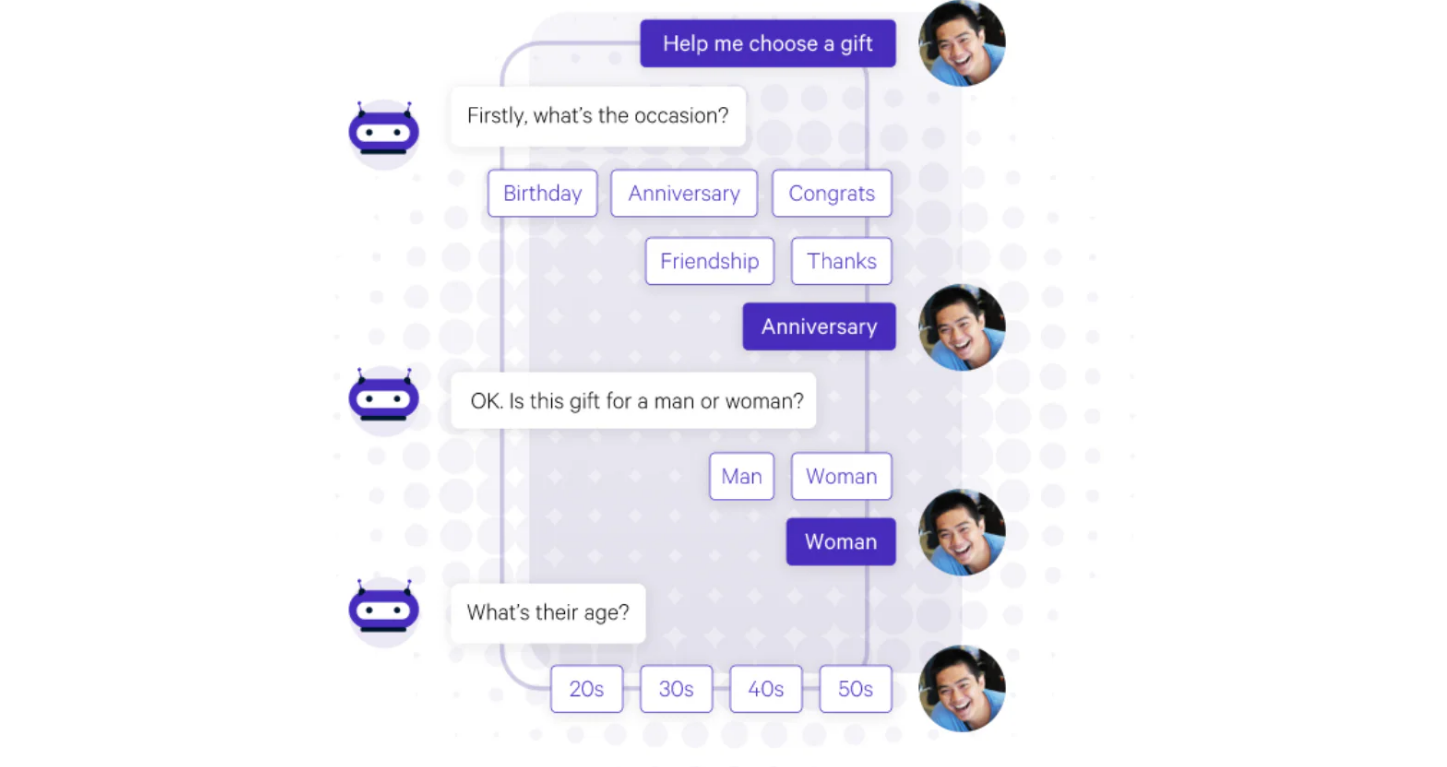
In ecommerce stores powered by Shopify, Wix, and similar platforms, chatbots are widely used. When customers ask, 'Where is my order?', the chatbot does three key tasks:
It is the dialog management system that works behind the scenes to organize task-based interactions and deliver the right responses based on user input.
Healthcare Symptom Checkers, like the Ada Health App

Here, the chatbot receives different sets of healthcare or doctor appointment queries. Based on the question and the user intent, the chatbot must respond.
And this is largely due to the efficient application of dialog management.
For example, the system asks structured follow-up questions such as “Do you have a fever?” or “How long have you had this symptom?”
Dialog management ensures each question logically follows the previous response.
Dialog management is what makes chatbot conversations structured and meaningful. It ensures systems understand context, manage multi-step interactions, carry out necessary tasks, ask questions when needed, and respond logically.
As conversational AI evolves, effective dialog management remains central to building reliable, human-like interactions.
Murf Falcon
The Fastest, Most Efficient TTS API for building Voice Agents
Discover how Murf Falcon helps build voice agents that are
ultra-fast, expressive, scalable and significantly cost-efficient, all at once.


Keeping your data safe


