Movie Dubbing in 2026: Everything You Need to Know



Key Takeaways
- Movie dubbing replaces original dialogue with translated voice recordings to improve global accessibility and audience immersion. Compared to subtitles, dubbing helps viewers focus on visuals, pacing, and emotional performances.
- Different dubbing types—lip-synced, phrase-synced, and time-synced—serve varied creative and technical needs.
- Traditional dubbing involves complex, multi-step workflows requiring translators, voice actors, directors, and sound engineers. Manual dubbing processes are often slow, expensive, difficult to scale, and challenging to revise.
- AI-powered dubbing significantly reduces turnaround time while maintaining professional audio quality. Modern AI systems enable realistic synthetic voices, precise lip-syncing, and fast contextual translations.
- Murf stands out as a professional-grade AI dubbing solution with multi-language support, voice cloning, APIs, and creative control.
Movie dubbing is the process of replacing original dialogue with translated voice recordings.
Voice actors perform scripted lines to match the timing, tone, and on-screen emotions of the performers in the original language.
The goal is to make content feel relatable to foreign or non-native viewers. This approach is better than subtitle translation because dubbing removes the need for constant on-screen reading. Consequently, audiences can fully focus on visuals, pacing, and performances.
Apart from expanding a film's global reach and commercial value, dubbing elevates accessibility for viewers facing challenges, such as visual impairments.
All of that translates to studios entering new markets while still resonating with the audience and reducing viewer drop-off.
In this article, we will examine the various types of dubbing, the process of translating movies into different languages, and the impact of AI on the entire workflow.
Why is Dubbing Important in Films?

Dubbing is the key that unlocks a global adventure for movie lovers. Simply put, dubbed movies meaning is all about making stories accessible to everyone. Here’s why it’s important:
1. Breaking Language Barriers
Ever been to a movie where the characters talk, but you can’t understand a word? Dubbing swoops into the rescue, making sure everyone, no matter their language, can watch foreign language movies.
2. Capturing the Emotions and Humour
Dubbing is not just about translating the original language into a different language but also keeping emotions, jokes, and cultural vibes alive. That way, whether you speak English, Spanish, or any language, you get the full experience.
3. Making Movies a Global Celebration
When a movie can speak many languages, it becomes a globetrotter, spreading joy in different countries. Everyone can enjoy the same stories, no matter where they are.
Types of Dubbing in Movies
In today’s global film industry, voice & video dubbing are a big part of making movies. But remember, not all dubbing is alike. Here are some types of dubbing you might need based on what you’re looking for:
Lip-Synced Dubbing
The lip-synced dubbing process nails the art of matching translated dialogue with actors’ lip movements. The method ensures every word fits the on-screen performance seamlessly.
Phrase-Synced Dubbing
Going beyond lips, this dubbing process focuses on syncing translated phrases, maintaining a natural flow that captures the original dialogue’s essence. It is common in everyday conversations or dramas.
Time-Synced Dubbing
For the pinnacle of precision, enter the time-synced dubbing process. Beyond lips and phrases, it synchronizes translated dialogue timing with the original performance.
Imagine a musical or a dance scene. Time-syncing is crucial here to make sure the translated singing or dialogues match the exact timing of the original performance.
Each of these techniques contributes to the overall dubbing process in movies to create a seamless viewing experience for the audience.
How to Dub Your Audio in Movies - The Traditional Way
Dubbing audio in movies traditionally involves a meticulous process to ensure the synchronization of voices with the actors’ lip movements. Foreign language films normally go through the following dubbing process post-production:
Translation and Adaptation
Translate the original script into the target language. Translators need to work closely with scriptwriters to adapt the dialogue to match the cultural nuances and lip-sync requirements.
Voice Actor Casting
Select professional voice actors who closely match the original actors in tone, emotion, and timbre.
Recording and Synchronization
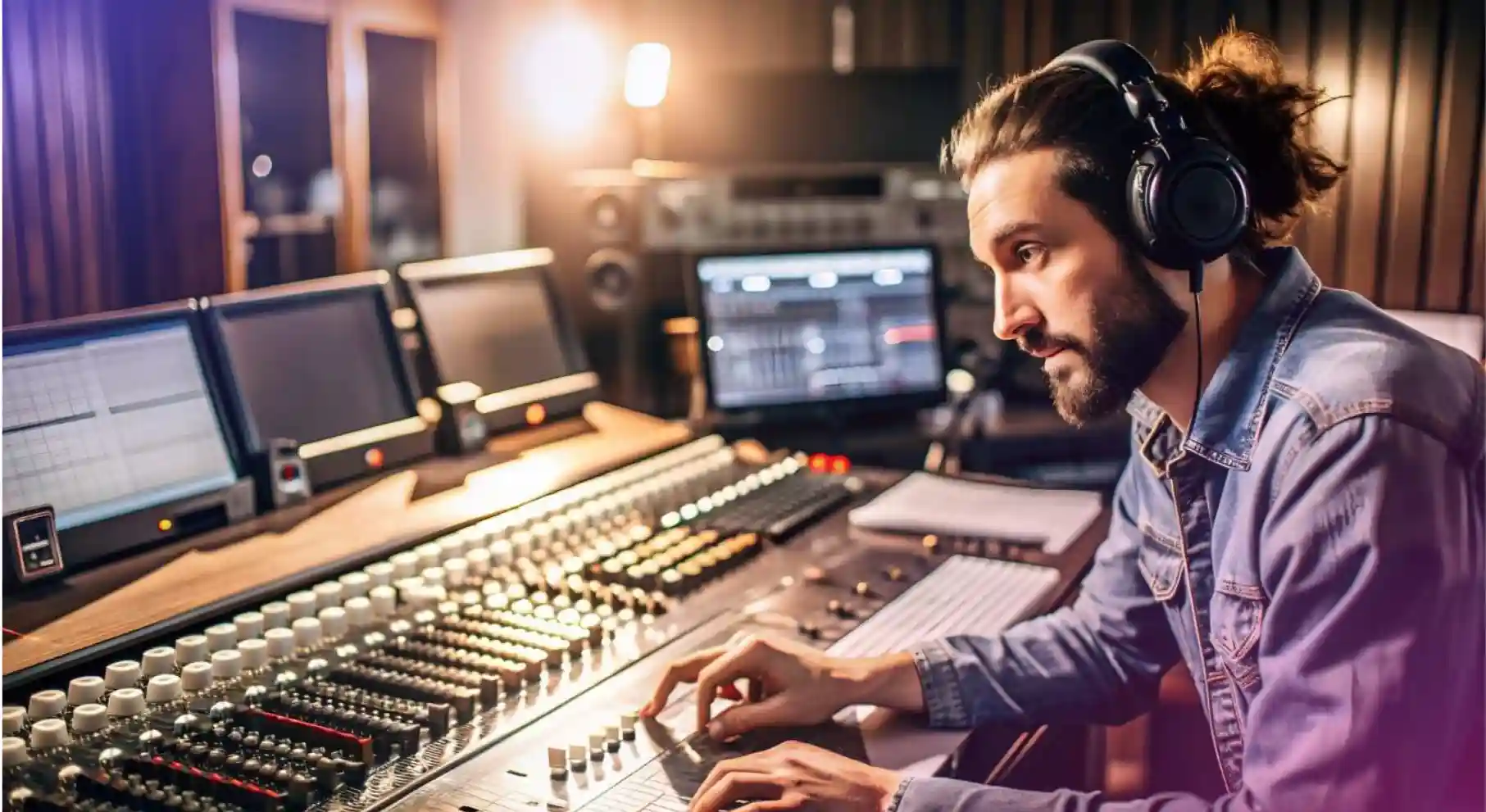
Actors record their lines in a studio with specialized equipment for excellent audio quality. They watch the original scene and synchronize their dialogue to match the lip movements of the on-screen characters.
Director’s Guidance
A dubbing director guides actors to replicate the original performance in terms of emotion, pacing, and intensity.
Monitoring and Adjustments
Sound engineers make real-time adjustments to the audio tracks for clarity, volume, and synchronization, ensuring multiple takes if necessary.
Quality Control
A quality control team reviews the dubbed version to identify and rectify any discrepancies or issues.
Mixing and Finalization
Sound engineers blend the dubbed voices with the original soundtrack and sound effects, creating a seamless audio experience.
Delivery
The final, approved audio track is synchronized with the video and prepared for distribution. This way, a broader audience can enjoy the foreign language film in their native language.
Limitations of Traditional Movie Dubbing Workflows
Despite decades of refinement, traditional dubbing workflows still present several operational and creative constraints.
- Lengthy production timelines slow releases: Manual scripting, voice casting, recording, and editing create long turnaround cycles. This delays global launches and limits simultaneous regional releases.
- High costs restrict scalability: Studio time, voice talent fees, directors, and engineers significantly increase localization budgets. These costs rise quickly when supporting multiple languages.
- Inconsistent voice quality across regions: Talent availability varies by market, leading to uneven performance quality in foreign films. This can weaken character continuity and audience immersion.
- Limited lip-sync accuracy affects realism: Manual alignment often struggles with complex facial movements. Poor synchronization breaks emotional connection and viewer trust.
- Cultural adaptation remains error-prone: Human translators may miss cultural nuances or contextual intent. This results in dialogue that feels unnatural or misaligned.
- Revisions are difficult and time-consuming: Script changes require rebooking talent and studio sessions. Minor updates can trigger major production delays.
Fortunately, recent innovations in generative AI have improved dubbing workflows for movie production teams. These solutions can translate movies within a week, if not a few days, while maintaining professional quality and cost-effectiveness.
Today’s Audio Dubbing Scenario
Today, many movie makers are turning to AI for dubbing, and it’s changing the game for the better. Instead of relying solely on human voice actors, you can use artificial intelligence to simplify the process and save costs.
AI Generates Remarkable Synthetic Voices
One key advantage of AI is its ability to generate synthetic voices in the preferred language that sound remarkably human. This eliminates the need for hiring voice actors for every language, saving a bunch of money. Traditional dubbing, with its need for professional voice actors, can’t match up in terms of cost efficiency.
AI Ensures Perfect Synchronization
Additionally, AI tackles the challenge of lip synchronization with finesse. It analyzes the video and ensures that the dubbed voices align seamlessly with the character’s lip movements.
AI Enables Quick and Precise Translations
Translation is a breeze for AI, too. It zips through scripts, rapidly translating them while maintaining accuracy and contextual relevance. Compare this to the traditional method, where human translators faced hurdles of speed and consistency.
In a nutshell, AI makes dubbing way easier. It saves costs for voice actors and studios, accelerates the dubbing process, and ensures the dubbed version looks and sounds exactly as intended.
How to Choose the Right Dubbing Platform for Films
There are plenty of AI-powered movie dubbing platforms in the market, making it difficult for creators and production teams to make the right choice. To accelerate that process, you can check the following aspects of the tool to evaluate it properly for your workflow:
- Voice quality and naturalness: Evaluate how realistic voices sound across emotions, pacing, and tone. Poor prosody quickly breaks immersion and damages audience trust.
- Lip-sync and timing accuracy: Strong platforms align speech precisely with mouth movements. This is critical for close-up scenes and dialogue-heavy films.
- Language coverage and accent support: Check supported languages, dialects, and regional accents. Broader coverage simplifies global distribution strategies.
- Cultural and contextual adaptation: Look beyond literal translation accuracy. The platform should handle idioms, humor, accents, and cultural references effectively.
- Customization and creative control: Production teams need control over voice selection, pacing, and pronunciation of the dubbed dialogue. Flexible controls support creative consistency across markets.
- Scalability and turnaround speed: High-volume releases demand fast processing without quality loss. Scalable infrastructure helps meet tight release schedules.
- Integration with existing workflows: Seamless compatibility with editing, post-production, and content management tools reduces friction. This improves team efficiency and collaboration.
- Revision and update flexibility: Content often changes late in production. Easy re-dubbing prevents delays and avoids costly re-recording sessions.
- Data security and rights management: Films involve sensitive assets. Ensure strong encryption, compliance standards, and clear voice licensing terms.
Murf: Professional-Grade AI Movie Dubbing Solution
Murf is an AI-driven voice, dubbing, and localization platform designed to simplify professional audio workflows for film and video creators.
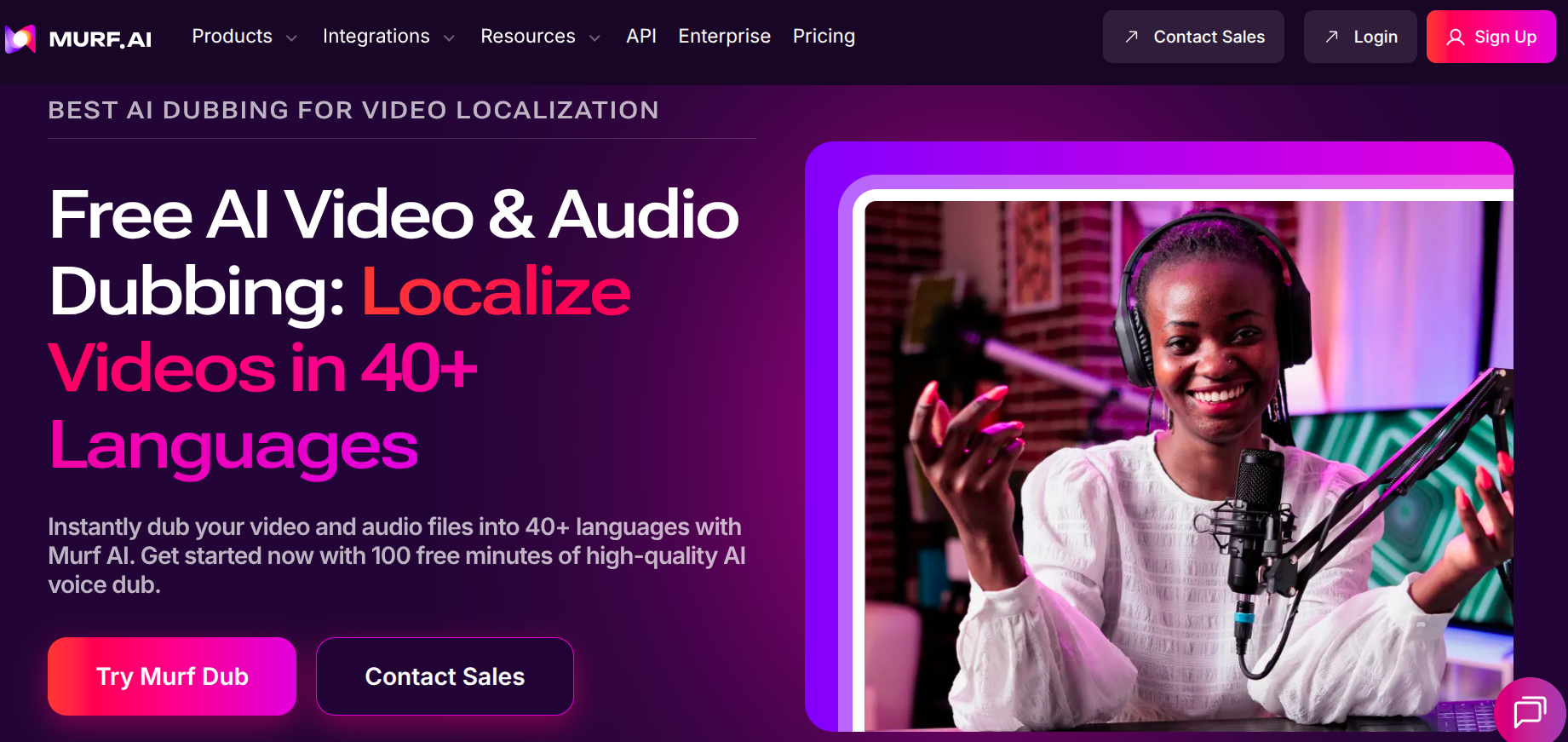
It uses advanced speech synthesis, voice cloning, and automated dubbing tools to generate high-quality, natural-sounding dialogue across many languages — making Murf a strong choice for teams focused on global releases.
The platform's dubbing capabilities let you translate and dub videos into 40+ languages with human-like voices that reflect emotion, tone, and pacing. The dub quality is then evaluated by native speakers from Murf's vetted network for quality control.
Production teams can also preserve speaker style or brand voice through voice cloning—replicating tone and delivery in other languages to maintain character continuity.
The platform supports bulk dubbing through an API, enabling scalable localization for films, streaming content, and enterprise workflows.
With over 200 realistic AI voices and integrations for major editing tools, Murf balances creative control with fast turnaround times. This combination of realism, speed, and scalability positions Murf as a professional-grade solution for modern dubbing needs.
Ready to speed up your dubbing and expand your global reach?
Sign up for Murf today and start dubbing films with professional-quality AI voices.
Wrapping Up
Film dubbing serves as the linguistic bridge that allows audiences worldwide to enjoy films in their native languages. So next time you hear someone ask what does dubbed mean in movies or look up dubbed movies meaning, you’ll know it’s all about making films universally enjoyable. Dubbed movies break down language barriers and foster a shared cinematic experience.
Today, audio dubbing has become an essential aspect of making global movies. Thankfully, innovative AI solutions are improving the dubbing process.
These technologies ensure that the essence of the original content is preserved while catering to diverse linguistic audiences.
Embracing the advancements in AI dubbing technology opens up new opportunities for filmmakers to reach diverse audiences and enrich the global film landscape.
Frequently Asked Questions
What does dubbing mean in movies?
.svg)
Dubbing in movies refers to the process of replacing the original dialogues in the movie with a translated version, syncing it seamlessly with actors’ lip movements.
What are the different methods of movie dubbing?
Various methods of dubbing in movies include lip-synced dubbing, phrase-synced dubbing, and time-synced dubbing. Each ensures precise synchronization with on-screen performances.
How is dubbing done in movies?
Traditionally, the dubbing process involved translating the script, casting voice actors, recording, and syncing dialogue in a Studio, guided by a director. Sound engineers then make adjustments, ensuring a seamless final dubbed version.
However, AI dubbing has simplified this process. AI technology automates many tasks, like translation and voice synthesis, making dubbing faster and cheaper. This means filmmakers can reach wider audiences globally more easily.
Is there any AI tool available for movie dubbing?
Nowadays, AI tools like Dubdub.ai, Wavel AI, Speechify, and ElevenLabs are available to simplify the audio dubbing process. With synthetic voices, precise translations, and efficient synchronization, they make dubbing more accessible and effective without needing to hire voice actors.
Can AI technology replicate the emotional nuances of original performances in dubbing?
Yes, advanced AI technology can replicate emotional nuances in dubbing. It uses complex algorithms to analyze and mimic human emotions, ensuring an authentic and emotionally rich dubbed performance.
What does dubbed mean in movies?
Dubbed in movies means replacing original dialogue with translated voice recordings. Voice actors perform lines in another language while matching timing and emotion. This helps audiences understand films without reading subtitles.
.webp)

.webp)