Samsung Text to Speech: Transforming Text into Seamless Spoken Expression



Key Takeaways
- Samsung Text-to-Speech converts written text into clear spoken audio, helping users consume content hands-free and reduce eye strain. TTS improves usability for individuals with visual impairments or reading challenges by offering reliable, on-device spoken guidance.
- Users can enable Samsung TTS through Settings or Accessibility tools like Screen Reader and Select to Speak for flexible, on-demand reading.
- Samsung provides customization options for speech rate, pitch, voice selection, and language packs to create a more comfortable listening experience.
- Limitations include fewer voices, less natural output, inconsistent app support, and limited advanced controls compared to modern neural TTS engines.
- Murf emerges as a stronger alternative with lifelike voices, deeper customization, translation features, and professional-grade audio suited for creators.
Text to speech technology converts written text into natural-sounding audio that users can listen to instead of reading. It improves accessibility, supports multitasking, and enhances overall smartphone usability. Many people use TTS to consume content faster, reduce eye strain, or access information on the go.
Samsung smartphones include built-in support in the Android accessibility suite that delivers clear, consistent speech output across apps. The system helps users listen to messages, read articles, and interact with learning tools without switching between screens on their Android device.
It also benefits individuals with visual impairments or reading challenges by offering reliable spoken guidance.
Common applications include voice-enabled navigation, hands-free messaging, audiobook-like reading, language learning, and assistive accessibility services. These read-aloud features work seamlessly within Samsung’s ecosystem, allowing users to personalize voice styles and adjust speech rate for a better listening experience.
In this article, let’s look at how Samsung’s text-to-voice system enhances everyday smartphone interactions.
How to Enable Samsung Text-to-Speech
Getting started with Samsung TTS is fairly simple:
- Open the Settings app on your Samsung phone.
- Scroll and tap General management.
- Tap Text-to-speech (or Text-to-speech output / Speech output, depending on your Android/One UI version).
- Under “Preferred engine,” select either the built-in Samsung engine or another (e.g., Google Text-to-Speech).
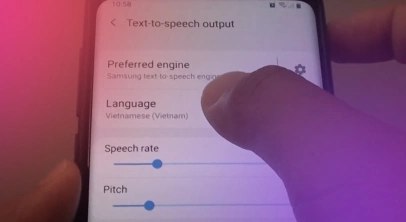
- To customize voice settings, tap the settings (gear) icon beside your chosen engine. Adjust language, speech rate, and pitch according to your preference.
- If you want additional languages or voices, choose “Install voice data” and download your preferred voice or language pack.
You can also check out the following video to enable TTS:
Now, your Samsung phone will read aloud supported text (in messages, articles, or other compatible apps) using the settings you selected.
Steps to Access TTS on Samsung Devices
Samsung text-to-voice can be triggered in many ways, and each method supports a smooth reading experience.
Start with the built-in Accessibility tools. Open Settings, go to Accessibility, and select Screen reader. Here, enable Select to speak. This feature lets you tap specific on-screen elements and hear them read aloud. It works well for articles, emails, and app interfaces.
Once enabled, a floating Select to speak icon appears on your screen. Tap the icon whenever you want to activate Samsung TTS. Then drag your finger to highlight text or tap individual items to hear them spoken. This method gives you precise control, especially when scanning long web pages.
You can also trigger TTS through apps that natively support reading features. For example, browsers, note-taking apps, and e-book readers often include a Read Aloud option. These built-in controls integrate directly with Samsung’s TTS engine, ensuring consistent output.
Another option is using the Assistant menu from Accessibility settings. This menu provides a shortcut to reading functions for users who prefer fewer gestures. Once configured, you can access Samsung TTS tools from a single on-screen panel.
These methods help you convert on-screen text into clear speech whenever you need it, across most Samsung apps and services.
How to Customize Samsung TTS Settings
Samsung allows users to tailor TTS output for clarity, comfort, and personal preference. These adjustments help create a consistent listening experience across apps. Use the following options to customize your setup:
- Change the default engine: Select Samsung Text-to-Speech Engine for optimized performance and smoother pronunciation across supported apps.
- Adjust speech rate: Slow the reading speed for better comprehension or increase it when you want to consume content faster.
- Modify pitch: Set a higher or lower pitch to achieve a tone that feels natural and less fatiguing during long listening sessions.
- Preview changes: Tap Listen to an example to confirm that your adjustments sound balanced and pleasant.
- Download additional voices: Install new languages or voice styles to support accessibility needs, language learning, or regional preferences.
- Enable high-quality voice packs: Choose enhanced voice files when available to achieve clearer and more human-like speech output.
- Configure accessibility tools: Link your TTS preferences with features like Select to Speak or Screen Reader for consistent audio behavior.
- Sync settings across apps: Ensure apps like browsers, readers, and messaging tools use your updated TTS configuration.
Limitations of Samsung Text-to-Speech
Samsung’s text-to-speech engine delivers solid performance, yet it comes with noticeable limitations that may affect specific use cases. Below are the key constraints users often encounter:
- Limited naturalness in voice output
The voice sounds clear but still lacks the human-like nuance found in advanced neural TTS models. It may feel slightly mechanical during long listening sessions. - Fewer voice options compared to competitors
Samsung offers a modest set of voices and accents. Competing engines provide broader libraries with expressive styles, emotional tones, and richer character voices. - Variable language support
While major languages work well, some regional languages lack high-quality or fully optimized voice packs. This limits accessibility for multilingual users. - Inconsistent performance across apps
Not all apps integrate smoothly with Samsung’s TTS engine. Some third-party tools may fall back to system defaults or fail to trigger spoken output reliably. - Limited customization depth
Users can adjust rate and pitch, but advanced tuning—like prosody control, emphasis, or pause manipulation—is unavailable. This restricts fine-grained control over narration. - Voice download dependencies
Many voice packs require manual installation. Users must also rely on Samsung’s updates for improvements, which arrive less frequently than cloud-based alternatives. - Offline quality constraints
Since Samsung’s TTS primarily runs on-device, offline output may sound less refined than cloud-powered engines that use heavier neural models. - Not optimized for long-form content
The engine performs well with short messages but may feel monotonous during lengthy articles or documents due to limited variation in speech patterns.
Murf Text-to-Speech: Best For Samsung Users
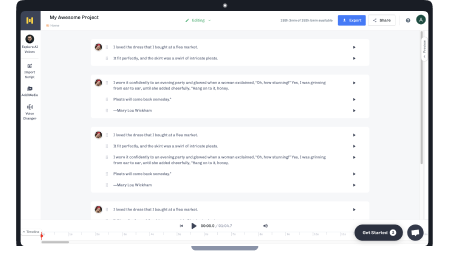
Murf is an advanced AI text-to-speech platform that delivers natural, studio-quality voiceovers. It outperforms Samsung’s built-in TTS engine by offering richer expression, wider voice variety, and professional-grade audio suited for content creation.
While Samsung focuses on basic reading tasks, Murf enables users to generate lifelike narration for videos, training modules, podcasts, and marketing assets.
Here’s what the tool offers:
- Expressive, Human Like Voices: With 200+ voices in over 35 languages, including English, Hindi, Spanish, and German, Murf enables users to pick the best voice for their text-to-speech needs.
- Flexibility in Tone: Murf allows users to adjust the style of their voices, making it fit for casual, formal, and professional use.
- Dynamic Voice Customization: With Murf, users can refine their text-to-speech experience by adjusting attributes such as pitch, pace, and pronunciation.
- AI Translation: With Murf AI Translate, users can convert their content into 35 different global and regional languages, including English, Hindi, German, French, and more, and make it accessible to a broader audience.
- Voice Changer: Murf’s voice changer allows users to create studio-quality voiceovers at home and edit the result as they see fit.
Ready to elevate the TTS experience on your Samsung device?
Sign up for Murf today and start creating natural, engaging voiceovers in minutes.

Frequently Asked Questions
Can I use text to speech on all Samsung devices?
.svg)
Most Samsung devices, including mobile phones and tablets, have built-in text to speech functionality. Users can access this feature through the device settings to enable speech synthesis for several applications.
Can text to speech be used in multiple languages on Samsung devices?
Samsung devices support text-to-speech in multiple languages so that users can adjust their listening experience to fit their preferred or desired language.
Are there additional accessories that enhance the text to speech experience on Samsung devices?
External accessories like Bluetooth headphones or speakers can enhance the listening experience by providing clearer and more immersive sound.
What should I do if text to speech is not working on my Samsung device?
First, ensure the feature is enabled in your device settings. Additionally, you can check for any pending software updates and restart your device. If that doesn’t solve the issue, consider reinstalling the text to speech engine from the settings or switching to a third-party solution.
How do I change the voice for text to speech on my Samsung device?
To change the voice for text to speech, go to settings on your Samsung device, select “Accessibility,” then choose “Hearing,” and finally tap on “Text to Speech.” From there, you can explore the available voices and languages.