AI Voice Agent Use Cases: How Teams Actually Use Them in 2026



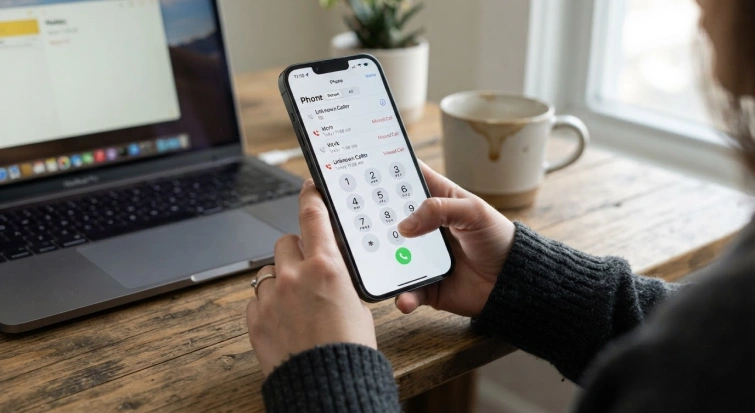
Most phone-based customer service is a frustrating loop with no resolution in sight. You call a company, press through four menu layers, get transferred once, repeat your account number, and either reach a human who can't help or get disconnected or the query is not listed in the options and you do not get the desired results. Businesses know this and they've been adding more agents to the problem for years without fixing it.
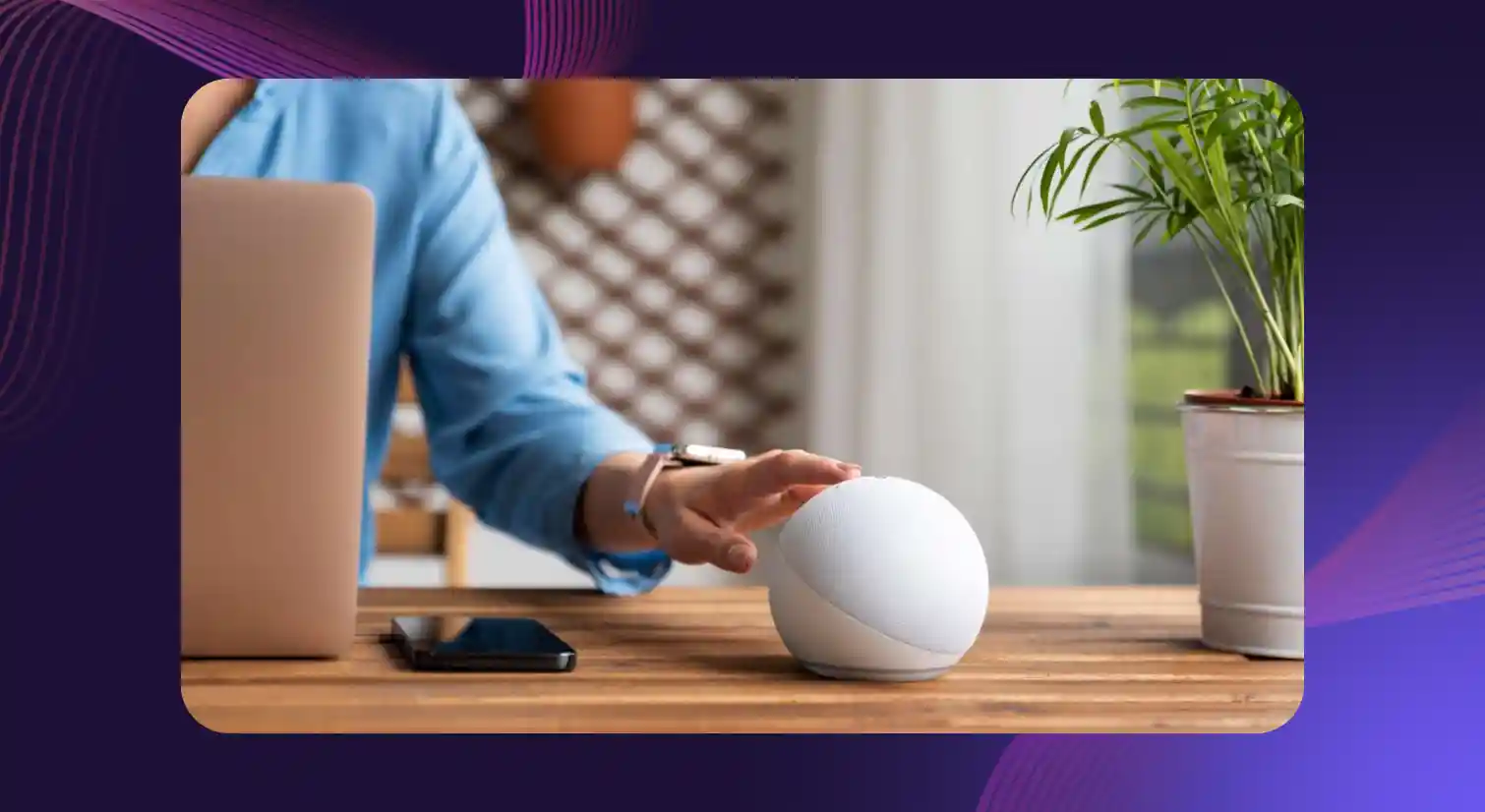
AI voice agents take a different approach. Instead of routing you to a human agent or trapping you in a menu, an AI voice agent has the actual conversation - listening, understanding what you want, figuring out what to do, and responding in real time, in natural speech, without the annoying hold music. The technology has moved past demo-stage novelty. Companies across healthcare, financial services, and e-commerce are running AI voice agents in production.
"Press 1 for billing, press 2 for support." That phone tree that is commonly used in customer calls is finally on its way out. The AI voice agent use cases that matter in 2026 are the ones where software picks up the call, understands what a real person is asking, and handles the whole thing in natural speech, no menu required.
This guide covers where teams actually deploy them, organised by job function and by industry. It covers what AI voice agents are, how the technology works and what parameters actually matter when evaluating one.
What is an AI voice agent?
An AI voice agent or phone agents are softwares that uses artificial intelligence to hold a spoken conversation with a caller, understands intent, and responds in a human-sounding voice without a person on the line. It uses natural languages understanding (NLU), Text-to-Speech, a Large Language Model (LLM) and Speech-to-text.
A language model figures out what they want and decides how to reply. Text-to-speech turns that reply into natural audio. The whole loop runs fast enough that the back-and-forth feels like a conversation rather than a transaction. If you want to hear the difference between a robotic IVR and a modern AI voice agent, the demo above is the quickest way to feel it.
Unlike human agents and traditional IVR systems, an AI voice agent does more than answer customer queries. It can autonomously complete tasks such as real-time booking appointments, qualifying leads, retrieving account information, updating records, routing calls, or transferring conversations to the right person. By connecting to business systems such as CRMs, scheduling tools, and knowledge bases, it can access information and execute workflows while the call is happening.
The result is a system that answers on the first ring, handles interruptions, remembers what was said earlier in the call, and either completes the task or hands off cleanly to a human.
Best Use Cases of AI Voice Agents: by function
Most best AI voice agents are deployed for a handful of repeatable, high-impact jobs. These are the use cases teams reach for first because the work is high-volume, predictable, and easy to measure. The pattern holds across most contact centers: calls that follow a script, repeat all day, and have a clear definition of done are the calls an AI voice agent handles best. That's why the best AI voice agents excel at automating these workflows first. Start there, prove the ROI, and the harder, more complex use cases become much easier to justify later.
Customer support & FAQ deflection
A voice agent answers the calls that don't need a human, such as order status, store hours, billing questions, password resets, and account updates. Deflecting these routine calls cuts queue times and frees agents for the harder conversations. This is where AI call center automation earns its keep, because the repetitive 60% of call volume is exactly what a well-scoped agent handles best. Reports suggest that labor costs of customer service will be reduced by $80 billion in 2026 by using AI agents.
Appointment scheduling and reminders
Booking, rescheduling, and confirming appointments is a clean fit. The task has a clear success condition, the customer conversation is short, and the agent can write directly to a calendar or CRM. Reminder calls that reduce no-shows are a common starting project because the ROI is obvious within a few weeks.
Outbound sales and lead qualification
Voice agents call prospects to qualify interest, confirm details, and book demos, then pass warm leads to a human rep. They adapt to answers and handle the first round of objections, which lets sales teams spend their time on conversations that are actually close to closing. If outbound calls is your priority, outbound calling agents are built for exactly this motion. One note: automated outbound calling is regulated, so disclosure and consent rules apply.
Call triage and routing
Before a human ever picks up, the agent authenticates the caller, captures the customer issues, and routes it with a structured summary attached. The customer stops repeating themselves and the human starts the conversation already knowing the context with the right agent. Through automating customer interactions and intelligent call routing, service requests can address the customer pain points and provide valuable insights and empowering businesses.
Payment reminders and collections
Compliant outbound reminders for balances and renewals are a steady, unglamorous win. The agent makes the customer call, handles the simple cases, and escalates anything that needs judgment with operational efficiency.
After-hours and overflow coverage
A large share of inquiries arrive when the office is closed. Instead of a voicemail box, an AI receptionist answers, books the appointment or captures the lead, and makes sure nothing waits until morning.
Use cases by industry
The same core capabilities show up differently depending on the business. The function-based use cases above apply everywhere, but a few industries see outsized value because their day is built on routine, rule-bound calls. These are the AI voice agent use cases where adoption is moving fastest.
AI voice agent for healthcare
Clinics and provider groups use voice agents for patient intake, appointment scheduling, prescription refill requests, and insurance verification. Collecting demographics, symptoms, and insurance details and customer record information before a patient reaches clinical staff means human time goes to high-acuity cases instead of paperwork. Healthcare adds a compliance layer, so any voice agent for healthcare handling patient information needs HIPAA-aligned safeguards and a business associate agreement in place. It is estimated that 75% of healthcare interactions already use AI voice agents in 2025.
AI voice agent for real estate
Brokerages and agents get the most value from speed to lead. An AI powered phone agent calls or answers new inquiries within seconds, qualifies the buyer or seller, books showings, and follows up on listings that have gone quiet. Because real estate leads go cold fast, an agent that responds instantly, day or night, captures interest that a callback the next morning would lose. Murf's real estate voice agents are set up for this lead-response pattern.
AI Agents for Restaurants
Reservations, takeout orders, and answers to "are you open" come in constantly and rarely need a person. A restaurant voice agent takes the booking or the order and writes it straight into the system. Voice interactions to assist customers in taking orders, estimated delivery times, menu availability are also some uses that agents can deliver for food businesses.
AI Agents for Retail and e-commerce
Order tracking, returns, exchanges, and delivery questions spike during peak seasons. A voice agent for retail absorbs that surge without the company scrambling to add additional human agents up for a few weeks. AI phone agents are also used to proactively call customers with personalised shopping experiences, reducing cart abandonment rates for a retailer.
AI Agents for BFSI (Financial services)
Balance inquiries, transaction history, identity verification, and fraud alerts run through secure authentication flows. These are high-volume and rule-bound, which suits an agent well, as long as the security and compliance controls are solid.
Where AI voice agents work well, and where to keep a human
Voice agents are very good at high-volume, well-scoped, repetitive calls with a clear definition of done. Appointment booking, FAQ deflection, order status, verification, and reminders are the sweet spot. The narrower the task and the clearer the success condition, the better the agent performs - meaning less manual effort.
They are weaker on complex, emotional, or high-stakes conversations. A frustrated customer with a tangled billing dispute, a patient in distress, or a high-value negotiation still belongs with a person. The right design is not "replace every call." It is "let the agent handle the predictable volume and hand off cleanly the moment a call needs human judgment."
Teams that treat the agent as a smart front door, not a wholesale replacement, get the best results and the fewest angry callers - as the AI may fail to understand ambiguous or complex requests.
What makes a good AI voice agent
If you are evaluating options, a few things separate a voice assistant that feels natural from one that obviously is not.
Voice quality and latency are where a lot of agents quietly fail, which is also why designing voice agent prompts well is half the battle. Compliance is a huge-factor for AI phone agents in industries such as BFSI and healthcare.
How to get started
You do not need a sweeping rollout to see whether this works. The teams that succeed tend to follow the same short path.
Pick one high-ROI use case first, usually FAQ deflection or appointment scheduling, where volume is high and the task is simple. Define a single success metric, such as deflection rate or no-show reduction, before you launch. Run a small pilot on real calls, listen to the transcripts, and fix the prompts and handoff points that fumble. Then measure against the metric you set and expand from there. Starting narrow and proving one number beats trying to automate everything at once.
There are two ways to deploy an AI voice agent: build a custom pipeline or use a platform.
Build from components: Assemble an ASR provider, an LLM, and a TTS provider, and build the orchestration layer yourself. This gives full control over each component of the AI voice agent and lets you swap models. It needs engineering resources and ongoing maintenance.
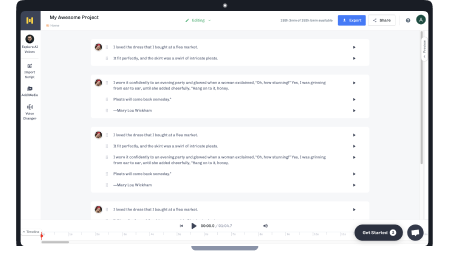
Use a platform: Platforms like Murf's AI voice agent handle the infrastructure. You configure the AI voice agent's behaviour, connect your business systems, choose a voice, and deploy to a phone number. First call is typically hours away, not weeks
When you are ready to build, an AI voice agent platform handles the speech, language, and voice layers so you can focus on the conversation design rather than wiring three providers together.
Safety considerations: Security, Compliance, and Data Residency
Every phone call a voice agent handles is a stream of sensitive data. A single conversation can carry names, payment details, health information, and biometric signal in the caller's voice itself. That makes the enterprise security posture of the platform a use-case question, not a back-office detail. The agent is only as safe to deploy as the controls sitting underneath it.
A few baseline controls are worth treating as non-negotiable before any deployment that touches real customer data:

Frequently Asked Questions
What is an AI voice agent?
.svg)
An AI voice agent is software that has a spoken, real-time conversation with a caller, understands what they want, and responds in a natural voice without a human on the line. It combines speech-to-text, a language model, natural language processing and text-to-speech to replace rigid phone menus with actual conversation.
What are the most common use cases for AI agent?
Customer support and FAQ deflection, appointment scheduling and reminders, outbound sales and lead qualification, call triage and routing, and after-hours coverage. These dominate because the calls are high-volume, predictable, and easy to measure.
What industries use AI phone agents the most?
Healthcare, real estate, restaurants, retail and e-commerce, and financial services see the most adoption. Each has a steady stream of routine, rule-bound calls, such as scheduling, order status, verification, and lead response, that an agent handles well.
Can AI voice agents be used in healthcare?
Yes. Clinics use them for patient intake, scheduling, refill requests, and insurance verification. Because they handle protected health information, a healthcare voice agent needs HIPAA-aligned safeguards and a business associate agreement.
Are AI voice agents good for customer service quality?
For routine, high-volume questions, yes. They deflect calls like order status, billing, and account updates and provide instant and accurate responses. The best setups keep a human in reserve for emotional or complicated conversations. Using AI chatbots can increase productivity by more than 10% in call centers.
What is the best contact center AI voice agent?
The best AI voice agent is the one that matches your use case on voice quality, latency, accuracy on names and numbers, language support, and integrations, with reliable escalation to a human. Evaluate against your actual call types rather than a feature checklist.
How much do AI voice agents cost?
Pricing usually runs on a per-minute basis that bundles speech-to-text, the language model, and text-to-speech, with the total depending on call volume and features. For a full breakdown, see how much AI voice agents cost.
Where do AI chatbots or AI systems not work well?
They struggle with complex, emotional, or high-stakes calls that need human judgment, such as tangled disputes or sensitive situations. Use them for predictable, well-scoped volume and route the hard calls to a person.
Can I build my own AI powered voice agent for my business operations?
Yes. A voice agent platform gives you the speech, language, and voice components so you can design the conversation without integrating multiple providers yourself. Start with one use case and a clear success metric to streamline operations. To provide exceptional service and heed to customer's requests, it can also be a good idea to use a platform that provides end to end AI voice agents.
Do AI voice agents support multiple languages in customer conversations?
Yes. Agents provide multilingual support that code-switch between languages within a single call. Language coverage varies by platform, so confirm the specific languages and accents your customers use before committing.
How to measure customer satisfaction of my agent?
This depends on a lot of variables. Customer behaviour and customer sentiment analysis is very important in understanding how the agent productivity has been. Customer satisfaction scores (CSAT) is a good way to measure the customer intent. Through relevant customer data and a good conversational agents, you can enhance customer experiences using voice AI platforms such as Murf.