Video Translation for Global Marketing: Reach Audiences Worldwide



Reaching customers across borders is no longer a dream reserved for huge corporations. Any brand with a story to tell can speak to a global audience today, but the challenge is making sure people understand you clearly in their own language.
That’s where effective video translation for global marketing comes in. When you translate videos, you bridge language barriers and make your message feel natural and relevant to people in different countries.
Further, working with video translation services or using AI-powered video translation tools can help you create content that fits multiple languages. What's more, these tools can preserve the meaning, tone, and intent of your message!
This article will shed light on the various ways video translation helps creators reach a global audience in meaningful ways. We’ll also consider the role that Murf’s AI-based video translation tool plays in this landscape.
How Video Translation for Global Marketing Helps Creators Connect with an International Audience
Not every creator has a massive budget or a production studio. But anyone can take one piece of video content, convert it into multiple languages, and reach millions of people in different countries. That’s the real power of video translation. It removes language barriers, makes your message easier to understand, and helps your content feel native to each target audience.
Why This Matters Today
Most online videos are still created in one language. But the world doesn’t speak the same. If your message only exists in English, it lives inside a tiny box and limits you from reaching a broader target audience. You miss viewers who would happily watch your content, buy your product, or follow your work if they could simply understand what you’re saying in their own language.
That’s where video translation services, AI-powered video translation, AI translation, and professional translators come in. They turn one script, one voice, and one idea into a product that feels local everywhere, enhancing the effectiveness of marketing campaigns.
When done well, this gives you:
- Instant access to a global audience
- Visibility in markets your competitors have ignored
- A real competitive edge
- Stronger engagement and watch time
- More trust and better conversions
Creators who adapt their marketing content for different regions are not just posting. They are building a real presence in key markets.
Breaking Cultural and Language Walls
Translation is not only about swapping translated words into target languages. What matters is whether the audience feels like: “This was made for me.”
That requires:
- Cultural sensitivity
- Understanding of cultural norms
- Knowledge of local humor, references, and communication styles
- Content that respects the target culture
If you ignore these details, viewers notice. They click away to the next video that resonates better. But when your video translation efforts respect the culture, people stay longer, engage more, and feel connected to your story.
How Creators and Global Marketers Can Use Video Translation to Reach a Wider Audience
You don’t need an international team to start. Here’s how modern creators are doing it:
Translate Your Video Script
Use video translation services, machine translation, or AI tools to create versions in different languages. Each version becomes an entry point into a new group of viewers.
Also, with this tool, you localize instead of copying. Localization takes your script and adjusts:
- Jokes
- Examples
- Tone
- References
- Measurements and numbers
This keeps your brand voice familiar while still respecting the culture on the other side of the screen.
Add Subtitles or Translated Audio
You have options:
- Subtitles
- Voice dubbing
- AI-generated voice cloning
- Real voice actors
- Hybrid approaches
Not every target market watches videos the same way. Some prefer reading, others listening. Choose based on how your target markets consume content.
Optimize for Search Engines
Uploading translated content in multiple languages helps more people find you. A Korean title, a German description, or Japanese tags can push your content into entirely new search result pools. That alone can increase reach, improve visibility, and boost market share.
Translate All Kinds of Videos
Video translation helps no matter what you create:
- Tutorials
- Interviews
- Product demonstration videos
- Reviews
- Entertainment
- Educational breakdowns
- Vlogs
- Brand stories
- Social content
- Full campaigns
If people watch it, you can translate it.
Turns a Video into a Global Asset
Most creators struggle to make new content constantly. Video translation helps you stretch what you already have. One video can have a Spanish version, Tamil version, Arabic version, Portuguese version and so on.
Builds Trust Faster
Audiences trust brands that speak to them in the language they grew up with. When your content shows up in the viewer’s native language, it always feels more personal, giving you a competitive advantage.
Creators who do this notice:
- Longer watch times
- More returning viewers
- Better reactions to marketing campaigns
- Higher clickthrough on calls-to-action
- Stronger emotional connection through consistent brand messaging
That emotional connection is the difference between “viewer” and “follower,” as well as between “lead” and “customer.”
Helps Small Creators Compete Globally
A decade ago, only major brands could afford international localization. Now, with AI-powered video translation, professional translation agency options, and affordable automation, smaller creators can communicate like global companies.
This is why the growing demand for multilingual digital content is exploding. Viewers want relevant content they can understand. Creators want growth. Video translation is where both meet.
Why Murf's AI Video Translator Deserves Your Attention
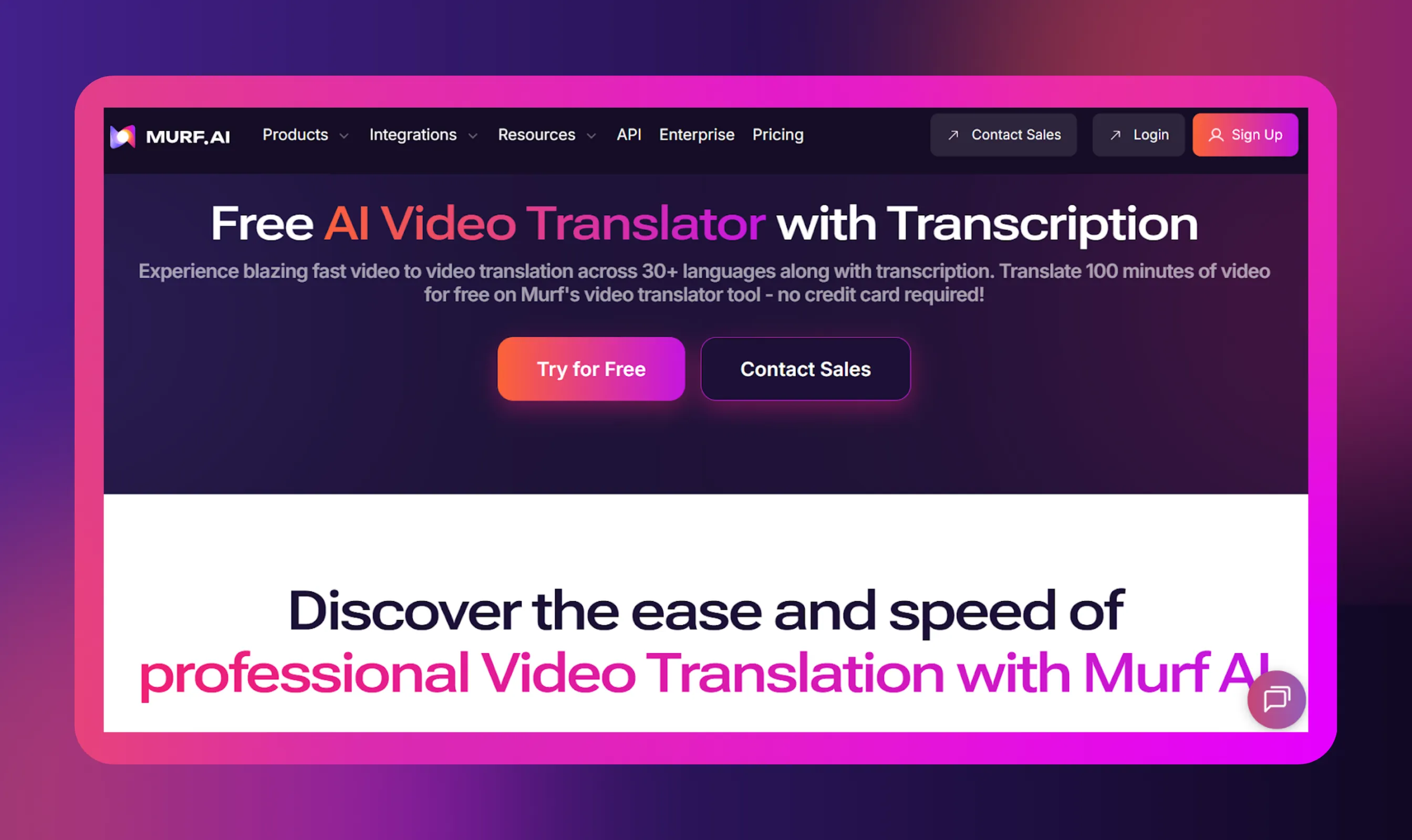
If you’re trying to take your videos beyond your home country, Murf's free video translator is a tool that genuinely makes the process easier. Say goodbye to the days of hiring a professional translation agency.
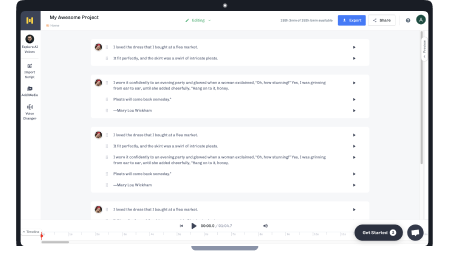
What used to take a full production setup, voice talent with language skills, and long studio timelines is now something you can handle on your computer in a short sitting. You upload your video, pick the language, and Murf handles the heavy lifting.
One thing that stands out is how natural the results sound. Instead of robotic voices or awkward pacing, Murf keeps your tone and delivery consistent. It also meets enterprise-grade security standards like SOC 2, ISO, and GDPR, so large teams don’t have to worry about compliance. And if you want a final human check, you can opt for native-language review.
Key Features and Why They Matter
- Translate video into 40+ languages without switching between different tools.
- Use one of 200+ high-quality AI voices across different accents and speech styles.
- Custom pronunciation control means product names, technical terms, and niche words sound correct.
- The translation process is fast, saving creators and teams days or even weeks of waiting.
- Human reviewers are available if you want the translation refined for tone and cultural accuracy.
- Supports common audio and video formats so you can start editing immediately.
Who Can Benefit from Murf
- Large companies and organizations: Adapt training videos, onboarding content, internal communication, and product demos
- YouTubers and independent creators: Translate your videos into multiple languages and still sound like yourself
- Marketing teams and global marketers: Localize explainers, product walkthroughs, and other marketing materials
- Course and online education creators: Turn a single recording into multiple localized versions
- Localization and translation professionals: Speed up production, and handle the core translation and voice work, while humans refine and finalize it
In short, Murf brings all of these creators together under one powerful platform. With tools like its Audio Translator and Video Translator, teams can adapt content for global audiences faster and more accurately than ever.
Conclusion
Most creators want their work to travel farther than their own borders. And today, video translation for global marketing finally makes that realistic. You don’t need a massive team, expensive studio time, or a stack of agencies to make video content feel native to someone watching in a different country. You just need tools that respect your tone, keep your brand voice steady, and understand the cultural layer behind the marketing messages.
That’s where Murf stands out. It takes the messy parts of video translation and makes them simple enough for small teams and individual creators. The audio stays natural, the workflow is straightforward, and you still get high-quality translations that feel like they were made for the viewer’s own language. If you care about reaching people instead of just posting something and hoping for the best, Murf AI can make global marketing feel doable instead of overwhelming.
Frequently Asked Questions
Which Languages Should I Prioritize for Global Marketing Videos?
.svg)
Pick languages spoken by the audiences you actually want to reach. Spanish, Hindi, Arabic, French, Chinese, and Portuguese are big globally, but the right choice depends on your actual target markets and where your diverse audience already exists.
How to Choose a Video Translation Tool for Global Outreach?
Look for a tool that handles multiple languages, keeps your tone consistent, and makes translated audio sound human. Bonus points if it gives you control over voice style, pronunciation, and accuracy so your message doesn’t get lost during the translation process.
What Is Video Translation in Global Marketing?
It refers to turning the spoken message of your video content into different languages so you can transcend language and cultural barriers. Good marketing translation ensures you reach people who wouldn’t understand you in one language alone.
Is Video Translation Only for Large Global Companies?
Not anymore. AI tools have made video translation services affordable for creators, small teams, educators, startups, and anyone with something worth saying.
What’s the Difference between Video Translation and Video Localization?
Video translation is converting spoken lines into another language. Localization goes deeper, especially where cultural nuances are concerned. It adjusts cultural references, tone, and meaning so the video content feels like it was made for the target culture, not just swapped word for word.