Decoding Speech: The Ultimate Guide to Phonetic Transcription



In an era where communication spans the globe at the speed of light, the demand for precision in linguistic expression has never been more critical.
Statistics reveal a staggering increase in the global exchange of information:
- Over 500 million tweets are sent daily on Twitter.
- Every day, an astounding 3 billion emails are exchanged globally.
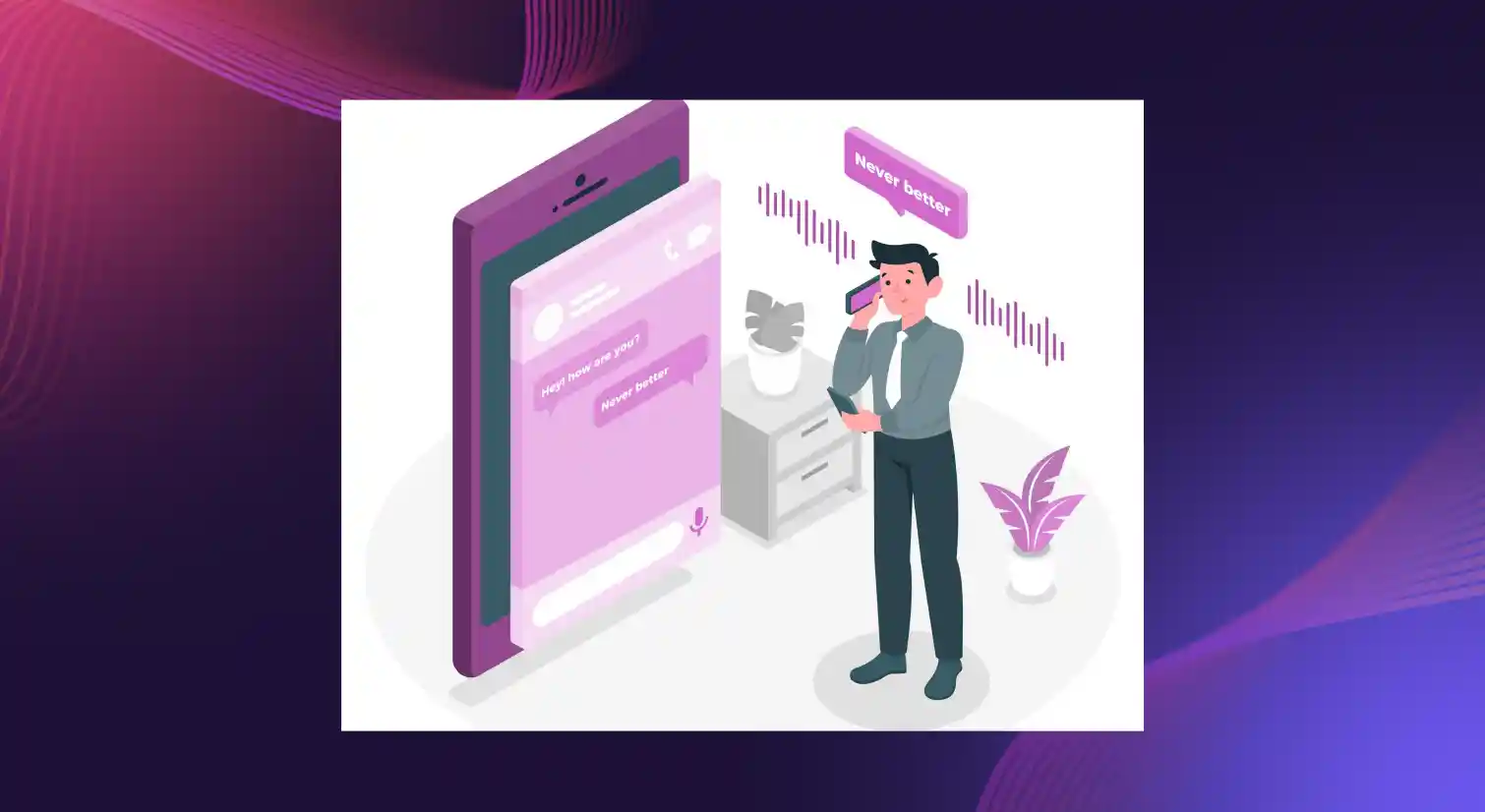
- Voice messages have become a prevalent mode of communication on various messaging platforms. About 62% of Americans send voice messages, with 30% doing so weekly, daily, or multiple times a day.
In this interconnected world, the need to accurately capture the subtleties of spoken language fuels tool development. It requires tools that go beyond traditional writing systems and can translate voice, turning the richness of oral communication into written form.
Phonetic transcription, emerging as a linguistic maestro, takes center stage in this quest for clarity. This user guide aims to unravel phonetic transcription intricacies, providing insights into its applications and nuances.
It explores the cutting-edge technology that propels phonetic translations to the forefront of linguistic innovation.
Every day, we speak thousands of words without thinking about how fragile speech really is. A slight shift in vowel sound, a voiced consonant instead of a voiceless one, and suddenly one word carries different meanings.
Now imagine trying to capture all of that using only regular letters and punctuation marks. It is not enough.
This is why phonetic transcription exists.
Built on the International Phonetic Alphabet, developed by the International Phonetic Association, it gives us a precise system of phonetic symbols to represent every distinctive sound in a language. No need to guess how an English word is pronounced differently in American English and British speech.
In this article, we'll learn about phonemic transcription, broad and narrow transcription, the IPA chart, diacritics, and how phonetic transcriptions help students, native speakers, and linguists decode pronunciation across languages.
If you want to truly understand how speech becomes text and how text can accurately represent sound, this is where it starts.
Understanding Phonetic Transcription: A Brief Overview
.webp)
Phonetic or phonemic transcription is the process of converting spoken language into written symbols. Unlike conventional writing, which aims to capture the meaning of words, phonetic transcription focuses on accurately representing the sounds of speech.
This meticulous approach ensures a precise and standardized representation of spoken language. It enables linguists, language learners, and researchers to study and analyze the phonological aspects of a language.
Tracing the Origins of Phonetic Transcription
The roots of phonetic transcription can be traced back to ancient civilizations. Scholars attempted to devise systems to represent spoken language in writing.
One notable example is the Sanskrit linguistic tradition, where ancient Indian grammarians accurately transcribed the sounds of their sacred texts.
However, it was not until the 19th century that a standardized and universal system began to take shape.
The International Phonetic Alphabet (IPA): A Linguistic Marvel
The culmination of efforts to create a universal or international phonetic transcription system resulted in the development of the International Phonetic Alphabet (IPA).
Conceived in the late 19th century and continually expanded, it encompasses all known language sounds, standing as a linguistic marvel.
Symbols, from familiar Latin characters to unique IPA characters, provide standardized phonetic representation. It is a versatile tool for linguists, language learners, and anyone seeking a precise representation of spoken language.
Example: The Diversity of the IPA
Consider the English word “fish.” In the context of standard orthography, it appears straightforward.
However, when transcribed into IPA, it reveals the intricate details of its pronunciation: /fɪʃ/.
The symbols /f/, /ɪ/, and /ʃ/ represent the sounds of the letter’ f,' 'i’ (as in “bit”), and ‘sh’ (as in “shoe”), respectively. This exemplifies how the IPA captures the nuances of spoken language with precision.
Phonetic Transcription vs. Phonological Transcription
It’s essential to distinguish the meanings of two closely related dictionary terms: phonetic transcription and phonological transcription.
While both involve the representation of speech sounds, phonetic transcription deals with the actual sounds produced by native speakers, considering variations in pronunciation.
On the other hand, phonological transcription abstracts away from these variations. It captures the underlying patterns and rules governing the sounds in a particular language.
Applications and Benefits of Phonetic Transcription
The primary purpose of phonetic transcription is to enhance communication by providing a standardized way to represent spoken language.
This clarity is especially valuable in language learning, where learners can grasp the subtleties of pronunciation and intonation.
Let’s delve into the applications and benefits of phonetic translations to understand their diverse impacts on linguistic understanding and education.
Unlocking the Secrets of Dialects and Accents
One of the primary applications of phonetic transcription lies in the study of dialects and accents within a language.
Linguists use phonetic translations to analyze variations in pronunciation, identifying unique speech patterns that distinguish regional and social groups.
For example, the word “water” may be transcribed and pronounced differently in American English (/ˈwɔːtər/) compared to British English words (/ˈwɔːtə/). This showcases the influence of accents on spoken language.
Mastering Pronunciation with Precision
Language learners often struggle with mastering correct pronunciation, especially in languages with sounds that don’t exist in their native tongues.
Phonetic transcription serves as an essential tool in language education. It provides learners with a visual guide to the sounds they need to produce.
Addressing Speech Disorders
In the realm of speech therapy, where accurate diagnosis and treatment are paramount, phonetic transcription plays a crucial role.
Speech therapists use transcription to document and analyze the speech patterns of individuals with speech disorders. This helps them tailor interventions for improved communication.
AI-Powered Solutions for Enhanced Precision
The integration of artificial intelligence with phonetic transcription has opened new frontiers in language technology.
AI algorithms, such as those employed by text to speech generators, enhance the accuracy and efficiency of phonetic transcription. This makes it more accessible and versatile.
Tools and Resources for Phonetic Transcription
Before you master phonetic transcription, you need tools that make the system feel practical instead of painfully academic. Think of the following tools as your training wheels before you ride solo.
- The IPA Chart: Built by the International Phonetic Association, the International Phonetic Alphabet is the backbone of phonetic transcription. The IPA chart lays out every phoneme, vowel, voiced consonant, and even non-pulmonic consonants. When regular letters fall short, these symbols step in and represent each distinctive sound, eliminating confusion.
- Dictionaries with Phonemic Transcriptions: Ever looked up an English word and still wondered how to pronounce it? Good dictionaries include phonemic transcriptions for both American English and British pronunciation. They show you instantly when a word is pronounced differently or carries different meanings depending on sound.
- Interactive IPA Charts: Seeing a symbol is helpful, but hearing it is even better. Accordingly, these audio-based charts allow you to connect speech to transcription in real time.
- Text-to-IPA Converters: These tools convert text into phonetic transcriptions, giving you possible pronunciations and helping you analyze how words shift in context.
Mastering the Art of Phonetic Transcription
Writing phonetic transcription involves using a set of symbols to represent specific speech sounds. The International Phonetic Alphabet symbol is the most widely used symbol system for this purpose.
It provides a comprehensive set of symbols that cover the sounds of all known languages. This makes it a universal tool for phoneticians and linguists.
While the concept of phonetic transcription might seem daunting, mastering the art involves breaking it down into systematic steps.
The following guide outlines a simplified approach to writing phonetic transcription:
Choose Your Word or Phrase
Begin by carefully selecting the word or phrase you wish to transcribe. Whether it’s a single word encapsulating a unique sound or an entire sentence showcasing various linguistic elements, your choice sets the stage for accurate transcription.
Familiarize Yourself with IPA Symbols

Acquaint yourself with the IPA symbols corresponding to the sounds within the letters of your selected word or phrase.
Utilize the IPA chart as your comprehensive guide to understanding each symbol’s representation in different meanings across the broad international phonetic association landscape.
Transcribe Each Sound
Systematically break down your chosen word or phrase into individual sounds, meticulously applying the relevant IPA symbols to each sound.
Consider details such as stress patterns, intonation, and any variations in pronunciation that contribute to the overall phonetic makeup.
Consider Dialectical Variations
If applicable, take into account dialectical variations in pronunciation. The IPA’s flexibility allows for nuanced phonemic transcriptions that accurately capture regional differences in how a word or phrase may be spoken. This consideration enhances the precision of your phonetic transcription.
Practice and Refine
Treat phonetic transcription as a skill that refines over time through practice. Regularly engage in transcribing various words and phrases, exposing yourself to a diverse range of linguistic challenges.
Consistent practice sharpens your understanding of IPA symbols and hone your ability to apply them effectively.
Example: Transcribing the Word “Technology”
Word: Technology
Phonetic Transcription: /tɛkˈnɒlədʒi/
Breaking down the transcription:
/t/: Initial ‘t’ sound.
/ɛ/: Short ‘e’ sound.
/k/: ‘k’ sound.
/n/: ‘n’ sound.
/ɒ/: Short 'o' sound.
/l/: ‘l’ sound.
/ə/: Schwa sound, an unstressed, neutral vowel.
/dʒ/: ‘dʒ’ sound, as in “judge.”
/i/: Short 'i' sound.
This breakdown provides a comprehensive representation of the sounds within one word, “technology.”
Challenges in Phonetic Transcription Technology
Delving into phonetic transcription technology unveils a landscape marked by persistent challenges and dynamic innovations. Let’s examine the complexities of shaping accurate phonetic representation.
- Achieving Perfect Accuracy: Perfect accuracy in phonetic transcription faces hurdles due to diverse accents, dialects, and language trends.
- Diverse Accents and Pronunciations: Accommodating the myriad accents and pronunciation variations poses a continual challenge for transcription accuracy.
- Rapidly Evolving Language Trends: The dynamic nature of language trends, with constant evolution, introduces complexities in accurate phonetic representation.
Innovations Pushing Boundaries
Innovations in technology, however, continue to address these challenges, pushing the boundaries of what phonetic transcription can achieve.
- Technological Advancements: Ongoing innovations in technology play a pivotal role in overcoming challenges and advancing phonetic transcription.
- AI-Driven Solutions: The integration of AI introduces solutions that enhance accuracy and accommodate linguistic diversity.
- Real-Time Adaptations: Modern transcription tools, leveraging real-time updates and adaptive algorithms, can swiftly adapt to evolving language nuances.
Continual Updates for Precision
In the pursuit of precision, continual updates play a pivotal role in refining phonetic transcription technology. They ensure adaptability to evolving linguistic nuances and provide an enhanced user experience.
- Frequent Algorithmic Enhancements: Regular updates to algorithms ensure that transcription tools remain attuned to linguistic developments and challenges.
- Dynamic Voice Libraries: Continual expansion and enhancement of voice libraries contribute to the richness and accuracy of phonetic transcriptions.
- Enhanced User Experience: With each update, transcription tools strive to provide users with an increasingly seamless and precise linguistic experience.
The Future of Phonetic Transcription: Integration and Accessibility
Phonetic transcription is no longer confined to linguistics classrooms or dictionary footnotes. Here's what's all set to improve:
Enhancing User Experiences
- Voice Assistants and Speech Tech: Phonetic transcriptions symbols help systems distinguish between words that are spelled similarly but pronounced differently.
- Language Learning Apps: Instead of guessing how a word should be pronounced, learners can see the exact phoneme, vowel quality, voiced consonant, or diacritics that shape pronunciation.
Breaking Down Linguistic Barriers
- Multilingual Communication: In multilingual environments, phonetic symbols clarify possible pronunciations across languages.
- Greater Accessibility: Integrating phonetic transcription supports clearer speech, better comprehension, and fewer misunderstandings.
Expanding Digital Possibilities
Because APIs make it easier to convert text into phonetic transcriptions, developers can embed pronunciation data directly into apps, tools, and learning platforms. The result is seamless integration of accurate sound representation into everyday digital interactions, making language more transparent, teachable, and inclusive.
Bringing Phonetic Transcription to Life with Murf AI
Once you understand phonetic symbols and the IPA chart, the real progress begins when you can actually hear those sounds. That’s where Murf’s text-to-speech platform becomes useful in a practical way.
- Text to Natural Speech: Murf AI converts written English text into realistic audio. You can paste a word, sentence, or full script and instantly hear how it is pronounced, helping you connect phonetic transcription to real speech.
- Accent and Variant Control: The platform offers multiple voice options, including American English and British accents. This makes it easier to compare how the same English word is pronounced differently across regions.
- Pronunciation Customization: Users can adjust stress, pacing, and emphasis. This is especially helpful when testing phonemic transcription or checking how subtle vowel changes affect meaning.
- Learning Reinforcement: For students and native speakers, listening while reviewing phonetic transcriptions strengthens retention. Seeing the phoneme is useful. Hearing it spoken clearly makes it stick.
Murf AI closes the gap between abstract IPA symbols and everyday pronunciation, turning transcription from theory into something you can actually experience.
Wrapping Up
Let’s be honest, English spelling can be chaotic. One word looks simple, then you hear it spoken and realize the letters were only half the story. That gap between spelling and sound is where phonetic transcription plays an important role.
Using the International Phonetic Alphabet developed by the International Phonetic Association, we can represent each phoneme, vowel, and distinctive sound with clarity. Broad transcription gives you the outline, while narrow transcription zooms in on the details. Either way, you finally see how a word is actually pronounced instead of guessing.
From dictionaries and classrooms to speech therapy and AI-driven speech tools, phonetic transcriptions make pronunciation visible and teachable. This clarity also becomes essential in digital media, where accurate pronunciation improves voiceovers, dubbing, and even video translation workflows. In a world full of accents, languages, and ultrafast digital communication, this kind of precision is simply practical.
Frequently Asked Questions
How do you write phonetic transcription?
.svg)
To write phonetic dictionary transcription, begin by choosing the word or phrase you want to transcribe. Select whether it’s a single word or a complete sentence.
Familiarize yourself with International Phonetic Alphabet symbols, or refer to the IPA chart for comprehensive guidance.
Break down the word into individual sounds and use the appropriate IPA symbols for the distinctive sound of each. If applicable, acknowledge dialectical variations in pronunciation.
Phonetic transcription improves with practice. Regularly transcribe words and phrases to enhance understanding of IPA symbols and their applications.
What is the phonetic transcription of simple words?
For newcomers, deciphering the symbols used in the IPA might seem like navigating an intricate code.
However, breaking down simple word transcriptions demystifies the process, laying a foundation for linguistic complexity.
Example: Transcribing “Cat”
Word: Cat
Phonetic Transcription: /kæt/
Breaking down the transcription:
/k/: Represents the 'k’ sound at the beginning of other letters in the word.
/æ/: Corresponds to the short 'a’ sound in the middle of the word.
/t/: Indicates the final 't’ sound.
This breakdown offers a clear representation of the sounds within the word “cat.” It serves as a fundamental exercise for beginners in phonetic transcription.
How do you transcribe each sound in phonetics?
The process of transcribing each sound in phonetics requires a keen ear and a solid grasp of the IPA symbols. Whether you’re transcribing individual sounds or entire phrases, following a systematic approach is key to accurate representation.
Example: Transcribing the Word "Photography"
Word: Photography
Phonetic Transcription: /fəˈtɒɡrəfi/
Breaking down the transcription:
/f/: Initial 'f' sound.
/ə/: Schwa sound.
/ˈt/: Stressed ’t’ sound.
/ɒ/: Short 'o' sound.
/ɡ/: 'ɡ' sound.
/r/: 'r' sound.
/ə/: Schwa sound.
/f/: 'f' sound.
/i/: Short 'i' sound.
This breakdown provides a comprehensive representation of the sounds present in the word “Photography,” showcasing the diverse set of IPA symbols.
Is there a better tool than Google Translate?
While Google Translate has become a household name for language translation, its limitations in pronunciation accuracy prompt exploration of alternatives.
Phonetic transcription emerges as an alternative method. It offers a detailed and precise representation of spoken language that transcends the capabilities of machine translation.
Phonetic transcription captures nuances, accents, and dialect variations for an accurate representation of spoken language. For language learners, phonetic transcription serves as a valuable aid in mastering correct pronunciation. It helps bridge the gap between written and spoken forms.
How do you transcribe phonetics?
Transcribing phonetics involves selecting a word, learning IPA phonetic symbols, and accurately representing each sound. Consider dialectical variations and practice regularly to enhance proficiency in phonetic alphabet transcription.
Utilize the IPA chart as a guide for understanding and applying symbols to capture the nuances of spoken language.
What is the app for phonetic transcription?
Several apps cater to phonetic transcription needs, offering various features for accurate representation:
- Praat: Known for its robust phonetic analysis capabilities, Praat offers tools for recording, editing, and analyzing speech sounds.
- IPA Scribe: Designed specifically for learners and teachers of English, IPA Scribe provides a user-friendly interface for accessing IPA symbols and transcribing words.
- PhoTransEdit: This app specializes in phonetic transcription for linguists, offering customizable transcription options and support for multiple languages.
- Forvo Pronunciation: While primarily a pronunciation app, Forvo Pronunciation also allows users to transcribe words phonetically, enhancing language learning experiences.
- Voice Notebook: Offering real-time transcription, Voice Notebook is a versatile app that supports voice input and converts speech to text with accurate phonetic representation.
These apps cater to various user needs, providing user-friendly interfaces, multilingual support, real-time transcription, and customization options to ensure accurate phonetic representation.
What is the free software for phonetic transcription?
Examples of free software for phonetic transcription include:
- Audacity: Known for audio editing, it supports phonetic transcription with its versatile features.
- ExMARALDA: Specifically designed for linguistic research, ExMARALDA offers tools for transcription, annotation, and analysis of spoken language data.
- WaveSurfer: This open-source tool provides a flexible environment for visualizing, annotating, and analyzing speech signals, supporting various transcription tasks.
- Speech Analyzer: Developed by SIL International, Speech Analyzer allows users to analyze and visualize speech sounds, making it useful for phonetic transcription tasks.