How to Transcribe Audio: Easy Steps to Convert Audio to Text


.webp)

Key Takeaways
- There’s more than one way to get from audio to text. You can sit down and manually transcribe it, let AI handle the heavy lifting, use a quick mobile app for rough notes, or bring in human transcription services when the stakes are high.
- Your recording quality matters more than you think. Clear speech and high quality audio make everything easier. Background noise, people talking over each other, and heavy accents? That’s where things get messy.
- Modern transcription software is fast. It can automatically transcribe an hour-long audio file in just a few minutes. But it’s not flawless, so expect to spend a little time editing.
- Yes, there are free options that are great for short recordings or quick drafts. But if you’re working on something important, paid tools usually save you time and frustration.
- Once you have a clean transcript, you can do a lot with it. Turn it into blog content, subtitles, meeting notes, social posts, or even multilingual voiceovers. One recording can go a long way.
Ever wondered how to transcribe audio without losing your sanity? Whether it’s a client audio recording, a podcast audio file, lecture notes, voice memos, or even phone calls, turning spoken words into clean, usable text is no longer optional. It’s essential.
Today, businesses, creators, and teams constantly transcribe audio to text to create blog posts, captions, reports, and searchable archives. A simple audio transcription can transform scattered ideas into a polished text transcript, ready to upload, edit, or share.
And with modern automatic transcription software powered by speech recognition technology, you can often automatically transcribe an hour-long recording in just a few minutes.
From audio or video files to structured written text, the transcription process has evolved fast. In this step-by-step guide, we’ll break down how to convert audio, when to use a transcription tool, and how to maintain high accuracy without wasting hours on manual transcription.
What Are the Different Ways to Convert Audio to Text?
If you’re figuring out how to transcribe audio, the right choice depends on your deadline, budget, and how accurate your transcript file needs to be. Here are the easiest ways to convert audio to text from an audio recording, video file, or any other audio or video files you’re working with.
Manual Transcription
This is the old-school route. You play the recording file, pause, rewind, and start manually transcribing every word. It’s the most hands-on form of audio transcribing.
Pros
- High accuracy when done carefully
- Easier to manage multiple speakers, heavy accents, and unclear speech
- Better control over formatting the final text transcript or Word document
Cons
- Extremely time-consuming. One hour of audio can take four-to-five hours to transcribe
- Mentally draining, especially with low or inconsistent high-quality audio
Manual transcription works best when precision matters more than speed, like legal, medical, or research-based audio transcription projects.
Using Transcription Software
Modern automatic transcription software uses speech recognition technology to transcribe audio to text quickly and with surprisingly solid accuracy. Some advanced tools, such as Murf AI, go beyond transcription by offering text-to-speech capabilities, allowing users to create voiceovers and dub the transcribed content into multiple languages. For example, a YouTube creator who uploads educational videos can use transcription software to generate subtitles quickly, increasing viewership from non-native speakers.
Pros
- It's much faster. One hour of audio can be processed in just a few minutes.
- Handles large volumes of audio or video files easily
- Often includes advanced features like timestamps and speaker labels
Cons
- Accuracy can vary depending on background noise or unclear speech
- Overlapping multiple speakers can confuse the system
- Requires light editing for polished, professional results
Voice-to-Text Mobile Apps
Tools like voice typing in Google Docs let you tap the microphone icon and instantly turn spoken words into written text. Apps such as Otter.ai use AI-powered speech recognition to automatically transcribe meetings, interviews, and live conversations in real time. These apps are perfect for quick notes, voice memos, brainstorming sessions, or capturing ideas during live audio conversations.
Pros
- Super convenient and always in your pocket
- Great for short recordings or spontaneous ideas
- Usually free and easy to access through existing apps
Cons
- Not reliable for long audio recording sessions
- Struggles with background noise or multiple speakers
- Limited formatting and export options
Human Transcription Services
A professional transcription service or specialized human transcription services focuses on delivering accurate transcripts that reflect tone, context, and nuance. It is used for legal proceedings, research interviews, or high-stakes business content where mistakes aren’t acceptable.
Pros
- High accuracy and better contextual understanding
- Handles technical language and complex speech well
- Produces publication-ready accurate transcriptions
Cons
- More expensive than automated tools
- Slower turnaround times
- Not ideal if you need instant results
Human Transcription Services
Some transcription services combine AI-generated transcriptions with human editors to refine accuracy. These hybrid models deliver the speed of automation with the precision of human review. Services like Rev and GoTranscript use this approach to produce high-quality transcripts. For instance, a legal firm handling recorded depositions may choose to use human transcription services to ensure accuracy in legal transcripts, which are crucial for court proceedings.
Step-by-Step Guide on How to Transcribe Audio Files
Audio transcribing might seem overwhelming initially, but breaking it down into clear steps can make the process seamless. Whether you want to transcribe audio manually or with AI tools, following a structured workflow ensures efficiency and accuracy. Here’s how you can get started:
Step 1: Choose Your Transcription Method [Manual vs. Automated]
Consider these factors when choosing a method:
- Need for high accuracy? Manual or hybrid transcription is best.
- Dealing with large volumes? Automated tools save time.
- Budget constraints? AI-based transcription tools are more cost-effective.
Step 2: Upload Your Audio File
Most transcription tools require you to upload an audio file. Commonly supported formats include MP3, WAV, and M4A. Manual transcription does not require this step.
Step 3: Start Transcribing
Manual Transcription:
- Play the audio at a slow speed.
- Type out the words spoken, marking different speakers.
- Use timestamps for clarity if needed.
Automated Transcription:
- AI software processes the audio and generates a text file.
- Post-editing is needed to correct errors.
Step 4: Edit and Proofread the Transcript
Regardless of the method, proofreading is essential to ensure accuracy. Grammar, misheard words, and punctuation errors should be corrected.
Step 5: Export or Copy the Transcript
Once the transcript is finalized, it can be exported in various formats such as TXT, DOC, or SRT, making it easy to work with different applications. Many transcription tools also allow seamless integration with subtitling software, enabling content creators to add captions to videos for improved accessibility and engagement.
How Murf Enhances Transcription

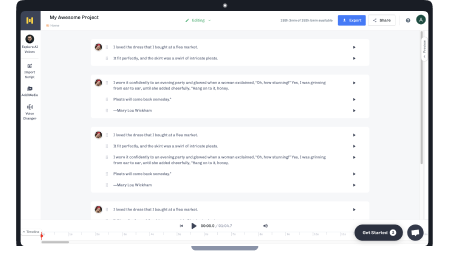
Murf isn’t just a transcription tool. After you transcribe audio to text in Murf Studio using its audio to text feature, you can instantly turn that text transcript into a natural-sounding voiceover.
With Murf Dub, you can create multilingual audio without re-recording your content. It’s a simple way to convert one audio file into polished speech for different regions, making your content more accessible and scalable.
You can dub the files in multiple languages using Murf Dub as follows:
Step 1: Log in to the platform
Start by creating an account on Murf Dub, a user-friendly AI-powered dubbing tool. Once your account is set up, log in to access the platform’s features and begin the dubbing process.

Step 2: Upload the video
Select the video file that requires dubbing and upload it to the Murf Dub platform. Ensure the video format is supported for smooth processing and accurate audio extraction.

Step 3: Select the target language
Choose the languages in which you want the dubbed audio to be generated. Murf Dub offers a wide range of languages, allowing you to expand your content’s reach across diverse audiences.

Step 4: Edit and proofread
Review the automatically transcribed text to ensure accuracy and make any necessary edits. This step helps refine the content, correct potential errors, and enhance clarity before finalizing the dubbed version.

Step 5: Dub the video in the target language
Once the text is reviewed and refined, initiate the dubbing process to generate the final audio. Murf Dub will synchronize the AI-generated voice with the video, creating a natural and professional-quality dubbed output.

What Is Audio Transcribing?
Audio transcription is the process of converting spoken words in an audio file into written text. This can be done manually by someone listening to the audio and typing it out or automatically using AI-powered transcription software. Unlike translation, which involves converting text from one language to another, transcription focuses purely on converting spoken words into text in the same language. Understanding the difference between translation vs transcription is crucial for selecting the right tool for your content needs.
Search engines cannot index audio, but they can index text, making transcriptions a valuable asset for SEO. For instance, transcripts allow podcasters to improve accessibility and repurpose episodes into blogs or social media content.
With podcasting hitting roughly 584 million listeners worldwide in 2025 and projected to grow to around 651 million by 2027, the demand for reliable audio transcription is ramping up fast. Meanwhile, video content accounts for more than 80% of all internet traffic, making transcription of audio or video files a smart move for boosting discoverability and accessibility in today’s content landscape.
Why Is Transcription Important?
- Accessibility: According to the World Health Organization, over 430 million people worldwide have disabling hearing loss. Transcriptions help them access audio and video content.
- SEO Benefits: Pages with transcripts rank higher in search engines since they provide more searchable text.
- Content Repurposing: A podcast episode transcript can be turned into a blog post, newsletter, or social media snippets, maximizing content reach.
- Time-consuming: Transcribing an hour of audio can take up to four to five hours.
- Requires effort and concentration: Listening and typing simultaneously can be exhausting.
Additionally, closed captions are gaining momentum, fueled by legal mandates and consumer preferences. According to a report, around 80% of Facebook users watch advertisements without sound. In the U.S., 40% of users view YouTube ads silently, while in the UK, this figure stands at 35%.
Challenges of Audio Transcription
On paper, audio transcription sounds easy. Press play, type what you hear, done. But this doesn't really work this way in reality. Whether you’re using automatic transcription software or doing manual transcription, a lot can go wrong between raw audio and a clean text transcript.
Here’s what usually trips people up when they transcribe audio to text.
- Background noise: Traffic, echoes, typing sounds, or side conversations can make it harder to clearly convert audio to text.
- Multiple speakers: When people talk over each other, it becomes difficult to separate voices and label them correctly in the transcript.
- Strong accents or fast speech: Speech recognition technology can struggle with heavy accents, slang, or rapid talking.
- Poor audio quality: Low volume, distorted recordings, or low-quality microphones reduce overall transcription accuracy.
- Filler words: Frequent “um,” “uh,” and repeated phrases clutter the raw text transcript and require cleanup.
- Technical jargon: Industry-specific terms or uncommon words are often misheard or misinterpreted by transcription software.
At the end of the day, the transcription process is all about clarity. The smoother your recording and the clearer the speech, the easier it is to produce accurate transcripts without spending hours fixing mistakes later.
Best Practices for Accurate Audio Transcription
Even the best transcription tools and methods can fall short without proper techniques. Ensuring accuracy requires attention to detail, the right tools, and a few key strategies. Here are some essential best practices to improve the quality of audio translator your transcriptions:
Use High-Quality Audio
Clear recordings significantly impact transcription accuracy. Background noise, overlapping dialogue, and low-quality microphones can lead to errors. Using a high-quality microphone and recording in a quiet environment improves results.
Timestamping
Adding timestamps helps users navigate the transcript quickly. This is especially useful for extended interviews, meetings, or lectures where specific sections must be referenced frequently.
Proofreading
AI-generated transcripts are fast but not always perfect. Reviewing and editing the transcript helps eliminate misinterpretations, typos, and contextual errors. This step is crucial, particularly for legal, medical, or technical content.
Speaker Identification
Labeling different speakers ensures clarity, especially in conversations or interviews. Tools that offer speaker identification can automatically distinguish between speakers, but manual verification improves accuracy.
Contextual Understanding
Industry-specific terminology, slang, and accents can challenge transcription accuracy. Verifying specialized terms and using context clues can help refine the final transcript. Keeping a glossary of frequently used terms can also be beneficial.
Final Thoughts
The transcription industry is growing at a rapid pace, driven by AI advancements, growing accessibility demands, and stricter data security regulations. AI-powered transcription tools are expected to achieve near-human accuracy, with platforms already boasting over 90% accuracy in ideal conditions. As businesses and individuals transcribe more sensitive information, legal proceedings, medical consultations, and confidential meetings, data protection will become a primary concern.
Additionally, closed captions are gaining momentum, fueled by legal mandates and consumer preferences. According to a report, around 80% of Facebook users watch advertisements without sound. In the U.S., 40% of users view YouTube ads silently, while in the UK, this figure stands at 35%.
Looking ahead, AI-driven transcription will incorporate real-time multilingual support, enabling businesses to communicate seamlessly across global markets. With increased automation, costs are expected to decrease, making high-quality transcription more accessible for small businesses and content creators. As these trends unfold, transcription will continue to enhance accessibility, global communication, and digital content optimization.
Frequently Asked Questions
Can I Transcribe Audio in Multiple Languages?
.svg)
Yes. Most decent automatic transcription software today supports multiple languages, so you can upload an audio file or video file and get a text transcript in the language you need. Tools like Otter.ai, Rev, and Sonix handle different accents fairly well. Just know this: clearer speech equals better results. If the recording is messy, switching languages won’t magically fix it.
How Accurate Are Automated Transcription Tools?
Most transcription software lands somewhere between 85% to 95% accuracy. If you’re working with high-quality audio, clear speakers, and minimal background noise, you’ll probably be impressed. If people are interrupting each other or mumbling, expect mistakes. AI uses speech recognition technology to automatically transcribe content fast, sometimes in just a few minutes. But if you need truly accurate transcripts, plan for a quick editing process. That part is normal.
Is There a Free Way to Transcribe Audio?
Yes, but with limits. You can use voice typing in Google Docs to transcribe speech in real time. It’s simple. Click the microphone icon and start talking. Tools like Otter.ai also offer a free plan with capped minutes each month. These options are great for short recordings, rough notes, or quick drafts. For longer audio transcription projects or better formatting, paid tools usually save you time in the long run.
What Is the Best Tool for Podcast Transcription?
It depends on how you like to work. Some creators swear by Descript because you can edit your audio or video by editing the text transcript. Others prefer Rev when they want human transcription services for higher accuracy. If you’re producing a weekly show, the best transcription tool is the one that fits into your workflow without adding friction. Easy upload, speaker labels, clean exports. That’s what actually matters.
.webp)

.webp)