Chatbot vs Conversational AI: Which One Is Right for Your Business?



Today, businesses have transformed the way they interact and communicate with customers through the use of artificial intelligence. Often used interchangeably, chatbots and conversational AI solution can now handle complex customer support queries, automate conversations. However, they are not the same. They are fundamentally different in their capabilities and user intent.
In this article, learn the major differences between chatbots and conversational AI, their real-world use cases, cost and ROI considerations as you look for the right tool for your business that would optimize customer experience in 2026.
Chatbot vs Conversational AI: Head-to-Head Comparison & key Differences
Both chats and conversational AI are technologies that is used in customer queries. However, both serve different business purposes and different levels of digital maturity. Before getting into the nitty-gritty of what both these solutions provide, let's define them here:
For businesses that are just beginning to automate customer support, a chatbot can provide a quick solution such as deflecting repetitive queries, offer 24/7 availability of support and reduce the dependance on a human agent. However, for businesses that require a deeper level of customer experience optimization, conversational AI can focus on delivering highly-personalized, scalable, intelligent conversations.
The decision to deploy chatbots and conversational AI lies on the overall strategy of a business. To make this distinction clearer, let's get into the comparison of the two solutions.
What Is a Chatbot? Definition & Core Concepts
A chatbot is a computer program that is designed to simulate customer interactions. Typically, AI Chatbots are a rule-based system that uses pre-defined scripts, decision trees or keyword matching that follows certain structured paths. Some chatbots use AI while others use natural language processing (NLPs) to understand human language, decipher questions and send automated messages in real-time.
What Is Conversational AI? Definition & Core Concepts
Conversational AI is a broader category of technology that uses natural language processing (NLP) and machine learning to understand what a person is trying to accomplish and respond in a more flexible way.
Instead of relying only on scripts, conversational AI can detect intent, hold context across multiple messages, and adjust its responses based on what it learns from real interactions. It can also work across channels, including voice, making it suitable for more natural customer experiences. You may also hear teams discussing conversational AI vs generative AI, and the simplest way to understand the difference is that conversational AI platforms focuses on managing dialogue and actions, while generative AI focuses on producing content; modern systems often combine both, but the goals are not identical.
AI Chatbot vs Conversational AI: Head-to-Head Comparison
When people compare chatbot vs conversational ai, they’re usually comparing two very different levels of conversation. Chatbots are often best for straightforward requests and high-volume FAQs because they’re built around predefined paths. Conversational AI applications are built for messy, real conversations where people ask follow-ups, change their minds, or explain problems in their own words. The best way to understand conversational ai vs chatbot is to look at how they behave when things aren’t perfectly predictable, because that’s where the gap becomes obvious.
Understanding & Contextual Awareness
Traditional chatbots work by matching keywords or guiding users through a menu of options. If someone says the “right” phrase, the chatbot can respond correctly, but if they phrase things differently or combine two questions, the experience can break down. Conversational AI is designed to understand intent, which is the goal behind the words, and it can keep track of context across multiple messages. For example, if a customer says, “I need to change my delivery address,” a basic chatbot may respond with a generic shipping menu or ask the customer to pick from fixed buttons, while conversational AI can reply more naturally by asking for the order number and then confirming the new address, continuing the interaction without forcing the customer to restart or re-explain.
Learning & Adaptability
A common difference between chatbot and conversational AI is what happens over time. Many chatbots remain “static,” meaning they only improve when someone manually updates scripts, adds new buttons, or expands the keyword list. Conversational AI systems can improve as they process more real conversations, because they can be trained on actual customer language patterns and tuned to recognize new intents more accurately. In practical terms, this matters when your product changes, seasonal questions spike, or customers start using new phrases as the system that can adapt will keep performing without needing constant rewrites.
Personalization & User Experience
Chatbots often treat every user the same, which is fine for basic questions but can feel robotic when someone needs help that depends on their situation. Conversational AI can personalize the experience by using context such as what the person asked earlier, what plan they’re on, or what actions they’ve already taken. Instead of repeating generic lines, it can respond in a way that feels tailored, like remembering that the user already tried a troubleshooting step or recognizing they’re asking about a billing issue for a specific account. This usually leads to smoother conversations, fewer drop-offs, and a better overall support experience, especially when customers are already frustrated and don’t want to repeat themselves.
Multichannel & Input Capabilities
Many chatbots are primarily built for text chat on a website or inside an app. Conversational AI can support a broader set of channels and formats, including voice, which is increasingly important as businesses add phone and voice-first experiences. If your audience prefers speaking over typing, or if you want to offer a more human interaction through conversational ai voice, conversational AI becomes more relevant because it can understand natural speech patterns and handle the back-and-forth flow better than a scripted bot. This is also where you’ll see conversational AI powering experiences beyond chat widgets, like virtual agents that work across multiple touchpoints.
Complexity & Deployment Effort
Chatbots are usually easier to launch because they can be built around a fixed set of questions and answers with minimal data or integrations. You can get value quickly if the goal is deflecting simple FAQs or routing requests. Conversational AI typically requires more effort upfront because it works best when it has training data, integrations with systems like CRMs or ticketing tools, and ongoing optimization. The trade-off is that the added effort can pay off when your conversations are complex, your customer volume is high, or your workflows require multi-step reasoning. In other words, chatbots can be a strong starting point, while conversational AI is often the next step when you want deeper automation and a more natural experience.
Business Use Cases: When to Use Chatbots vs Conversational AI
The easiest way to decide between chatbots vs conversational ai is to look at the complexity of what your customers actually do. If most interactions are short and repetitive, a chatbot can deliver a solid return. If customers need multi-step help, personalized guidance, or workflows that touch multiple systems, conversational AI will generally fit better.
Customer Satisfaction, Support & FAQs
For customer support, chatbots are great at handling repetitive questions like business hours, basic pricing, return policies, password resets, and simple order updates. They work especially well when you want to reduce ticket volume by answering the same questions instantly at any hour. Conversational AI becomes more valuable when the problem is not one-and-done and requires follow-ups, troubleshooting, or context. If a customer says, “My account was charged twice and I also can’t access my invoice,” a chatbot may struggle because it’s two issues at once, while conversational AI can recognize multiple intents, ask clarifying questions, and guide the customer through the right steps without bouncing them around.
Sales & Lead Qualification
In sales, chatbots can help with basic tasks like capturing contact details, routing inquiries, and booking a demo, emulating customer satisfaction. That can be enough when your goal is simple lead capture. Conversational AI is better when the conversation itself affects conversion, such as qualifying a lead based on needs, timeline, budget, team size, or integration requirements.
It can respond dynamically to objections and ask smart follow-ups that feel less like a form and more like a real conversation. If you’ve ever seen a visitor arrive with a vague question like, “Will this work for my team?” you’ll understand why conversational ai vs chatbot matters for sales as the depth of the conversation can shape whether the person stays engaged.
Enterprise Automation & Complex Workflows
If your business needs automation that connects to internal tools and multi-step workflows, conversational AI tends to outperform simple chatbots. This includes scenarios like verifying identity, updating account information, checking eligibility, processing requests across systems, or triggering workflows in CRMs and helpdesks.
Industries with high-stakes customer interactions such as finance, healthcare, and insurance often lean into conversational AI because conversations are nuanced and require context, compliance, and accuracy. This is where insurance conversational AI is commonly discussed, since customer journeys like policy questions or claims updates can involve multiple steps and follow-ups that don’t fit neatly into a rigid script.
Simple Interactions & Task Automation
Not every use case needs advanced artificial intelligence, and it’s important to say that plainly. If the interaction is straightforward like tracking an order, confirming store hours, collecting a few details for an appointment, or routing a request to the right department, an AI chatbot can be both effective and cost-efficient. In these cases, the simplicity is the feature, because you’re solving a predictable problem quickly without investing in a more complex system than you need.
How to Choose Between a Chatbot and Conversational AI
Choosing the right solution starts with understanding your real customer conversations. If your interactions are predictable, short, and repeatable, a chatbot can deliver value quickly with less cost and setup. If your interactions involve multiple steps, frequent follow-up questions, or situations where context matters like troubleshooting, account changes, or complex workflows, conversational AI is usually the better fit than traditional chatbots.
Budget and timelines matter too, because chatbots are often faster to launch, while conversational AI may require training, integrations, and continuous optimization. Many businesses don’t treat this as a forever decision, though; they start with a chatbot for the basics and transition toward conversational AI as they scale, expand channels like voice, or need richer automation.
The chatbot vs conversational ai choice isn’t about picking the trendiest tool, it’s about matching the technology to your business reality. If your goal is to handle basic questions and simple tasks efficiently, a chatbot can be a smart, reliable solution. If you need deeper understanding, context-aware conversations, personalization, and the ability to support complex workflows across channels, conversational AI is typically the better long-term investment. The best approach in 2026 is the one that improves customer experience while meeting your goals for cost, scale, and operational impact.

Frequently Asked Questions
Are all chatbots powered by conversational AI chatbots?
.svg)
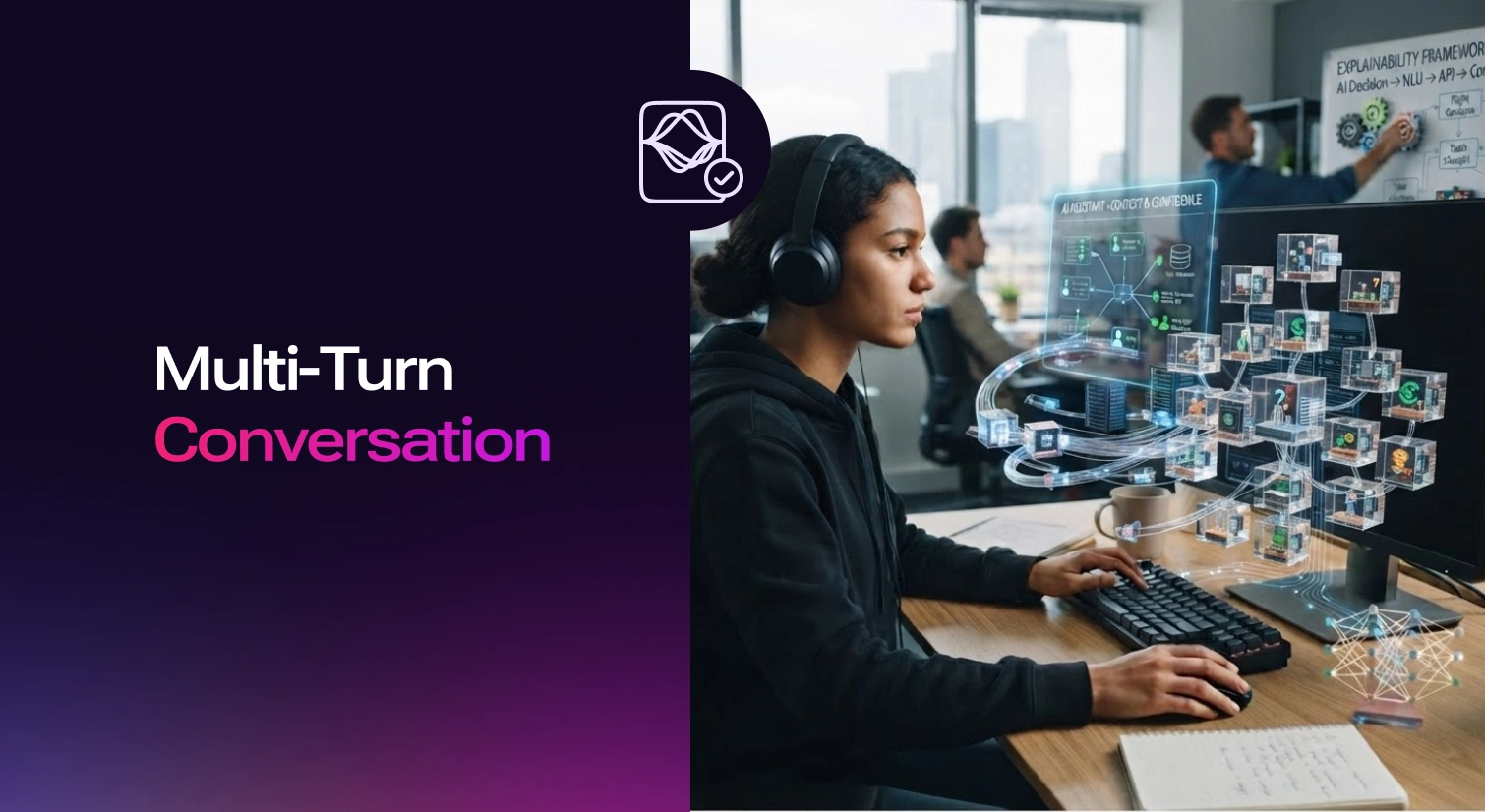
No. Many chatbots are rule-based and run on scripts or decision trees without understanding intent in a human conversations. Conversational AI is a more advanced approach that can interpret language, context, and meaning across multiple turns in a conversation through natural language, artificial intelligence to save customer service costs.
Can Chatbots be categorized under conversational AI?
Some can, but not all. A chatbot that uses intent detection, context tracking, and AI-driven language understanding can fall under conversational AI, but a purely rule-based chatbot is usually considered a simpler, separate category.
Are rule based Chatbots or Conversational AI better for customer support?
For basic FAQs and simple requests, chatbots are often sufficient and cost-effective. For complex support that needs context, follow-ups, and higher resolution rates before handing off to an agent, conversational AI is usually the better fit.
Can conversational AI platforms replace chatbots?
In many businesses, conversational AI can handle most tasks a chatbot can, but replacing chatbots isn’t always necessary. If your needs are simple and stable, a chatbot may remain the more efficient solution, while conversational AI becomes valuable when complexity, scale, or experience requirements increase. If it's just to understand human language and solve customer queries, then an AI chatbot woul suffice.

.webp)
.webp)