What is Branded Calling, Branded Called ID Explained



When over 72% of US adults do not answer calls from unknown numbers, every unanswered call represents a missed appointment, a failed fraud alert, or a lost sale. Branded calling is changing that equation, and fast.
In this blog we discuss what is brand calling, how does it work, why it matters, and how to get started.
Key Takeaways
- Branded calling is a telecommunications feature that displays a business's name and logo on recipient's smartphones, replacing anonymous digits with a verified business name, logo, and call reason on the incoming call screen. This dramatically improves answer rates-some deployments report increases of over 100%.
- Modern branded caller id relies on authenticated, stir shaken-compliant rich call data rather than outdated CNAM databases, helping phone companies filter out spoofed and unwanted calls while protecting legitimate business identity.
- Branded calling is most impactful for high-value phone calls-financial services fraud alerts, healthcare reminders, delivery updates, and payment reminders-where missed calls carry real cost. Customers are more likely to answer important calls like healthcare appointments and delivery updates when they see a verified business identity.
- Enterprises typically enable branded calls through an authorized partner or service provider that vets the brand, manages number registration with carriers, and monitors brand reputation and call performance over time. Branded calling helps businesses rebuild trust with consumers across every outbound interaction.
What is branded calling (and why it suddenly matters)?
Branded calling (or branded caller ID) is a telecom feature that lets businesses display their verified company name, logo, and a brief reason for calling directly on the recipient's mobile screen. It replaces the generic "Unknown Caller" label with trustworthy information, which raises answer rates and customer confidence.
By the mid-2020s, the phone call had a trust problem. Billions of robocalls flood U.S. consumers each month. In 2023, consumers lost $10 billion to phone-based fraud, and the FTC launched Operation Stop Scam Calls in July 2023 to address the crisis. Therefore, most people now treat any call from an unknown number as suspicious. Answer rates for unbranded outbound calls have dropped significantly, leaving enterprise businesses struggling to reach the customers they serve.
Branded calling solves this by replacing a bare 10-digit phone number with a verified display of the company name, a logo, and an optional call reason on the incoming call screen. It is a telecommunications feature built specifically for business-to-consumer and enterprise use, not for ordinary consumer-to-consumer calls. When a business places an outbound call through a branded calling service directly, the recipient sees exactly who is calling and why they are calling, before they decide to pick up.
Unlike legacy caller id and CNAM databases, branded calling is tied to an authenticated business identity managed within carrier or industry-led registries. Branded Calling ID is governed by CTIA standards, and the branded calling id ecosystem now spans major U.S. carriers-AT&T, Verizon, and t mobile-with international operators in Canada, the UK, and Germany joining through ecosystems like Hiya and TNS. Voice service providers and phone companies worldwide are adopting this standard to deliver trusted, authenticated outgoing calls at scale.
How a branded call appears to your customer
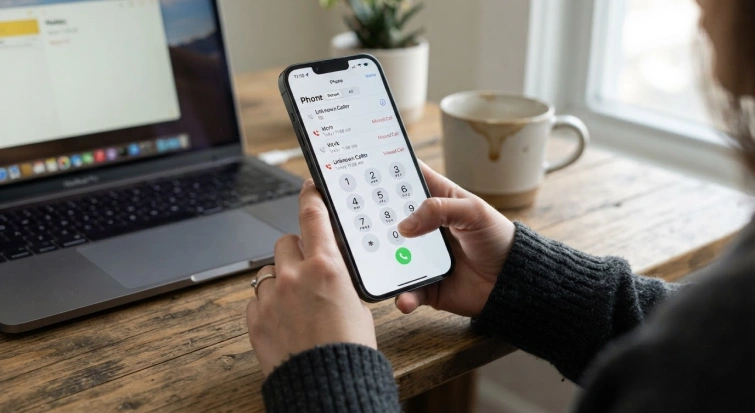
Imagine a patient waiting for lab results. Their phone rings. Instead of a random number or a "Spam Likely" label, the screen shows "City Health Clinic," with a recognisable logo, and the words "Your Lab Results Are Ready." This context changes everything. The customer is able to recognize the caller instantly and decides to answer.
The name, logo, and call purpose is displayed on the recipient's device during a branded call. Typical branded calling information on modern smartphones includes a verified name, a brand mark or logo, a call reason such as "Fraud Alert," "Appointment Reminder," or "Delivery Update," and the underlying caller id number. Branded caller id can include up to 32 characters for display, giving businesses enough room for a clear, recognisable business name.
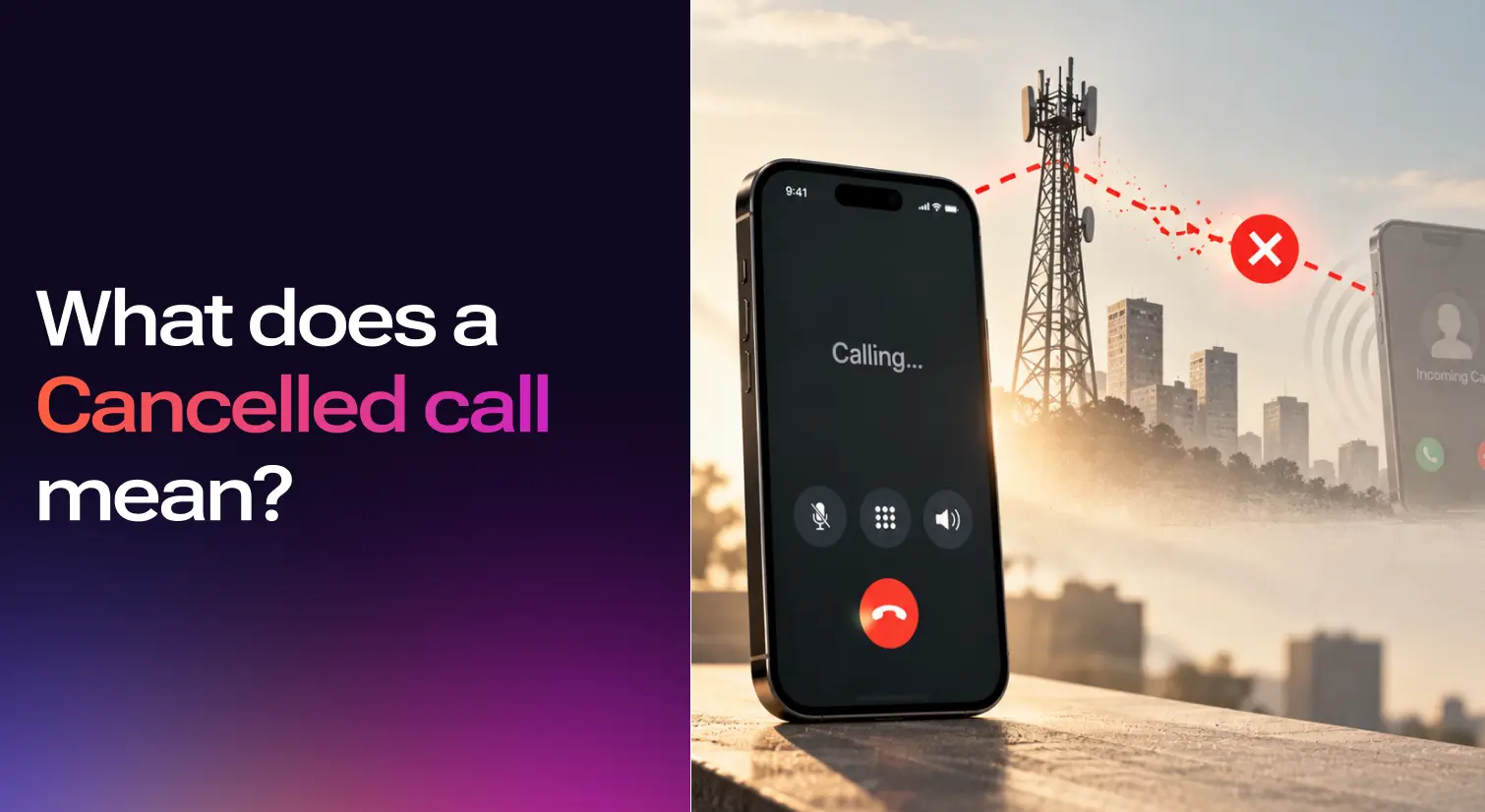
Let's compare this to an unbranded call. With the lack of a branded call display, the same call might appear as "Unknown," "Wireless Caller," or "Spam Likely", causing them to not pick up the calls due to a lack of trust. Two-thirds of adults trust branded calls more than unknown numbers, so the difference in consumer behaviour is huge.
When using branded calling, device and the OS differences matter. Android phones generally support full rich call data-display names, logo, and call reason. On Apple/IOS devices, the display can vary by version and settings, sometimes showing only a verified name and number without a logo.
How branded calling works?
Understanding how branded calling works requires looking at three layers: identity verification, call authentication, and carrier-level rendering. Together, they ensure that the right business name and logo accompany each outgoing call to the recipient's device.
Business onboarding follows a structured vetting process:
- The enterprise registers its legal entity-business name, address, documentation-with an authorised partner or branded calling vendor.
- Know Your Customer (KYC) verification confirms the business is legitimate and independently vetted.
- The business associates its business phone numbers with the brand, proving ownership or valid lease agreements.
- Logo assets, approved display names, and call reason templates (e.g., "Appointment Reminder," "Delivery Update") are submitted to the registry.
When an outbound call is placed, the originating service provider attaches a stir shaken token to the SIP INVITE and references standards based rich call data stored in the branded calling platform. Branded calling uses STIR/SHAKEN protocols for call authentication, cryptographically signing the call to assert the caller's identity.
To explain this in simple terms, this is a set of telecom standards US carriers use to cryptographically sign and verify that a call genuinely originates from the number it claims, making the caller ID hard to duplicate.
On the terminating side, phone companies validate the stir shaken signature, retrieve the branding data, and render the branded caller id on the subscriber's phone. The call's branding data is retrieved from a centralised database maintained by the ecosystem. For customers outside supported networks, calls may still benefit from improved spam scores and fewer "unwanted call" flags, even if the full branding does not appear.
Branded calling vs legacy caller ID and CNAM
Brand caller ID has evolved significantly. For decades, CNAM (Caller Name) databases were the primary mechanism. Previously, when you received an incoming call, the terminating carrier queried a third-party database and displayed a short text name-typically limited to about 15 characters-alongside the phone number. However, they had some shortcomings:
- Names that were displayed were frequently outdated or inaccurate.
- There is no logo, no call reason, and no cryptographic verification.
- As the calling party identity is not strongly validated, spammers and spoofers exploited the system to impersonate legitimate businesses.
- This created trust issues with a customer and made it harder for a genuine business caller to reach customers.
Branded calling replaces or supplements CNAM with carrier-verified rich call data. Brand assets-verified name, logo, and call purpose-are tied to authenticated numbers and updated centrally within a single uniform ecosystem. This ecosystem engineered for accountability ensures that only businesses that have passed verification can display their brand. The result is consistency, security, and brand control across carriers and devices.
Many branded calling services sometimes still use CNAM for older devices and networks. However, enterprise customers have now increasingly prioritised branded calling id for its security advantages and superior call display capabilities.
STIR/SHAKEN, authentication, and protection from spoofing
STIR/SHAKEN is a mandated protocol for caller id verification, developed to combat illegal robocalls and caller id spoofing following FCC and industry initiatives. The framework creates a cryptographic "passport" for each call that lets terminating carriers verify that the caller id number has not been tampered with in transit.
Branded calling uses STIR/SHAKEN protocols for call verification: only authenticated calls from vetted businesses can reliably display rich, trusted branding. A spoofed number cannot legitimately obtain that branding because it would fail the attestation check.
What are the business advantages of using branded calling?
When most outbound voice calls arrive from an unrecognised number, 76% of users would answer calls with name and logo displayed. Every unanswered call means a missed appointment, a failed collection attempt, or a lost conversion - leading to lost customers.
Branded calling helps businesses enhance customer engagement and improve trust in phone communications. They provide contextual information such as the reason for the call, aiding in the customer decision-making process.
Across published case studies, branded calling increases answer rates by over 100% in some deployments. Healthcare organizations have reported 41% lifts. Insurance firms have seen answer rates jump from 15% to 25%-a 66% relative increase.
Here are some of the benefits:
- Fewer repeat calls: AI voice agents spend less time redialing, therefore reducing the cost per contact.
- Higher conversion: when customers answer, conversations happen and information is shared more likely with branded calling.
- Stronger brand perception: branded calling reinforces brand recognition on every outbound call, signalling to customers that the company invests in secure, transparent communication.
The highest ROI comes from prioritising branded caller id for high-value or time-sensitive calls: financial services notifications, healthcare outreach, logistics coordination, and payment reminders where each missed call has a measurable cost.
Branded Calling Use cases & Industry Examples
Branded calling is most effective in sectors where trust, urgency, and regulatory scrutiny run high. Here are some of the verticals where branded calling can see the greatest impact.
Financial services
Banks, credit unions, and card issuers use branded calls for fraud alerts, suspicious-transaction checks, loan-status updates, and collections. A verified branded caller id reduces hang-ups and helps prevent customers from sharing sensitive data with fraudsters using spoofed numbers. Verizon reported a 25% jump in sales line answer rates after deploying branded calling with name logo and call reason.
Healthcare
Hospitals, clinics, and telehealth providers improve attendance when patients see the provider's verified name on their screen. One nationwide U.S. healthcare provider saw a 41% increase in answer rates, directly reducing missed appointments and improving care outcomes. Healthcare organizations benefit enormously because missed calls in this sector can mean delayed diagnoses or skipped treatments.
Retail, logistics, and home services
Branded calls keep customers informed about order status, delivery windows, and technician arrivals-cutting inbound "Where is my package?" volume. Twilio data from the UK, Canada, and Germany showed answer rates climbing from about 79% to nearly 95% for branded delivery notifications.
Public sector and utilities
Government agencies, municipalities, and energy companies use branded calling for outage alerts, safety notifications, and billing issues where legitimacy is paramount. Trusted calls in these contexts can be the difference between timely evacuation and a missed warning.
Implementing branded calling: how to get started
The journey from unbranded to branded calls follows a clear process: assess needs, choose an ecosystem or provider, complete vetting, configure branding, and monitor call performance.
1. Pick engagement models
Enterprise businesses can work through their existing voice service provider, engage an authorised partner within a branded calling id ecosystem, or use specialised branded calling vendors integrated with carriers. Businesses must register with a vetted provider for branded calling, and businesses must register their phone numbers with a branded calling provider before any branding can be displayed.
2. Key onboarding steps:
- Collect corporate documentation-legal business name, trademarks, proof of number ownership.
- Complete Know Your Customer verification so your business is independently vetted.
- Submit logo files (format, size, color variants per carrier requirements) and approved display names within the character limits.
- Define call reason templates for each campaign or line of business-"Appointment Reminder," "Fraud Alert," "Delivery Update."
3. Define branding assets
Branded caller id can include up to 32 characters, so keep your caller name concise and recognisable. Logo files typically require specific resolution and transparency settings; your service provider will supply the specs.
4. Set KPIs early
Establish targets for answer rates, call completion, spam labels incidence, and revenue or operational metrics. Run A/B tests-branded versus unbranded, different call reason wording, varied timing-and optimize continuously. Typical activation timelines range from a few business days for a small number of lines to several weeks for larger, regulated enterprises with complex number registration requirements.
Governance, compliance & handling unwanted calls
Carriers, regulators, and branded calling ecosystems enforce strict rules to protect consumers from abuse. Even the most sophisticated branded call display does not exempt a business from its legal obligations.
Compliance expectations include:
- Adherence to TCPA and local telemarketing laws.
- Honouring national and internal Do Not Call lists (DNC)
- Maintaining transparent opt-in and opt-out processes for marketing communications.
Branded calling does not override consumer protections. Subscribers can still block, report, or filter branded calls they consider irrelevant or intrusive. If a business places calls that generate high complaint rates, carriers or analytics providers may impose limits, apply spam labels, or remove the branded call display entirely.
Ecosystem safeguards include Know Your Customer checks, campaign approval processes, volume and frequency limits, and ongoing monitoring. The vetting process is designed to ensure that branded caller id is not misused for spam or fraud. Businesses should coordinate with their service provider on complaint handling, remediation when numbers get mislabeled, and ongoing reputation management.
The bottom line: branded calling earns trust only when businesses use it responsibly. Aggressive or deceptive use will damage brand reputation faster than any spam label.
Future of branded calling and rich call data
Branded calling is part of a broader shift toward "trusted voice"-a future where phone calls carry richer, more interactive, and fully authenticated information. To stay ahead, enterprise customers should understand where the landscape is heading.
Rich call data features are expanding beyond name and logo. Emerging capabilities include dynamic campaign-specific messaging, post-call experience integration, and potential links to contact cards or messaging apps. The goal is to increase customer engagement at every stage of the call lifecycle.
Industry bodies such as ATIS, CTIA, and global operator forums are refining guidelines for cross-network interoperability and consistent branded call presentation. This industry led collaboration aims to ensure that a branded call looks and feels the same regardless of which carrier or device the recipient uses.
Enterprises now use real-time feedback on answer rates, spam labels, and call outcomes to fine-tune call timing, branding, and call reasons. The data loop between answered calls and campaign design gets tighter with every cycle.
Branded calling is not a short-term fix for robocall fatigue. It is the long-term foundation for secure, identity-rich voice communication-one where every legitimate business caller can reach its customers with confidence, and every consumer can trust the calls they receive.
Branded calling and AI voice agents: Compliance in 2026
Here's where branded calling gets more interesting than any of the vendor explainers admit. A growing share of outbound calls are now placed or answered by AI voice agents, and that collides with a fast-moving legal picture that branded caller ID does not resolve on its own.
In February 2024 the FCC ruled that an AI-generated or cloned voice counts as an "artificial or prerecorded voice" under the Telephone Consumer Protection Act (TCPA). Calls using synthetic voices need prior express consent for informational calls and prior express written consent for marketing, the same tier as any robocall, regardless of how human the voice sounds.
This is where branded calling and AI voice agents fit together, and where it's easy to get the relationship wrong. Branded caller ID directly supports the accurate-caller-ID mandates: it proves who is calling and is the opposite of spoofing. Verifying your identity on the screen and having permission to make the call are two separate requirements.
If you run AI voice agents behind branded numbers, you need both: a verified identity that gets the call answered, and a compliant consent and disclosure posture for the conversation that follows. Treating a branded logo as if it were a compliance shortcut is the mistake to avoid. Murf AI's voice agents provide your business with both - an identity that is trustworthy through branded calling.
The practical read for 2026: build the identity layer now with branded calling, and pair it with consent records and an AI-disclosure practice that assumes the stricter interpretation. The regulatory direction points toward more disclosure, not less, and the businesses setting that up early are the ones that won't have to rebuild their calling stack later.
Answering the call, not just getting picked up
Branded calling solves the first half of the problem, getting people to answer. The second half is what happens next. If your team runs outbound or inbound calls at scale, Murf's AI phone agents and AI phone answering handle the conversation once the call connects, working alongside your telephony stack.

Frequently Asked Questions
What is branded calling?
.svg)
Branded calling is a service that displays your verified business identity, your company name, logo, and a reason for the call, on the recipient's phone screen before they answer. It uses carrier-level authentication so the display can't be spoofed the way a standard caller ID can.
What is branded caller ID, and is it the same as branded calling?
Yes, in everyday use they mean the same thing. "Branded calling" and "branded caller ID" (sometimes shortened to BCID) both refer to showing verified name, logo, and call-reason information on an incoming call. Some vendors prefer one label over the other, but they describe the same capability.
How does branded calling work?
When you place a call, your provider authenticates it using STIR/SHAKEN and attaches Rich Call Data containing your brand elements. The recipient's carrier verifies the cryptographic signature before the call connects, then displays your verified identity if it passes.
What's the difference between branded caller ID and CNAM?
CNAM shows only an unverified text name pulled from carrier databases, with no logo, no call reason, and no protection against spoofing. Branded caller ID shows verified, business-controlled name, logo, and reason, authenticated through STIR/SHAKEN. CNAM is the older, weaker system.
Do recipients need to install an app to see branded calls?
No. Branded calling runs through the carrier networks, so branded calls appear automatically on supported devices once your business is registered and verified. There's nothing for the recipient to download.
Does branded calling work on both iPhone and Android?
Yes, where the carrier and device support the standard. Display works on both iOS and Android, and carrier support has been expanding, though coverage still varies by network and handset.
How much does branded calling cost?
There's no universal price. Cost depends on vetting, the number of registered identities, and your call volume, priced per call or by subscription. Most providers quote based on your specific traffic rather than publishing a flat rate.
How do I get branded calling for my business?
You register your business, brand assets, and approved call reasons with a provider that acts as your Originating Service Provider. After the vetting authority verifies your identity, your branded information is authorised to display on calls from your registered numbers.
Does branded calling stop call spoofing?
It makes spoofing far harder. The STIR/SHAKEN signing behind branded calling cryptographically verifies that a call comes from the number it claims, so scammers can't easily fake your branded identity. It's a strong deterrent rather than an absolute guarantee across every network.
Which industries benefit most from branded calling?
Any business that relies on outbound calls and loses money when they go unanswered: financial services, healthcare, collections, telecom, legal and professional services, and retail or utilities with high call volumes.