What Is a Warm Transfer Call? (And How to Do it Right)


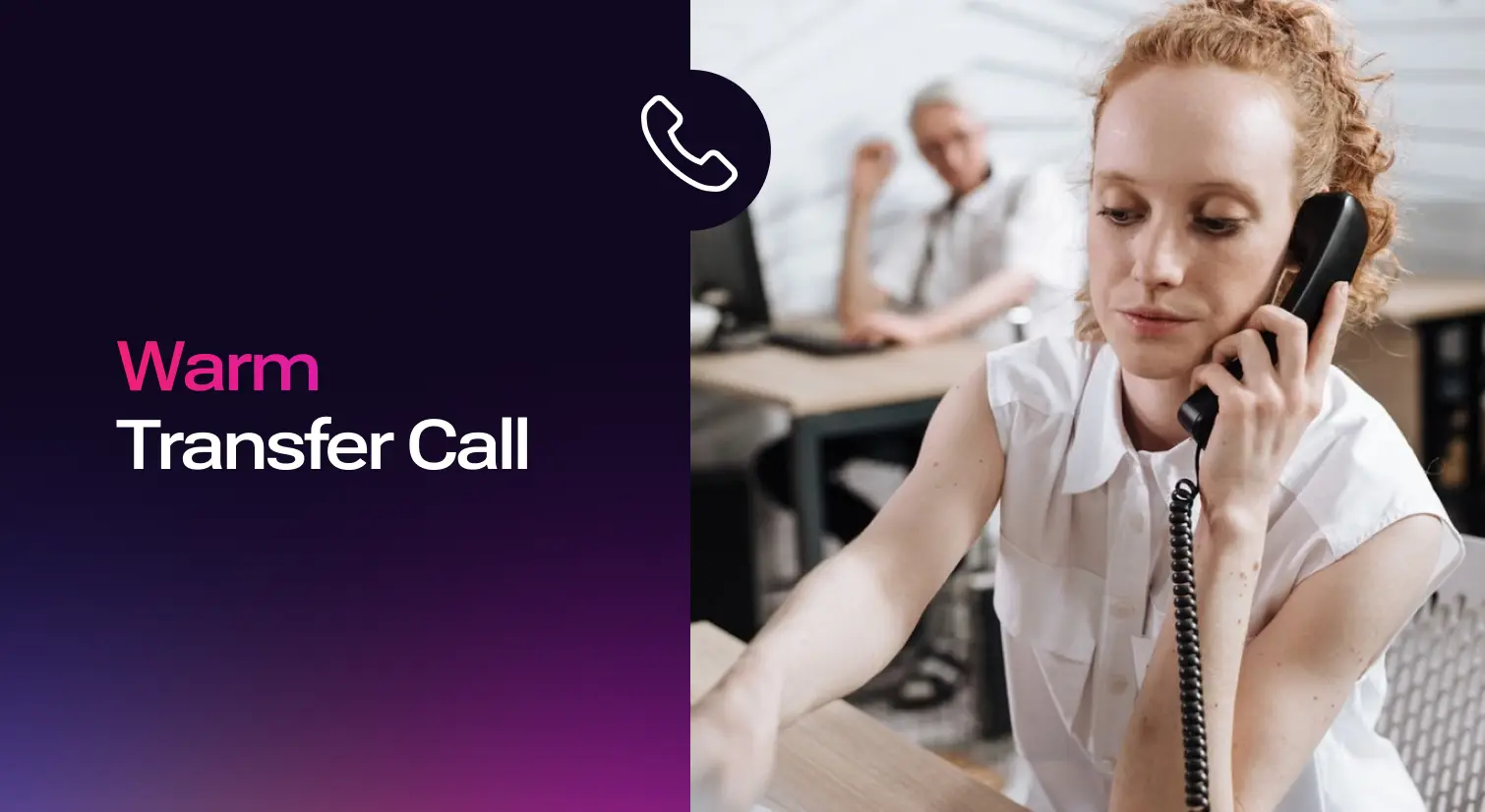

A customer calls about a billing issue with a feeling of anger, confusion and frustration. You figure out they need the accounts team, so you initiate a call transfer. An agent with no context about the customer or the issue picks up, says "Hello? How may I help you?" and the customer has to repeat information from scratch. They're angrier than when they started the call.
A warm transfer call is when the agent on the line with the customer provides a context for the transferring agent first, briefs them on the situation, and only then connects all three parties. The customer doesn't have to repeat themselves. The receiving agent is ready with all the information and the context. The handoff is proactive and designed to improve customer satisfaction.
Also called an attended transfer, soft transfer, consultative transfer, or live transfer, the names depend on the platform, but the process is the same.
What is a warm transfer call?
A warm transfer call is when the call center agent transfers a customer call to another agent with the complete information about the customer and the issue they are facing. This results in enhancing the customer experience. The customer does not have to repeat the issue or provide the same identifying details they did with the first agent. By making the customer feel heard and understood you are building the brand trust and goodwill that is one of the the most valuable assets of a business.
With a warm transfer call, the sequence goes:
- The original agent tells the caller they'll be transferred and puts them on hold briefly.
- The first agent reaches the receiving agent internally.
- The first agent explains: who's calling, what the issue is, what's been tried, and any relevant customer information.
- The receiving agent confirms they're ready.
- All three join the call where the first agent makes introductions, then drops off.
The caller never repeats their name, their account number, or what went wrong. The receiving agent starts the conversation with full context, creating a more personalized experience.
Cold transfers skip steps 2–4. The receiving agent picks up with a blank slate.
What is a cold transfer call?
A cold transfer call also known as a blind transfer is simply a customer call that is transferred from one agent to another without any context about either the customer or the issue. As the name suggests the agent that attends to to the customer is "blind" to information relevant for a resolution.
It might sound that cold transfers are bad and warm transfers are good; however, that is not always the case. There are certain situations where cold transfers are a preferred much less than avoided or disliked. Imagine you are in an emergency where getting to the right person is more important than being put on hold and waiting or where you need a technical solution to your issue and the agent you are talking to is from sales and has no clue how to resolve your issue.
Warm Transfer vs Cold Transfer Calls: An Overview
Neither is always right. The mistake most contact centers make is treating one as the default and the other as the exception, instead of training agents to read the situation and use their judgment.
Why warm transfers matter: Key statistics
The impact of warm transfers goes beyond smoother conversations. Research and industry benchmarks consistently show that customers respond better when agents provide context before a handoff.
- According to SMQ's benchmarking report approximately 19% of customers are transferred to another agent during support calls, making transfer quality a significant part of the overall customer experience.
- According to a PwC survey, 86% of customers are willing to pay more for a better experience, showing that great support isn’t just a nicety but it’s a necessity.
- Bain & Company reports that boosting customer retention rates by just 5% can increase profits by up to 95%.
- Customers are 15% less likely to abandon a company after a warm transfer compared to a cold transfer.
- Cold transfers often result in customer satisfaction scores that are up to 12% lower than warm transfers.
For contact centers focused on retention, these numbers highlight an important reality: The transfer process is not an operational detail. It's a customer experience moment that directly affects satisfaction, loyalty, profits and brand perception.
When to use a warm transfer
Situation 1: When the caller is upset. An emotional caller who gets cold-transferred will almost certainly escalate. Taking 90 seconds to brief the next agent and telling the caller you've done it, reduces customer frustration and helps create a better customer experience.
Situation 2: In a scenario where the issue is complex or multi-touch. If a customer has explained a layered problem, the receiving agent needs that context to continue where things left off. Without it, you're starting the clock again and increasing overall handling time.
Situation 3: The caller has called before about the same issue. A repeat call means something wasn't resolved. A warm transfer stops the caller from re-explaining a problem they've already described once, twice, or three times.
Situation 4: The account is high-value or VIP. For a key account, the briefing is a basic expectation. Routing them blind signals that your coordination is poor and can hurt your brand image.
Situation 5: The customer is moving from a digital channel to voice. If a customer started in chat or email and is now calling, they've already explained the issue in writing. The receiving agent should have that context before picking up and if your AI voice agent handles the first touch, the handoff summary can be automated.
When a cold transfer is fine
Not every call warrants the extra 90 seconds. Some situations where cold is the right call:
Situation 1: The caller is asking for a specific person by name. "Can I speak to Marcus in accounts?" they want to be routed, not walked through an introduction. Put them through with a simple call to another extension.
Situation 2: The contact center is in a surge. When every agent is running full, getting the caller to someone fast matters more than the briefing. In those cases, communicate clearly - tell the caller who they're going to and what to expect - then make the cold transfer clean.
Situation 3: It's a misdial or wrong department. The caller reached the wrong number. The warm transfer overhead adds nothing. Route them, tell them who they're going to, and cut it.
How to do a warm transfer call? (Step by Step)
- Tell the caller what's happening. "I'm going to put you on hold briefly while I get the right person on the line. I'll be back in under a minute." Don't disappear set the expectation.
- Ask for permission before transferring. "Would it be okay if I connect you with our accounts specialist who can help further?" A warm transfer requires transparency. Getting the caller's agreement helps maintain trust and gives them a sense of control over the interaction.
- Put the caller on hold. Use your platform's hold feature, not mute. The caller gets hold music, not dead air.
- Reach the receiving agent. Call their extension, use internal chat, or merge via your phone system's transfer feature.
- Brief them. Name, issue, what's been tried, any emotional context, and a quick note on the customer's query. Under 30 seconds.
- Introduce the parties. "I have [caller name] on the line - [caller name], I'm handing you to [agent name] who handles [area]. I've already filled them in." Then drop off.
- Confirm the transfer is complete. Make sure the caller is with the receiving agent before ending your leg of the live call.
Warm transfer script templates
Copy-paste these for your team. Adapt names and departments to your setup.
AI-powered warm transfers: The handoff-to-human
Every argument for warm transfers be it context continuity, caller satisfaction, first-call resolution gets stronger when the first leg of the call is handled by an AI call center voice agent.
The classic objection to warm transfers is Average Handle Time (AHT). The 60–90 second briefing adds time per call. At scale, that adds up. But what if the briefing could happen automatically? That objection only holds when the briefing happens in real time, verbally, by a human who just finished speaking with the customer.
When an AI voice agent handles the first leg of the call, it gathers the caller's name, account details, call back number, and issue description automatically, identifies the right escalation path, and passes a structured pre-briefing summary to the human agent before the three-way connection is made.
The human reads the summary in a few seconds. The "warm" part of the transfer happens before they say hello. The caller gets continuity. The agent gets context. The AHT objection is gone.
This is what the industry calls a warm handoff to human and it's where conversational AI is changing the warm vs cold transfer debate. The tradeoff isn't fast versus thorough. It's: Let AI carry the context so humans can focus on the conversation.
For high-volume teams, this removes the operational pressure that leads most managers to default to cold transfers. Throughput, efficiency, and quality stop being in tension when the briefing happens at a different layer.
Best Practices for Warm Transfer Calls
Many teams focus on the handoff itself and forget what happens afterward. For complex issues, escalation calls, or high-value accounts, consider following up once the issue is resolved.
A short follow-up call, email, or message confirms that the customer's problem was addressed and demonstrates accountability. This simple step can further improve customer satisfaction, strengthen customer loyalty, and reinforce a positive brand image long after the transfer is complete.

Frequently Asked Questions
What is a warm transfer call?
.svg)
When an agent handling a customer call reaches the receiving agent first, briefs them on who's calling and why, and then connects all three parties, that's a warm transfer call. The customer doesn't repeat their issue. It contrasts with a cold (or blind) transfer, where the call is passed with no briefing.
What is the difference between a warm and cold transfer?
In a warm transfer, the first agent speaks to the receiving agent before the caller is connected. The receiving agent knows the context before picking up. In a cold transfer, the first agent routes the call directly, no briefing. Cold transfers are faster; warm transfers produce better outcomes on complex or emotional calls.
When should you use a warm transfer vs a cold transfer?
Warm transfer: the caller is upset, the issue is complex, the customer has called before about the same problem, the account is high-value. Cold transfer: the caller wants a specific person by name, the center is in a volume surge, or the call was a wrong-department misdial.
What does warm transfer mean in a call center?
In a call center, a warm transfer is a human-to-human handoff where the first agent briefs the receiving agent before the caller connects. It reduces repeat-explanation frustration and improves first-call resolution on complex issues. The term is interchangeable with "attended transfer."
How warm transfer calls work?
Tell the caller you're putting them on hold briefly, reach the receiving agent, brief them on the caller's name and issue in under 30 seconds, then introduce both parties before dropping off. Most modern call center platforms include a transfer button and attended transfer option within the management system.
What is an example of a warm transfer?
A caller contacts billing support about an unexpected charge. The billing agent determines this needs the accounts team. Rather than routing blindly, they put the caller on hold, reach the accounts team, explain the dispute, then connect all three — introducing the caller to the accounts agent who is already ready to help.
What is a warm handoff in customer service?
A warm handoff is a incoming call transfer where the receiving party is informed and ready before the handover happens. In customer service, the receiving agent gets a briefing with customer details, issue history, and relevant context before speaking to the customer. This allows the new agent to continue the conversation without asking unnecessary clarifying questions.
What are the benefits of warm transfers for customer experience?
They eliminate repeated explanations, which is the single most common frustration on transferred calls. They improve first-call resolution because the receiving agent has context. They also reduce call abandonment as customers are less likely to hang up when they know the next person is already prepped and ready.
Can AI do warm transfers?
Yes. An AI voice agent handles the first leg by gathering caller details, identifying the issue, routing to the right team member or live agent, and then passing a structured pre-briefing summary before the human takes over. This makes the handoff faster and more accurate than a human-to-human briefing, without adding AHT.
What is a warm transfer script and why does it matter?
A warm transfer script is a short template for what an agent says to the receiving agent (the briefing) and to the caller (the introduction) during a handoff. Unscripted warm transfers are inconsistent as agents give different amounts of context and create different caller experiences. A script makes the process repeatable, improves calls handled quality, and keeps briefing time under 30 seconds.