Sub vs Dub Explained: A Complete Guide to Subbed vs Dubbed



The sub vs. dub debate centers on how you experience foreign language content. Subtitles keep the original audio track while displaying translated text on screen, while dubbing replaces the original voices with a new audio track in your language.
This choice matters when you watch anime, movies, or any international content. Each format offers distinct advantages depending on what you prioritize: authenticity, convenience, accessibility, or language learning.
Geographic preferences vary widely, with some countries favoring dubbing and others preferring subtitles.
This guide helps you understand both options so you can decide which suits your personal preferences, the content type you're watching, and your viewing context.
There's no universal answer, just the right choice for your situation.
What Do Sub and Dub Actually Mean?
When comparing subbing and dubbing, the distinction lies in whether content retains its original audio with translated text or replaces it with a localized voice track. Both formats serve the same goal of making content accessible globally, but they use entirely different approaches.
Let's understand the main differences between subtitles and dubbing and how they shape your entire viewing experience.
Subbed (Subtitles): What is It
_%20What%20is%20It.webp)
Subtitles display translated text on screen while keeping the original audio track intact. You hear the voice actors in the source language while reading the dialogue in your native language. This subtitling process preserves the original performances and cultural nuances embedded in how actors deliver their lines.
Subtitles appear most commonly in anime, foreign language films, and series distributed on streaming platforms like Netflix and Crunchyroll. Many viewers prefer subtitles because they maintain authenticity and allow you to hear the original actors' voices.
The translated text typically appears at the bottom of the screen, timed precisely to match the dialogue. Professional linguists handle the subtitling workflow to ensure accuracy and readability. English subtitles dominate international content, though streaming platforms now offer multiple language options.
Dubbed (Dub): What is It
_%20What%20is%20It.webp)
Dubbing replaces the original audio with new voice talent speaking in the target language. The dubbing process involves casting voice actors, translating and adapting the script, and recording new dialogue that syncs with mouth movements on screen.
Sound engineers keep the original music and sound effects while swapping only the dialogue track. Dubbing is especially popular for children's programming because young audiences often struggle to read subtitles quickly.
Animated content like cartoons benefits from dubbing because matching facial movements is easier than with live-action film. Many non-English speaking countries prefer dubbing over subtitles for their local language audiences.
The dubbing process takes more time and costs more than subtitles, but it creates a more accessible experience for casual viewers who want to focus on visuals rather than reading.
Key Differences Between Sub and Dub: Pros and Cons
Each format excels in different areas depending on what you value most. Knowing the key trade-offs between subtitles and dubbing can help you choose the best option for your needs. These differences span authenticity, convenience, speed, and accessibility.
For many viewers, the sub vs. dub debate comes down to immersion versus convenience rather than a clear-cut superior option.
Audio Authenticity and Artistic Integrity
Subtitles preserve the original voice acting, allowing you to hear authentic emotions, vocal inflections, and cultural tone from the original actors' voices. You experience the genuine performances exactly as directors and voice actors intended them. This matters especially in dramatic films or anime where vocal nuances carry significant weight.
Dubbing can sometimes lose these subtleties because different voice talent interprets characters through their own lens. The dubbing process may alter emotional delivery or change how lines are emphasized.
Localization during dubbing can shift cultural references or modify jokes to fit the target audience better, sometimes straying from the original script. A lot of viewers who prioritize artistic integrity prefer subtitles because they maintain the authentic experience without compromising the creator's original vision.
Accessibility and Viewer Convenience
Dubbing improves accessibility by removing the need to read subtitles. This benefits casual viewers, children who read slowly, people with visual impairments, and anyone multitasking while watching content.
You can focus entirely on the visuals and facial expressions without dividing attention between the screen and translated text. Subtitles require you to read continuously, which can pull focus away from action sequences or important visual details happening on screen.
However, reading subtitles becomes easier with practice for regular viewers. Dubbed versions create a more seamless experience where the dialogue feels natural in your original language.
For global audience reach, dubbing often performs better in regions where reading habits differ or literacy rates vary. The convenience factor makes dubbing the preferred choice for family viewing and younger audiences.
Speed of Release/Availability
Subbed versions release much faster because the process of subtitling a video requires less production work. Creating subtitles takes only 2-4 hours per minute of content, making it ideal for weekly anime episodes or simulcasts. You get access to new content almost immediately after it airs in the source language.
Dubbing takes significantly longer, often requiring 1-2 weeks or more per minute of video content. Dubbing involves casting voice actors, scheduling recording sessions, matching the facial movements, and extensive post-production work.
This time-consuming workflow delays dubbed releases, sometimes by months. Traditional dubbing can take up to 15 times longer than subtitling when all stages are factored in.
Streaming platforms typically offer subtitled movies and shows first, adding dubbed versions later once production completes. This speed difference matters most for fans who want immediate access to new episodes.
Language Learning and Cultural Immersion
Subtitles are excellent for language learning because they allow you to hear authentic dialogue in the original language while reading translations. This dual input helps you develop phonetic understanding, expand vocabulary, and improve listening comprehension.
You gain exposure to natural speech patterns, different accents, colloquialisms, and cultural nuances that textbooks cannot teach. Watching foreign-language content with subtitles creates an immersive language experience that shows how native speakers actually use words in context.
Dubbing makes content easier for non-native audiences by presenting everything in their local language, but this convenience comes at the cost of losing cultural subtlety. You miss hearing how the Japanese language sounds or how South Korean S rank hunter characters speak in their native tongue.
For serious language learners, subtitles provide irreplaceable value in building familiarity with new language sounds and sentence structures.
Suitability by Content Type
Content type significantly influences whether dubbing or subtitles work better. For animated shows like anime, dubbing often suits the medium well because matching voice to animated mouth movements proves easier than with live-action film.
Fast-paced dialogue or action-heavy scenes can make subtitles difficult to follow, especially for slow-reading viewers who struggle to keep up. Dubbing lets you stay focused on complex animation without missing visual details.
In children’s animation, recognizable performances are crucial. Many fans even look up SpongeBob SquarePants voice actors to understand how dubbing shapes character identity.
However, for emotional scenes, culturally rich dialogue, or content with subtle wordplay, subtitles better preserve the original performances and cultural references. TV show dramas benefit from subtitles when the authenticity of delivery matters more than convenience.
Comedy presents unique challenges where dubbing may need to adapt jokes that don't translate literally, sometimes changing the humor's intent. Genre and pacing determine which format ultimately makes more sense for your viewing experience.
Accessibility and Inclusivity (Disabilities, Reading Ability)
Dubbing serves viewers with dyslexia, reading challenges, or visual impairments who find reading subtitles difficult or impossible. Those who prefer listening over reading benefit from hearing dialogue in their native language without cognitive strain.
Subtitles support hearing-impaired audiences through closed captions and SDH (Subtitles for the Deaf and Hard of Hearing), which include descriptions of sound effects and non-speech elements. Regular subtitles only show dialogue, while closed captions provide fuller accessibility by noting music, background noises, and speaker identification.
SDH subtitles work better than closed captions for international translation because they support more extensive character sets across different languages. Both formats play crucial roles in making video content accessible to global audience members with different needs.
The choice between dubbing and subtitles often depends on which disability or challenge you're addressing.
Translation Accuracy and Localization Issues
Subtitles typically preserve the original meaning, idioms, and cultural references more accurately than dubbing. Professional linguists who handle the subtitling process focus on direct translation that maintains the intent from the primary language.
You get closer to what characters actually say in the original script. Dubbing involves extensive localization where translators adapt jokes, simplify complex concepts, or change cultural expressions to resonate with the core audience.
This localization sometimes alters the original meaning to prioritize naturalness in the new language. Dubbing must also fit the translated dialogue within timing constraints and match mouth movements, forcing additional compromises in accuracy.
Research shows that human dubs have significantly lower translation quality than subtitles when these constraints apply. While modern AI tools improve contextual localization and the capture of cultural nuance, some meaning inevitably shifts during the dubbing process.
When to Choose Sub vs. Dub: What's Right for You?
Your choice between subtitles or dubbed versions depends on personal preferences, viewing context, and what you prioritize most. Consider factors like authenticity, convenience, your familiarity with foreign language content, and the specific type of media you're watching.
Neither option is universally superior; each serves different audience demographics and situations better.
When You Want the Original, Authentic Experience
Choose subtitles when you value hearing the original performances and cultural authenticity. Over 60% of viewers choose to watch with subtitles specifically for this reason. Subtitles let you experience the original dialogue exactly as voice actors delivered it, preserving emotions and cultural tone that dubbing sometimes misses.
This matters most for dramatic content where vocal nuances shape character interpretation. Film enthusiasts and cinephiles typically prefer subtitles to maintain artistic integrity and avoid localization changes that alter the original script.
When You Want Convenience and to Focus on Visuals
Pick dubbing when you prefer focusing entirely on the screen without reading. Dubbing removes the cognitive load of tracking subtitles, letting you appreciate facial expressions, animation quality, and action sequences fully.
This works especially well for multitasking or when watching with family members who struggle with reading speed. Casual viewers who want a seamless, relaxed experience without dividing attention between visuals and translated text benefit most from dubbed versions.
You Are New to Anime
First-time anime viewers often find dubs more accessible as an entry point. Dubs let you focus on understanding the story, characters, and visual style without the added challenge of reading quickly.
New anime viewers often explore cast comparisons, with searches for phrases like solo leveling voice actors helping them decide whether to start with the subbed or dubbed version.
Many popular anime like My Hero Academia offer excellent dubs with talented voice actors, so you won't sacrifice quality. Once comfortable with the medium, you can experiment with subtitles.
However, some beginners choose to watch with subtitles from the start to experience authentic Japanese performances. Try both formats early to discover your preference.
Content Type, Pace, and Context Matter
Genre significantly influences which format works better. Action-packed anime and fantasy shows benefit from dubbing because fast-paced scenes make subtitles hard to follow. Comedies and dramas often work better with subtitles to preserve nuanced performances and wordplay.
Consider your viewing situation too - subtitles suit focused, attentive viewing, while dubbing fits casual background watching. Animation generally dubs better than live-action film because matching mouth movements proves easier. The content genre, pacing, and your viewing context should guide your decision.
Murf AI: Dubbing with Precision
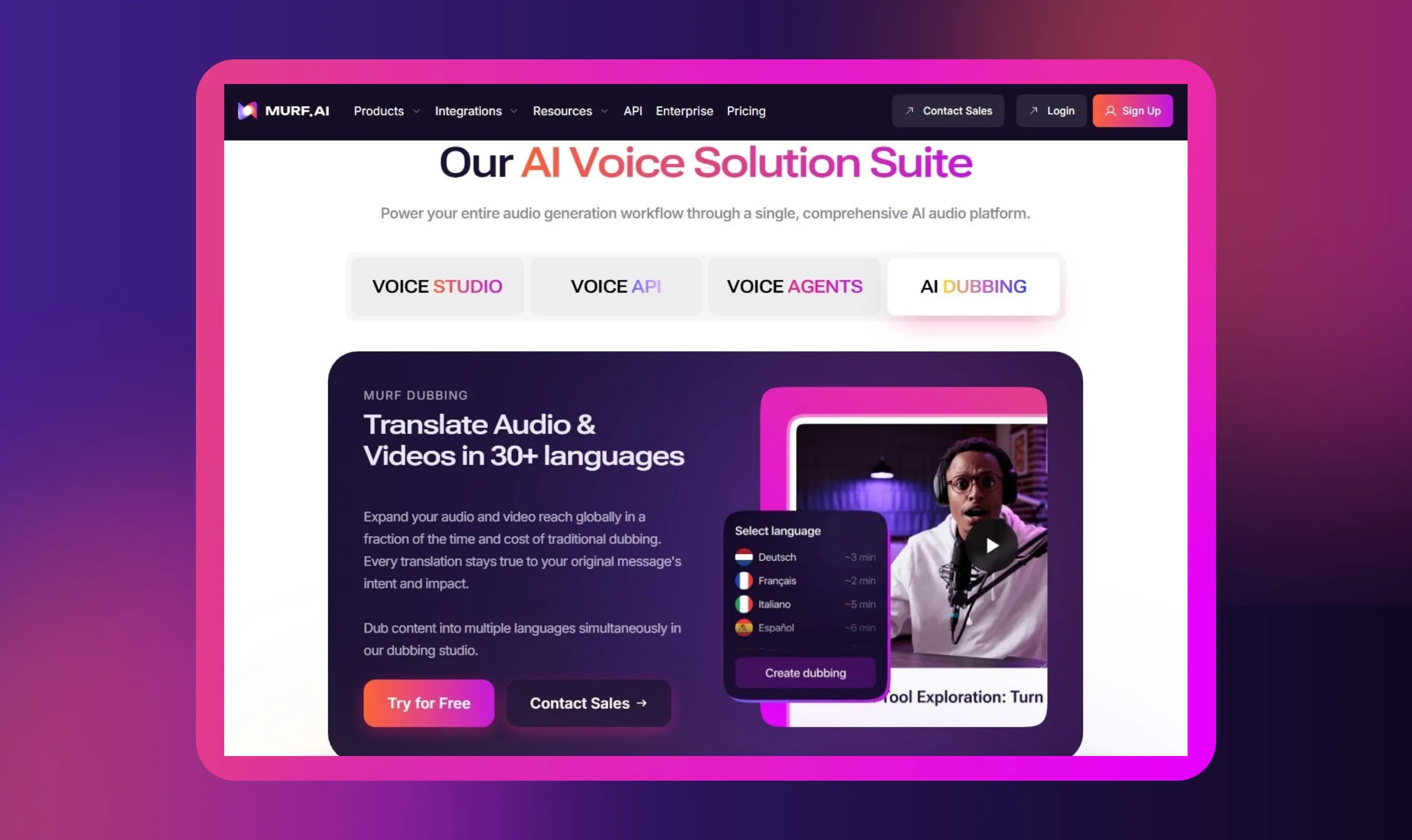
AI dubbing solutions like Murf are accelerating multilingual releases and reducing traditional dubbing timelines significantly. Murf's voice dubbing technology delivers accurate translations while retaining the original speaker's voice and tone across languages.
The platform's audio translator and video translator features enable creators to dub content into 40+ languages simultaneously, maintaining consistent delivery. AI improves lip-sync accuracy, tone-matching, and background retention while lowering production barriers for smaller studios.
This technology makes dubbed content more accessible worldwide without requiring extensive voice talent casting or time-consuming post-production. Murf's authentic AI voice cloning replicates speaker characteristics across different languages, reducing costs while maintaining quality.
Conclusion
The sub vs. dub debate has no universal winner. Your best choice depends on whether you prioritize authenticity, convenience, accessibility, language learning, or content type. Subtitles preserve original performances and cultural nuances, while dubbing offers seamless viewing without reading.
Both formats serve valid purposes for different audience demographics and personal preferences. Try both approaches with different anime and movies to discover what suits your viewing style. Respect that other viewers may prefer the opposite format for legitimate reasons.
Ultimately, the goal is enjoying foreign language content in whatever way enhances your experience most.
I hope this guide helped you settle the subbed vs. dubbed debate.

Frequently Asked Questions
Is subbed anime always better than dubbed anime?
.svg)
No, neither format is universally better. Subbed anime preserves original voice acting and cultural authenticity, while dubbed anime offers convenience and accessibility.
Modern English dubs for popular shows like Fullmetal Alchemist and Cowboy Bebop feature excellent voice actors who deliver strong performances. The "better" choice depends on your personal preferences and what you value most.
Should I watch sub or dub if I'm new to anime or don't understand Japanese?
Starting with dubs often works better for beginners because you can focus on visuals and story without reading quickly. English dubs for shows like My Hero Academia and Demon Slayer let you enjoy the animation and action while understanding dialogue naturally.
Once comfortable with anime, try subtitles to experience authentic Japanese performances. Experiment with both formats early to discover your preference.
Why do dubs not match subs?
Dubbing and subtitling are created by different translation teams with different constraints. Dubbing must match lip movements and fit timing precisely, often requiring adapted translations.
Subtitles prioritize accuracy to the original script but must condense text because reading is slower than listening. The dubbing process focuses on natural-sounding dialogue in the target language, while subtitles stay closer to literal translation.
Is sub or dub more accurate?
Subtitles are generally more accurate because they preserve the original meaning without timing constraints from mouth movements. Subtitle translators can translate directly from the source language without adjusting for lip-sync. Dubbing involves localization that adapts cultural references and simplifies expressions to fit the target audience, sometimes altering the original script. However, both formats serve different purposes rather than competing on accuracy alone.
Do subtitles/dubbing affect how I experience the story or emotions?
Yes, significantly. Subtitles preserve the original performances, letting you hear authentic emotions and vocal nuances that shape character interpretation. Dubbing can alter emotional delivery depending on how the voice talent interprets roles.
The choice affects immersion—dubbing lets you focus entirely on visuals and facial expressions, while subtitles require dividing attention between the screen and translated text. Your emotional connection often depends on which format feels more natural to you.
With modern AI dubbing tools, is the sub vs. dub debate outdated?
The debate continues but is evolving. AI dubbing tools like Murf improve lip-sync accuracy, reduce production time, and lower costs, making high-quality dubbed content more accessible worldwide.
However, personal preferences about authenticity versus convenience remain. AI is closing the quality gap in dubbing, but many viewers still prefer hearing original performances. The technology makes both options better rather than eliminating the choice.
.webp)

.webp)