Conversational LLMs: How Large Language Models Power Human-Like AI Conversations



Key Takeaways
- A conversational LLM is designed for dialogue, context awareness, and multi-turn conversations.
- It improves on traditional bots by adapting to real human language instead of relying on rigid scripts.
- Strong systems combine language models with memory, retrieval, workflows, and monitoring.
- Businesses use them for support, knowledge search, sales, education, and voice automation.
- Success depends as much on system design and business goals as it does on model quality.
Not long ago, most digital conversations with software felt mechanical. You typed a question, received a scripted answer, and the moment you asked something unexpected, the experience broke down. Traditional bots could follow rules, but they struggled with nuance, memory, and natural dialogue.
That is changing fast.
The rise of the conversational LLM has changed what people now expect from AI interactions. Instead of rigid decision trees, modern systems can understand natural language, maintain context, respond dynamically, and support real tasks across customer service, internal operations, education, sales, and voice experiences.
This matters because users no longer compare digital experiences only to direct competitors. They compare them to the best experiences they have anywhere. They expect software to understand follow-up questions, remember what they said earlier, and help them reach an outcome quickly.
A well-designed conversational system can reduce repetitive workloads, improve response speed, support teams at scale, and create more engaging user journeys.
What Is a Conversational LLM?
A conversational LLM is a large language model optimized for back-and-forth interaction. It is trained to understand prompts, interpret meaning, and generate responses that feel relevant, coherent, and natural across multiple turns of conversation.
Unlike older chat systems that matched keywords or followed fixed flows, conversational models can respond more flexibly. They understand that language is messy. People change direction, ask incomplete questions, refer to previous messages, and often express the same need in many different ways.
For example:
- User: "I need help with my subscription."
- Assistant: "Sure. Would you like to upgrade, downgrade, pause, or cancel it?"
- User: "Pause it for now."
- Assistant: "I can help with that. How long would you like to pause your plan?"
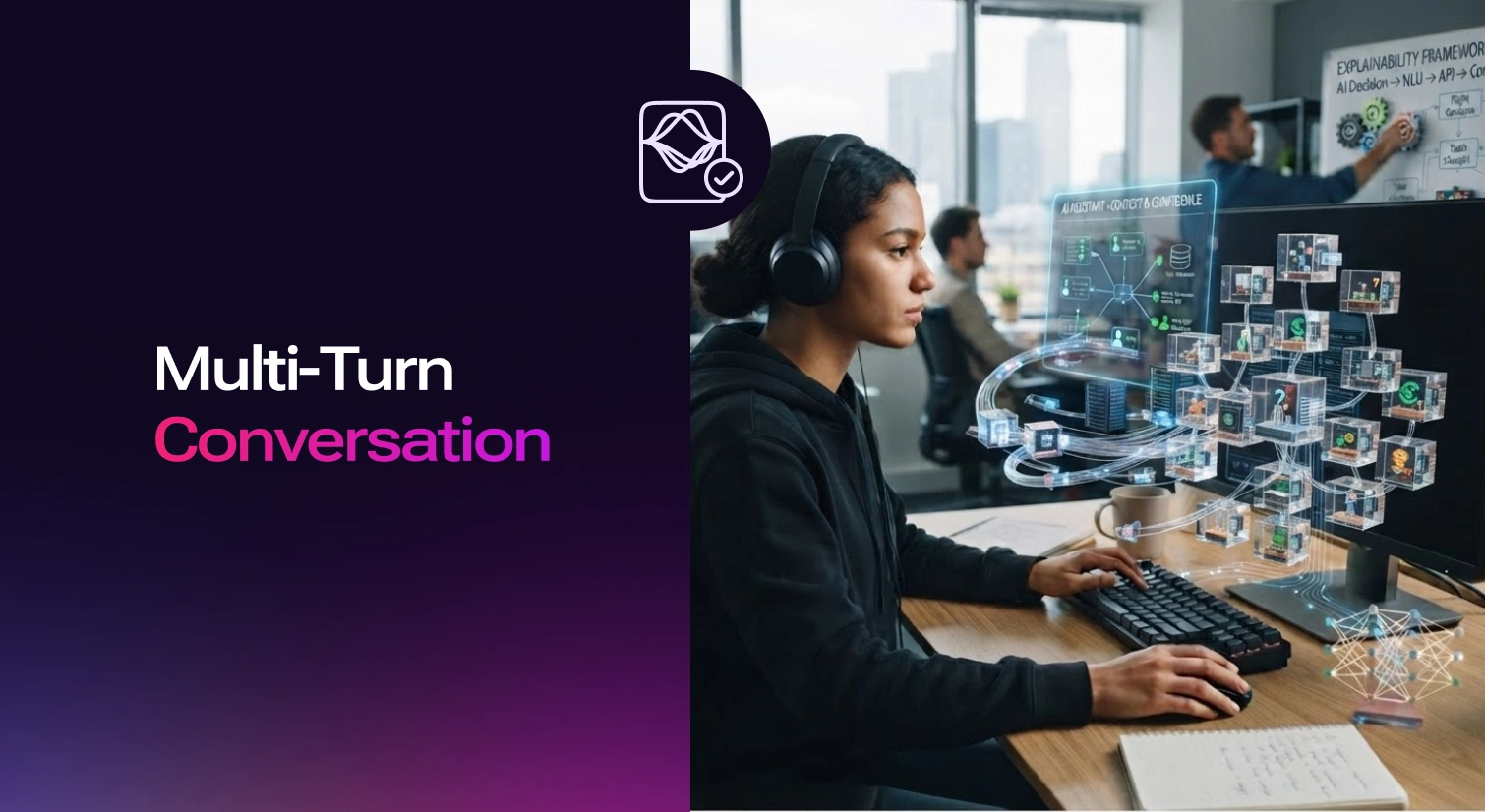
This works because the model understands the conversation as a connected journey rather than isolated messages.
That is why conversational LLMs are now central to many modern conversational AI products. They help software behave less like a tool and more like an intelligent assistant.
How Conversational LLMs Work
To the user, the experience feels simple: type a message, get an answer. Behind the scenes, multiple layers work together in milliseconds. Here is how Conversational LLMs work:
Input Understanding and Prompt Processing
Every interaction begins with user input. The system first interprets what the person is asking and what they likely want to achieve.
This stage may include detecting intent, understanding tone or urgency, extracting useful details such as names, dates, products, or locations, checking for unsafe or restricted requests, and formatting instructions for the model.
For example, consider these three messages:
- “Where is my package?”
- “My order still hasn’t arrived.”
- “Can you check the delivery status for order 4812?”
The wording is different, but the goal is similar. The system should understand that all three relate to order tracking.
Prompt processing is also critical. A prompt is not only the user’s message. It may include system instructions, such as "be concise," "use professional tone," "ask clarifying questions when needed," "only answer using approved company policy," and "escalate billing disputes to a human agent."
Context Management and Conversational Memory
One of the biggest reasons conversational systems feel more human is memory.
Without context, each message would be treated as new. That creates repetitive and frustrating interactions.
Imagine this exchange:
- User: "I need to reschedule my appointment."
- Assistant: "Sure. What date would you like instead?"
- User: "Friday morning."
A weak system may fail because “Friday morning” alone does not contain enough information. A strong system remembers the earlier request and continues naturally.
There are two common memory layers:
Long-term memory can create stronger personalization. For example, greeting returning users by name, remembering product preferences, continuing unresolved support issues, and suggesting relevant next actions.
However, memory should be designed carefully with privacy, consent, and data governance in mind.
Response Generation Using Transformer Models
At the heart of most modern systems is a transformer model. This architecture made major advances in natural language processing because it can understand relationships between words and context far better than earlier approaches.
Instead of selecting from pre-written responses, the model generates text step by step based on probability, context, and learned patterns from training data.
That enables it to answer questions, summarize documents, explain concepts, draft emails, translate languages, generate creative text, and hold multi-turn conversations.
For example:
- User: "Explain cloud computing like I’m 10."
- Assistant: "Imagine your games and files live on a giant computer on the internet instead of only your laptop. You can use them from anywhere."
The model did not retrieve a fixed script. It generated a response suited to the request.
Retrieval-Augmented Responses and External Knowledge
A language model can sound confident even when it is wrong. That is why many businesses combine models with retrieval systems.
In RAG conversational AI, the system first searches trusted sources such as policy documents, product manuals, databases, or internal knowledge bases. It then uses that information to generate a grounded response.
Example:
- User: "What is our updated parental leave policy?"
Instead of guessing from old training data, the system retrieves the latest HR policy document and answers based on that source.
This improves accuracy, trustworthiness, freshness of information, and compliance alignment.
For enterprise use, retrieval is often more important than model size alone.
Tool Use and Workflow Actions
The best systems do more than answer questions. They complete tasks.
Modern conversational systems can connect to APIs, CRMs, calendars, ticketing systems, payment tools, and other external systems with deep learning conversational AI.
For example, if a user says, “Book a meeting with the sales team next Tuesday,” the assistant may check calendar availability, suggest open slots, confirm the chosen time, create the meeting, and send invitations.
This turns AI from a talking interface into an operational assistant.
Feedback Loops and Continuous Learning
Conversational AI platforms are not perfect at launch. Real users quickly reveal where improvements are needed.
Common issues include confusing responses, hallucinated answers, weak tone, poor retrieval results, missing workflows, and repetitive phrasing.
The strongest teams improve continuously through:
- Fine-tuning with better examples
- Instruction fine-tuning for behavior
- Prompt refinement
- Monitoring real interactions
- User feedback analysis
- Better retrieval design
- Performance testing
This continuous improvement cycle often matters more than the first version of the model.
Benefits of Using Conversational LLMs
The real value of conversational systems is not technical novelty. It is measurable business and user impact. Here are the benefits of using conversational LLMs:
- More natural user experience: Users can speak or type naturally instead of learning commands or navigating menus.
- Faster response times: AI can answer instantly, reducing wait times and frustration.
- 24/7 availability: Support continues outside business hours without adding headcount.
- Scalability: Thousands of simultaneous conversations can be handled during peak demand.
- Lower operational costs: Repetitive tasks can be automated, so teams focus on higher-value work.
- Consistency: Responses can align with approved policies, tone, and brand standards.
- Personalization: Systems that maintain context can tailor answers based on history and preferences.
- Employee productivity: Internal assistants can help staff find answers faster and complete routine work more efficiently.
- Faster innovation: New use cases can be launched quickly through prompts, workflows, and integrations.
- Better customer satisfaction: Faster, smoother, more helpful interactions often lead to stronger loyalty.
Use Cases of Conversational LLMs
The strength of a conversational LLM is flexibility. It can support customer-facing experiences and internal operations across many industries. The same model can solve different business problems depending on how it is trained, connected, and deployed.
- Customer Support: Answer common questions, troubleshoot issues, manage returns, reduce queue pressure, and provide 24/7 support. Human teams can focus on more complex cases.
- Internal Knowledge Assistants: Help employees quickly find policies, product details, training resources, and process information without searching across multiple tools.
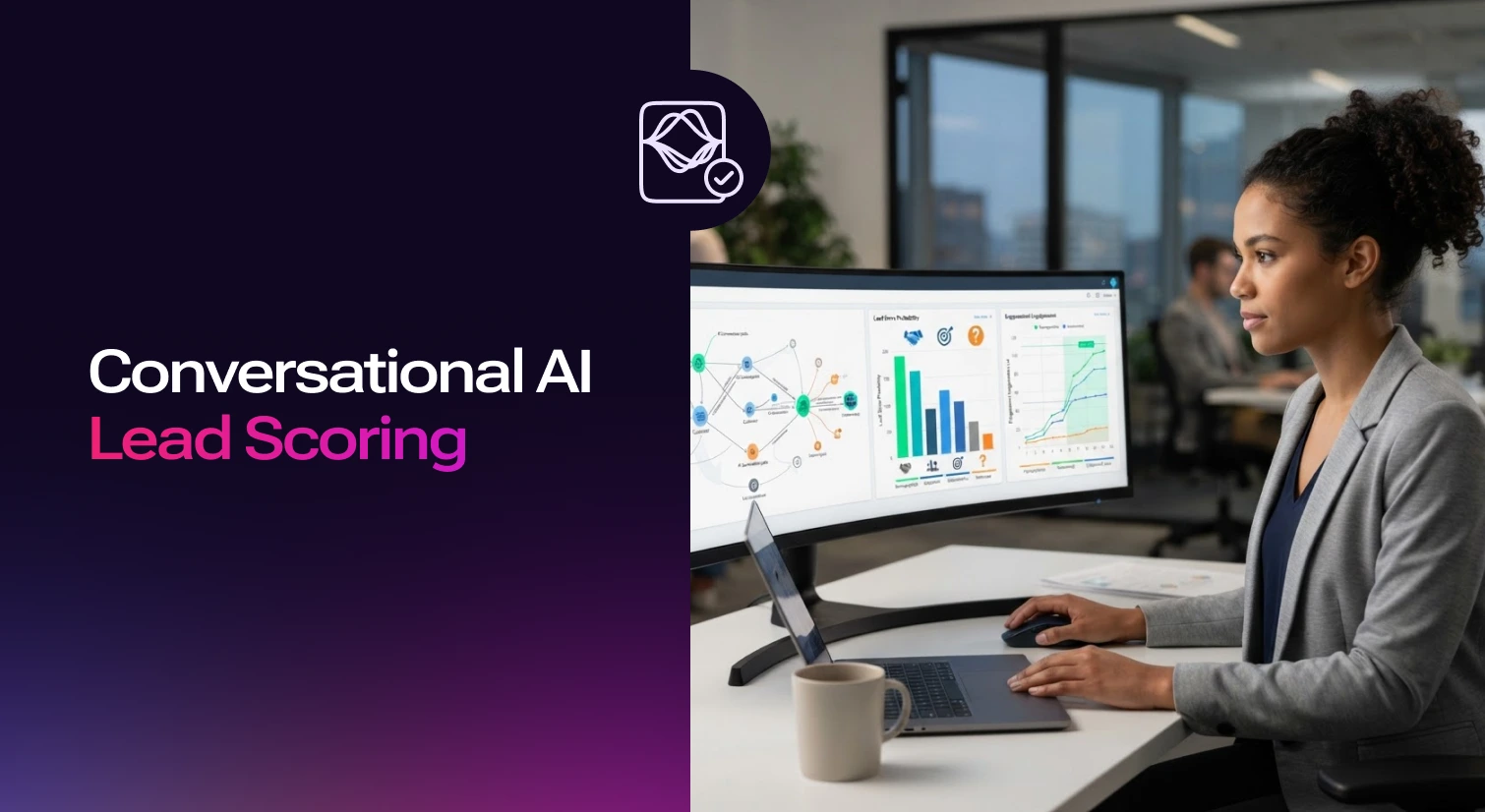
- Sales and Lead Qualification: Capture requirements, answer pricing questions, recommend relevant solutions, qualify leads, and schedule demos for sales teams.
- Education and Learning: Explain difficult topics, create practice questions, summarize material, and adapt lessons to different skill levels.
- Healthcare and Service Coordination: Support appointment booking, reminders, intake flows, and routine guidance with strong privacy, security, and escalation controls.
- Voice AI Experiences: Power real-time voice agents across phone, app, and support channels using speech recognition and natural voice responses.
Murf’s Conversational AI is a practical example. It applies conversational intelligence to voice interactions, helping businesses deploy natural voice experiences for customer support, onboarding, scheduling, and other real-time workflows. With realistic voices across languages, Murf adds strong multilingual reach for language tasks, natural pacing, expressive tone control, low-latency responses, and consistent brand voice quality for conversational tasks. It also supports other key aspects like workflow integrations and seamless handoff to human teams when needed.
Best Practices for Building Conversational LLM Systems
Even powerful models fail when systems are poorly designed. Use these principles when building production-ready solutions that are accurate, useful, and scalable for user needs.
- Start with a clear goal: Know what success looks like, whether it is reducing support volume, improving conversions, raising productivity, or increasing customer satisfaction.
- Design for real conversations: Users ask vague questions, change topics, and use follow-ups. Build for real behavior, not ideal flows.
- Use trusted data sources: Connect knowledge bases, documents, or live systems so responses are accurate and up to date.
- Build strong context handling: Decide what the system should remember during a session and across future interactions.
- Add guardrails: Set rules for privacy, restricted topics, escalation, and uncertain answers.
- Measure what matters: Track practical metrics such as resolution rate, CSAT, escalation rate, accuracy, and adoption.
- Keep humans available: Some situations need empathy, judgment, or exception handling. Make handoffs smooth and fast.
- Improve continuously: Use transcripts, analytics, and feedback to refine prompts, workflows, and overall performance over time.
Summing up
The conversational LLM is reshaping how humans interact with software.
Instead of rigid bots and static workflows, people now expect systems that understand natural language, maintain context, adapt to changing requests, and help them reach outcomes quickly. That shift is transforming support, sales, internal operations, education, and voice experiences.
But success does not come from model size alone. The best results happen when large language models are combined with memory, retrieval, workflow logic, monitoring, and a clear business strategy.
For organizations exploring AI, the opportunity is real. Start with a meaningful use case. Build carefully. Measure what matters. Improve continuously.
That is how human-like AI conversations create lasting value.

Frequently Asked Questions
How do conversational LLMs work?
.svg)
They process user input, interpret intent, use context and memory, come up with responses with generative AI through transformer-based models, and often connect to external data or tools for better accuracy and task completion.
What is the difference between conversational AI and LLMs?
Conversational AI is the broader category of systems built for dialogue. LLMs are one enabling technology within that category. A complete product may also include retrieval, workflows, analytics, and voice tools with natural language understanding.
Are conversational LLMs better than chatbots?
They are often more capable than traditional rule-based chatbots that can perform specific tasks because they can handle multi-turn conversations, natural language, and dynamic user expectations. However, for an ideal model's performance, they still need strong design and monitoring from conversation designers.
What are examples of conversational LLMs?
Examples include customer support assistants, internal knowledge bots, AI-powered computer science tutors, language translation, sales AI models, scheduling tools, and real-time voice agents.
What are the limitations of conversational LLMs?
Conversational AI systems may generate incorrect answers, require computational resources, need careful privacy controls, and perform poorly without retrieval augmented generation, guardrails, or thoughtful system design.

.webp)
.webp)


