Natural Language Processing in Conversational AI: How Machines Understand Human Language



Key Takeaways
- Natural language processing conversational AI enables machines to understand human language, intent, and context in real time
- NLP works alongside natural language understanding NLU and deep learning to convert language input into structured data
- Modern systems use large language models and generative AI to generate human like dialogue
- NLP powers voice assistants, customer service chatbots, and AI agents across industries
- Real-world deployments improve customer satisfaction, operational efficiency, and response accuracy
A customer opens a telecom app and types, "Internet has been down since this morning. Restarted everything. Still not working.”
A rule based system would match keywords like "internet" and "down" to return a generic troubleshooting guide. A modern system does something more useful. It understands the issue, detects that basic troubleshooting has already been attempted, recognizes urgency from the user’s input, and initiates a diagnostic check or escalation.
This shift is driven by natural language processing conversational AI. It understands that human communication is not structured, and users may at times combine intent, context, and emotional tone in a single sentence. As a result, systems must interpret natural language without needing precise commands. That is where natural language processing conversational AI plays a central role.
What Is Natural Language Processing in Conversational AI?
Natural language processing (NLP) in conversational AI refers to the use of NLP techniques within conversational AI systems to process, interpret, and respond to human communication.
NLP is a field within artificial intelligence that allows machines to understand and generate human language. It combines computational linguistics, machine learning, and statistical methods to process both structured data and unstructured data.
In conversational AI, NLP acts as the first layer that processes the user’s input. It transforms raw language input into structured data that downstream systems can analyze.
This is why NLP conversational AI is considered a core component of modern AI systems. It enables:
- Processing of text and spoken language
- Understanding user queries and intent
- Supporting multiple languages and cultural references
- Generating human like responses
For example, when a user says, “I want to cancel my subscription and get a refund,” NLP processes the sentence, identifies key entities, and prepares it for interpretation. This is followed by natural language understanding (NLU), which determines the user’s intent.
The distinction between processing and understanding is often explained through an NLP vs NLU comparison. NLP handles language processing, while NLU focuses on interpreting meaning. Together, NLP, conversational AI, and NLU enable machines to understand human inputs and respond in a human-like manner.
How Natural Language Processing Works in Conversational AI
Natural language processing in conversational AI follows a structured pipeline. Here is how it works:
Text and Speech Input Processing
The process begins with user input. This can be text or spoken language. In voice based systems, automatic speech recognition (ASR) converts spoken language into text. Systems like Google Assistant and other voice assistants rely on this technology to process billions of voice commands.
Once converted, NLP performs pre-processing by cleaning language input, normalizing text, and tokenizing words. For example, when a user says, "Check my account balance," tokens represent each word.
Intent Recognition and Entity Extraction
After processing input, NLP identifies the user’s intent. This includes intent recognition to understand the user’s goal and named entity recognition to extract key entities such as names, dates, or locations.
For example, when a user says, "Transfer 5,000 rupees to Rahul tomorrow,” the system identifies:
- Intent: Money transfer
- Amount: 5,000 rupees
- Person: Rahul
- Date: Tomorrow
Context Management and Dialogue Flow
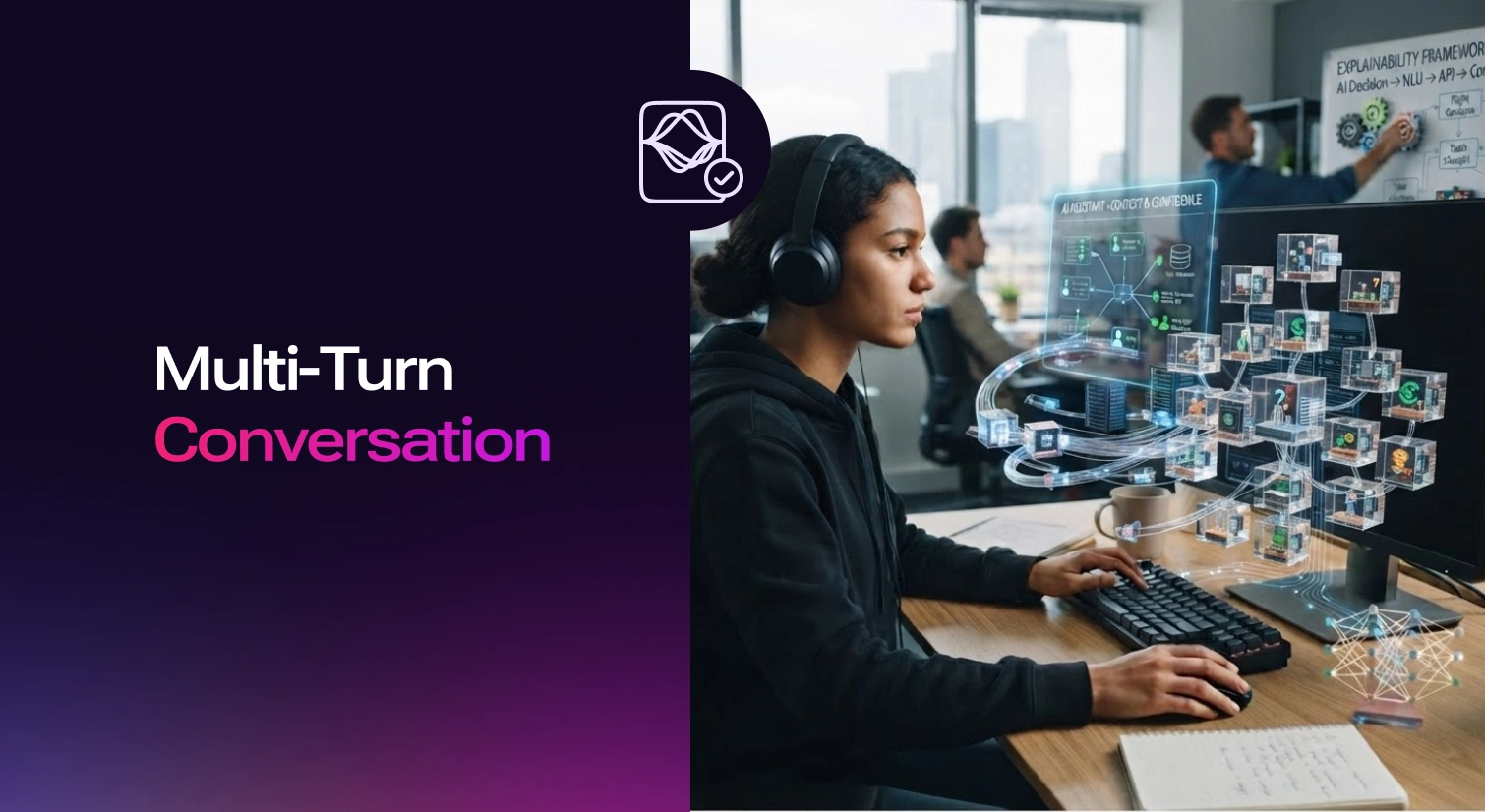
Human communication often spans multiple steps. Users provide information gradually across interactions. For example, when a user says, "Book a taxi,” “make it for 7 PM,” and “to the Atlanta Airport,” NLP works with a dialogue manager to track conversation history and maintain context.
This enables:
- Handling multi turn conversations
- Maintaining conversation flow
- Delivering contextually aware responses
Response Generation Using AI Models
Once intent and context are understood, the system generates a response. Modern systems rely on:
- Natural language generation (NLG)
- Large language models
- Generative AI
These systems generate responses based on patterns learned from training data. For example: "Your request is processed" becomes "Your payment has been completed successfully. You will receive a confirmation shortly."
Key NLP Techniques Used in Conversational AI
The performance of NLP for conversational AI depends on a combination of techniques that work together to process language, understand meaning, and generate accurate responses. Here are the key NLP techniques used in conversational AI:
Tokenization and Text Processing
Tokenization is the process of breaking down raw text into smaller units such as words, phrases, or subwords. This is one of the first steps in language processing and forms the foundation for all downstream NLP tasks.
For example, the sentence “Track my order status” is split into individual tokens like "Track," "my," "order," and "status."
Along with tokenization, text processing includes steps such as normalization, removing unnecessary characters, and standardizing formats. This ensures that different variations of language, such as "tracking order" or "track my order," are processed consistently.
Sentiment Analysis
Sentiment analysis focuses on identifying the emotional tone behind a user’s input. It helps systems understand whether a user is satisfied, frustrated, neutral, or urgent.
For example, the feedback "This is very frustrating" decodes the negative sentiment, while the feedback "Great service, thank you" captures the positive sentiment.
In conversational AI, this insight is important because it allows systems to adjust their responses accordingly. A frustrated user may receive a faster escalation or a more empathetic response, while a neutral query may be handled with standard automation.
Named Entity Recognition (NER)
Named Entity Recognition (NER) is used to identify and classify key pieces of information within a sentence. These entities can include names, locations, dates, amounts, and other relevant details.
For example, when a user says, "Send the invoice to Rahul in Mumbai tomorrow," the system identifies:
- Person: Rahul
- Location: Mumbai
- Time: tomorrow
Machine Learning and Deep Learning Models
Modern NLP systems rely heavily on machine learning, deep learning, and reinforcement learning techniques to improve language understanding.
These models are trained on large volumes of real world language data, including customer queries, conversations, and interactions. Over time, they learn patterns in how people communicate, including variations in phrasing, sentence structure, and intent.
For example, phrases like "Cancel my order," "I want to stop my delivery," and "Don’t send this anymore" can all be mapped to the same intent. These models enable systems to:
- Learn from training data and past interactions
- Improve accuracy over time without manual rule updates
- Handle ambiguity, slang, and incomplete queries
Benefits of NLP in Conversational AI
The benefits of natural language processing conversational AI extend across performance, scalability, and user experience. Here are the key benefits of NLP in Conversational AI:
- Improved understanding of human language: NLP helps systems understand slang, abbreviations, typos, and natural phrasing without requiring fixed commands.
- More accurate and contextually aware responses: By using conversation history and current input together, systems can respond more accurately in multi-step interactions.
- Automation of customer interactions: NLP allows chatbots and voice assistants to handle repetitive queries such as order tracking, billing updates, and basic support requests.
- Personalized responses: Systems can use preferences, behavior, and past interactions to tailor replies, recommendations, and next steps.
- Scalability across channels: NLP powered tools can manage thousands of interactions across chat, voice, apps, and messaging platforms at the same time.
- Improved customer satisfaction: Faster resolutions, better understanding, and more natural conversations create a smoother support experience.
- Continuous improvement: NLP systems learn from training data and feedback, helping them improve accuracy and adapt to changing user behavior over time.
Use Cases of NLP in Conversational AI
The impact of natural language processing conversational AI becomes clear when you look at how it connects real user queries to actual outcomes. Here are the key use cases of NLP in Conversational AI:
Customer Support Automation
Customer support is one of the most mature applications of NLP, especially where query volume is high and repetitive. In addition, it is not limited to one sector and can be used wherever customer queries need to be handled quickly and accurately at scale.
For example, Klarna, the AI powered global payments network and shopping assistant, deployed an AI assistant to handle customer queries related to payments, refunds, and orders. The system uses NLP to understand user queries in natural language and resolve a large portion of requests without human involvement.
Voice Assistants and Virtual Agents
Voice interactions depend heavily on NLP combined with automatic speech recognition to process spoken language in real time. Beyond consumer assistants, enterprises are increasingly deploying voice agents.
For instance, companies using Murf’s Conversational AI can handle inbound customer calls with natural, real time conversations instead of traditional IVR menus. These systems go beyond simple commands by understanding intent, asking follow up questions, and guiding users through complete interactions. This makes them valuable for customer support, onboarding, appointment booking, lead qualification, and sales conversations.
Sales and Lead Qualification
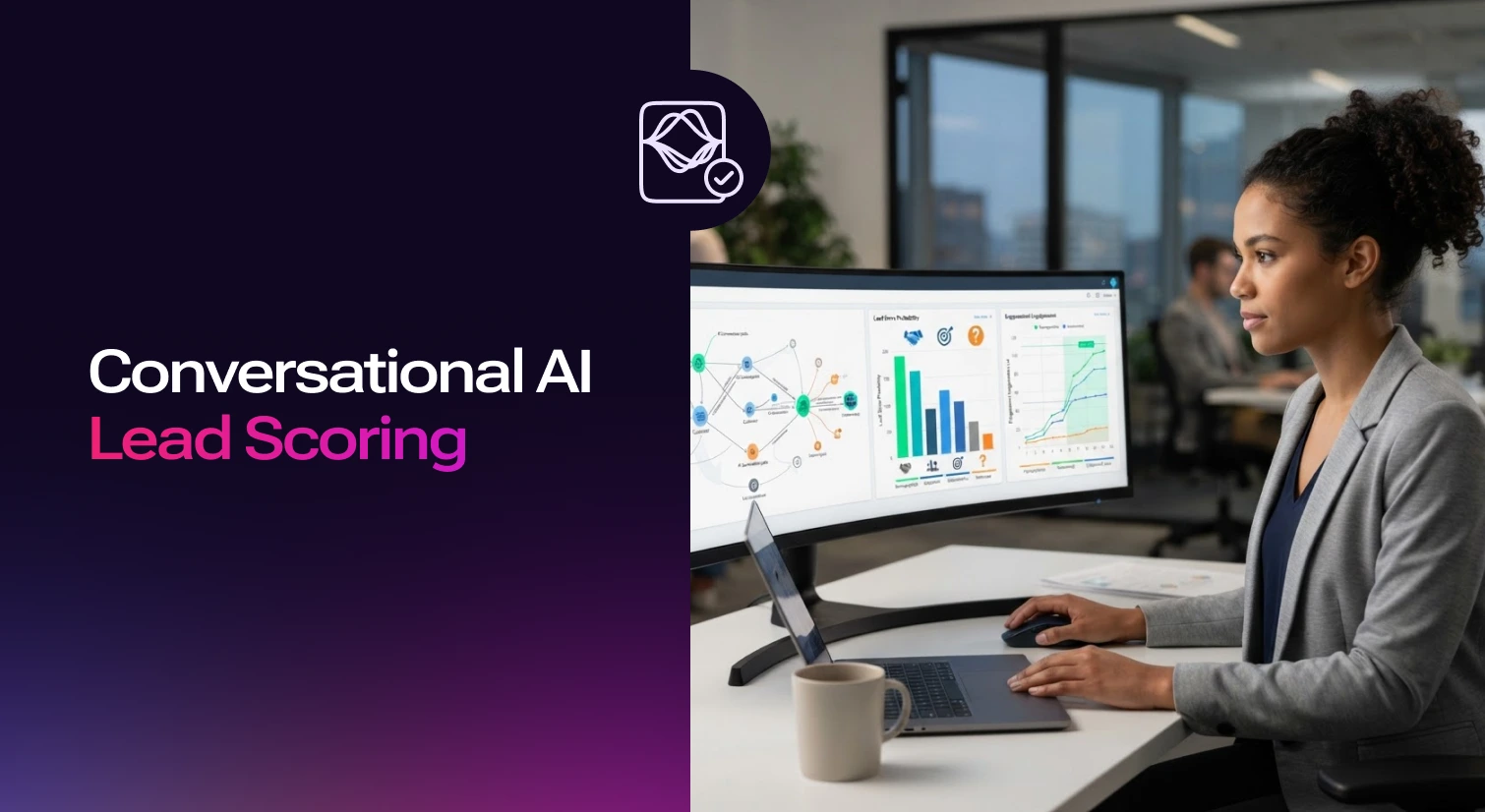
NLP is increasingly used to qualify leads by understanding intent during the first interaction itself.
For example, AI driven sales assistants used by companies replaced manual sales outreach with conversational bots that identify leads, ask qualifying questions, and follow up via email automatically. Instead of static forms, these systems engage users in real time, extract key details such as requirements and budget, and pass structured insights to sales teams.
Healthcare and Patient Interaction
Healthcare interactions are often unstructured, with patients describing symptoms in their own words. NLP helps convert this into structured insights.
For example, conversational AI systems are being used for patient triage and risk assessment using large language models. These systems analyze symptoms shared in natural language and provide real-time guidance or next steps. Hospitals and digital health platforms also use NLP to manage appointment scheduling, answer patient queries, and assist with follow-ups.
Internal Business Automation
Inside organizations, a large portion of communication involves repetitive queries related to internal processes.
For example, consulting firms like McKinsey use internal conversational AI tools such as “Lilli,” which allows employees to query internal knowledge systems using natural language. The system processes complex queries, retrieves relevant information, and supports decision-making across teams.
Intelligent Search and Information Retrieval
Another important use case is improving how users search for and retrieve information.
For example, Gmail uses NLP to filter spam by analyzing content, patterns, and user behavior rather than relying only on keywords. This improves productivity and reduces time spent searching for information.
Summing up
Natural language processing conversational AI is a foundational technology that enables machines to understand human language and interact effectively. It transforms language input into structured data, interprets intent, and generates accurate responses.
With advancements in machine learning, deep learning conversational AI, and large language models, NLP continues to improve conversational AI systems. As businesses increasingly rely on AI-driven interactions, NLP will remain critical for delivering scalable, efficient, and human like communication.

Frequently Asked Questions
How does NLP improve conversational AI systems?
.svg)
NLP improves conversational AI by enabling systems to process human language, understand intent, and generate accurate responses. It allows machines to handle complex queries and deliver context-aware interactions across chat and voice platforms.
What are examples of NLP in conversational AI?
Examples of NLP in conversational AI include customer service chatbots, voice assistants like Google Assistant, and virtual agents used in healthcare and banking. These systems process language input and generate responses in real time.
What is the difference between NLP and NLU in conversational AI?
NLP processes language, while NLU interprets meaning and intent. NLP prepares input data, and NLU ensures systems understand user intent.
Which technologies power NLP in Conversational AI?
Technologies that power NLP in Conversational AI include machine learning, deep learning, large language models, speech recognition, and natural language generation.
What are the challenges of NLP in conversational AI?
Challenges of NLP in conversational AI include ambiguity in language, handling multiple languages, bias in training data, and maintaining context across interactions.

.webp)
.webp)


