How to Enable Text to Speech on Kindle



Key Takeaways
- Kindle's text to speech feature helps busy professionals "read" during low focus moments like commuting or cooking.
- You can enable TTS directly on Kindle e-readers through the Aa menu and start listening with one tap. iOS, Android, and Fire devices also support Kindle read-aloud, either through native TTS engines or accessibility tools like Speak Screen and VoiceOver.
- Assistive Reader enhances the listening experience with real-time text highlighting and OS-level TTS support. Kindle includes strong accessibility features—VoiceView, Word Wise, Dark Mode, and OpenDyslexic font—to support diverse reading needs.
- TTS offers key benefits for multitaskers, visually impaired readers, language learners, and writers reviewing their work. However, the voice quality can be robotic, you may experience mispronunciations, and it offers limited customization options.
- Murf AI overcomes these gaps with human-like voices, advanced customization, multiple accents, and expressive styles that make audiobook listening more immersive.
Let’s be honest. Most people want to read more, but life doesn’t exactly leave room for it. Sitting down with a physical book sounds great in theory, until your day actually begins.
That’s where text to speech steps in and does the heavy lifting. With the Kindle app, you don’t need to carve out extra time. Your Kindle reader can simply read aloud while you move through your day. Commuting, eating, waiting around, it all counts now.
But the question remains: how to change voice on Kindle app?
Once you enable text to speech, your device starts turning digital books into something you can just hear instead of stare at. The reading experience feels lighter, less forced. You can tweak the reading speed, settle into a natural text to speech voice, and let it run in the background.
Even compared to Google Text to Speech, it feels more polished, less robotic.
In this article, we’ll break down how to use text to speech on Kindle so reading finally fits into real life.
How to Use Text to Speech on Kindle
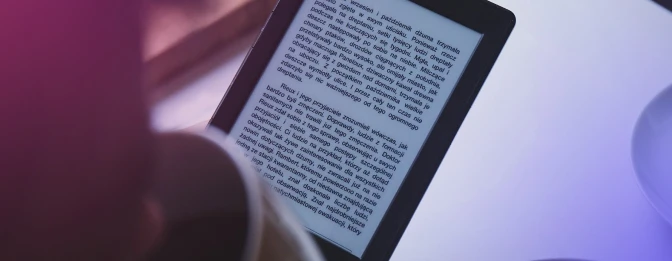
Kindle text to speech is convenient for users who spend many hours commuting or performing tasks that require very limited cognitive capacity. They can simply activate the feature to use text to speech feature and learn on the go.
So, how to get Kindle to read to you? Here is a step-by-step guide on how to enable the text to speech feature on a Kindle device.
Step #1
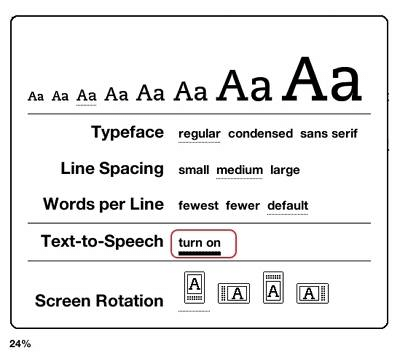
Tap the center of the screen and navigate to the menu icon 'Aa' in the upper right corner of the screen.
Step #2
Click on the option 'Text to speech' from the Settings menu.
Step #3
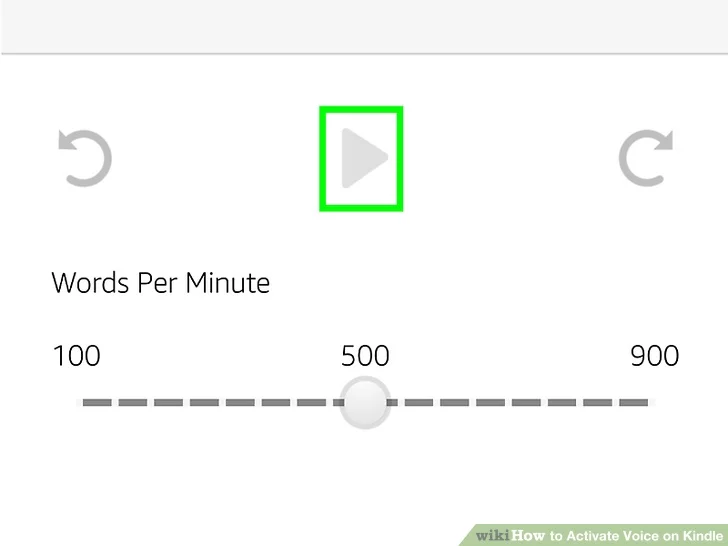
Users can now navigate and modify the speed, tone, and voice according to their preferences. For example, to increase or decrease the reading speed of the TTS voice, tap the 'Narration Speed' icon.
Step #4
On returning to the reading page of the Kindle e-book, tap the screen to reveal the progress bar and click "Play." The feature gets active by clicking the play button.
Users can now listen to the audio by attaching the headphones or simply through an external speaker of their device. By following the above steps, you can easily activate the text to audio output on the Kindle device.
How to Enable Text to Speech on the Kindle App Across Devices
1. Kindle Text to Speech in iOS
The Kindle app on iOS does not include Amazon's native TTS, but you can use Apple's built-in VoiceOver or Spoken Content features to have books read aloud.
The first way is to do it via Speak Screen, which is easy for most iOS users:
- Go to Settings → Accessibility → Spoken Content
- Turn on Speak Screen
- Open any Kindle book
- Swipe down with two fingers from the top of the screen
- A controller appears and the book is read aloud
You can check out the steps in the video below:
2. Kindle Text to Speech in Android
Android does support system text-to-speech inside the Kindle app, which can be enabled by following the steps below:
- Install/enable a TTS engine:
Settings → Accessibility → Text-to-Speech Output
(Google TTS or Samsung TTS both work) - Open the Kindle app
- Open a book
- Tap the center of the screen
- Tap the three-dot menu ⋮
- Choose "Text-to-Speech" or "Speak Text"
You can follow along with this video:
3. Kindle Text to Speech in Fire
Fire tablets support Amazon's built-in Text-to-Speech, and the Kindle app on Fire devices is optimized for it.
- Open Settings → Device Options → Accessibility
- Ensure Text-to-Speech is on
- Open a Kindle book
- Tap the center of the screen
- Tap the "Aa" (Display) menu
- If the book allows TTS, you'll see Text-to-Speech or "Narration / VoiceView"
- Press Play to start reading aloud
The above steps are demonstrated in the following video:
How to Use Assistive Reader Text to Speech on Kindle App
Assistive Reader allows you to use Kindle's built-in audio features as well as highlight real-time text while listening. It is compatible with books purchased from the Kindle store or borrowed from Kindle Unlimited/Prime Reading/another Kindle partner.
It also supports books shared with you in your Family Library. Moreover, the book should be in a language that is supported by your device's text to speech engine.
Here's how assistive reader works:
- Uses your device's OS-level text to speech engines to read the words aloud
- Pauses automatically when reading stops, like when you open the navigation menu or make an annotation
Enhanced Typesetting is a set of layout and typographical features that improve the reading experience of Kindle books. You can use Assistive Reader with any Kindle book with Enhanced Typesetting. To enable this feature, simply go to the Kindle eBook Store. Look for the Enhanced Typesetting option and choose "Enabled" in the features list. That's it; you're all set.
Wondering how to activate Assistive Reader? Just follow these simple steps, and Kindle will read to you the way you want:
Step #1
Start the Kindle app and open the content where you'd like to use Assistive Reader.
Step #2
Tap the top center of the screen. Select the reading settings menu, i.e., "Aa."
Step #3
Click on "More." Turn on Assistive Reader. It will now stay active until turned off again.
Step #4
To use player controls, tap the screen for the setting panel to appear at the bottom of the screen. You can now control the reading speed and more.
Bonus Tip: If you've reached a certain point in the text and want to start Assistive Reader from there itself, long press the specific word to open the actions menu. Then, click "Play" to begin text to speech from that word onwards, instead of from the start of the page.
Here's an explainer video to make things clearer:
Best Accessibility Features on Kindle Reader
So, now you know how to use text to speech on Kindle. But that’s just the surface. The Kindle text to speech feature isn’t some isolated trick. It’s part of a bigger system designed to make reading feel easier, more flexible, and human. Here’s how.
VoiceView for Screen Readers
The VoiceView Screen Reader is a lifeline for visually impaired users. It’s not just about turning on speech. It’s about giving full control back through a proper screen reading feature.
Once it’s on, your Kindle e reader doesn’t just read aloud. It guides you. Every tap, every swipe, every part of the screen content gets translated into audio.
Here’s how to activate text to speech with it:
- Turn on Bluetooth on your device
- Hold the power button for about nine seconds
- Then tap the screen with two fingers for a second
- Wait for the voice instructions to kick in
After that, the device recognizes gestures and starts reading everything aloud. It’s smooth, intuitive, and most importantly, it makes digital books accessible in a real way.
Word Wise for Definitions
The Word Wise feature is for those moments when a word slows you down just enough to break your rhythm.
Instead of stopping, searching, and losing your place, Word Wise keeps things moving by showing meanings above difficult words inside your Kindle book.
It’s especially useful if:
- You’re working through dense text books
- You struggle with unfamiliar vocabulary
- You just want to read without constant interruptions
It adapts as you go, which makes the whole reading experience feel less like work and more like progress.
Dark Mode for Less Eye Strain
Let’s not pretend staring at a bright screen for hours is harmless. It’s not.
Dark Mode flips the script. Less glare, less strain, more comfort. Especially if you read at night or in low light.
To turn it on:
- Swipe down from the top of the screen
- Tap into settings and switch it on
That’s it. Small change, big difference. Your eyes will thank you.
Varying Font sizes and Layouts for Visual Enhancement
This is where Kindle e readers quietly outshine a physical book. You’re not locked into someone else’s idea of what reading should look like.
You can tweak:
- Font size
- Spacing
- Margins
- Layout
Basically, you shape the page to fit you. Not the other way around.
And once you get used to that level of control, going back to static e-books or printed pages feels limiting.
OpenDyslexic Font for Easier Reading
For readers with dyslexia, reading isn’t just slower. It’s heavier. More effort, more friction.
The OpenDyslexic Font helps ease that weight. The letters are designed with a heavier base, making them easier to track and process.
To switch it on:
- Open your e-book
- Tap the display settings (the “Aa” menu icon)
- Choose it under Font Family
It’s a small adjustment on the surface. But for many, it completely changes how they read books.
Benefits of Using Text to Speech on Kindle App
Once you start using the Kindle app with text to speech, reading stops feeling like a task you have to “make time for.” It just blends into your day. You’re not tied to the screen anymore. Your device can read aloud while you get on with life.
And that shift? It’s bigger than it sounds.
Here’s where the text to speech feature really proves its worth:
- For the visually impaired, this screen reading feature isn’t a bonus. It’s essential. It allows them to hear Kindle books and access digital books without barriers.
- For older readers, fading eyesight doesn’t mean giving up on reading. With text to speech enabled, they can continue to read books without strain.
- If you’re learning a new language, hearing the text aloud helps you catch pronunciation, rhythm, and flow in a way silent reading never can.
- Writers and authors get a different edge. When your own words are read aloud, mistakes stand out. Awkward phrasing becomes obvious. The speech exposes what your eyes might miss.
- And for commuters, this is where it just clicks. Whether you’re stuck in traffic or squeezed into a train, your Kindle book keeps going without needing your full attention.
- Even daily routines like cooking or working out don’t interrupt your reading experience. You can still use text to speech and stay connected to your book without staring at a page.
At some point, you stop thinking of it as a feature. It just becomes how you read digital books now.
Drawbacks Of Using Text to Speech on Kindle Mobile App
Kindle can read to you, but it has some drawbacks that affect a reader's listening experience. Let's look at a few limitations you might encounter:
Lack of Emotional Nuance
The Kindle text to speech voice model fails to add emotions when it reads the on-screen content aloud. The robotic and monotonous voice can even be disengaging and reduce the reader's interest in the book.
Pronunciation Challenges
The Kindle app can read to you best in the English language. Its default engine can mispronounce colloquial and accented words. The confusion rises further if some words aren't in English language, such as names of characters and places.
Limited Customization
Customization options in Kindle e-reader are limited. The listener cannot change the accent and gender of the speaker.
Incompatibility
Only some text books and personal documents available in the market are compatible with text to speech enabled. In other words, it's a proprietary, restricted speak screen feature.
Text Formatting
The style of writing and message conveyed through text to speech features can vary, and some users may not appreciate the text to speech file format when compared to the original text.
Kindle Text to Speech on Newer Devices: Scribe, Colorsoft, and Paperwhite (2024–2025)
Amazon has expanded its Kindle lineup significantly in recent years, and TTS behavior varies across newer hardware. Here's what you need to know if you're using one of the latest devices.
Kindle Scribe
The Kindle Scribe, Amazon's first Kindle with writing capabilities, supports Assistive Reader for read-aloud functionality. Because the Scribe runs a full Kindle OS, the same Aa menu steps described above apply. However, Scribe users can also use the stylus to long-press a word and trigger read-aloud from that specific point — a small but meaningful usability improvement for note-takers who want to listen back through annotated sections.
Kindle Colorsoft
Released in late 2024, the Kindle Colorsoft brings a color e-ink display to the Kindle lineup. Colorsoft fully supports Assistive Reader and VoiceView, with the same TTS settings found on Paperwhite. The color display does not affect TTS functionality, but it does improve the experience for illustrated books, comics, and children's titles that are increasingly being paired with read-aloud features.
Kindle Paperwhite (2024 refresh)
The 2024 Kindle Paperwhite includes USB-C charging and a larger 7-inch display but retains the same Assistive Reader TTS engine. Notably, the 2024 model ships with a faster processor that reduces the delay between tapping Play and audio starting — a common complaint from earlier Paperwhite users.
AI Narration on Kindle
Amazon has been quietly rolling out AI-generated narration for select Kindle titles through a program that allows publishers to opt in to AI-narrated audio versions. Unlike Assistive Reader — which reads whatever text is on screen using the device's TTS engine — AI Narration produces a dedicated audiobook-quality track for supported titles, available directly in the Kindle app. As of 2025, availability is limited to participating publishers, but the program is expanding and represents a significant step beyond basic device-level TTS.
If you see a headphone icon on a book's detail page in the Kindle store, that title supports AI Narration. Tapping it switches the experience from screen reading to a continuous audio track, similar to Audible but embedded directly in the ebook.
Murf: Text to Speech That Makes Audiobooks Deeply Engaging

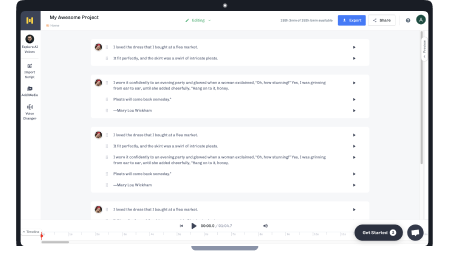
Murf AI takes text to speech to the next level, offering a user-friendly interface and an array of features that surpass the limitations of Kindle's text to speech. With Murf, users can enjoy a more engaging and natural listening experience, free from the monotony of robotic voices.
Murf Studio enables users to generate over 200 human-like voiceovers in more than 35+ languages, each language with its distinct accent; that range covers Marathi text to speech as well. Additionally, users can customize the pronunciation of a particular word on the platform using IPA phonemes and alternate spellings.
Our superior neural TTS, Murf Speech Gen 2, produces voices that are indistinguishable from human speech, capturing every nuance and every subtlety. You can easily customize the speed, volume, pitch, pause, and pronunciation; as well as emphasize words, making it more efficient in less time and effort.
Moreover, Murf API allows you to choose from versatile options like storytelling, terrified, meditative, inspirational, angry, and newscast formal, among others. A key advantage of Murf over the Kindle text to speech app is that users can add music and soundtracks with the voiceover and sync them together.
Users can easily download the audio created on Murf and use any third-party tool to read the content out loud on the Kindle app.
Ready to elevate your reading experience on Kindle?
Sign up for Murf today and get free ten audiobook generation minutes.

Frequently Asked Questions
Can Kindle Read Aloud to You?
.svg)
Absolutely! All you need to do is pair your device with Bluetooth headphones or speakers. Simply tap on top of your device’s screen and select the “Read Aloud” option to start text to speech.
How to Change the Voice on Kindle Assistive Reader?
To change the voice on the Kindle Assistive Reader (VoiceView Screen Reader), go to Settings on your device, open Accessibility, select VoiceView, then adjust the text to speech voice, language, and reading speed under voice options.
How to Enable Text to Speech on Kindle?
Start by opening the book you want to read. Now go to the “Menu” option and click on “Settings.” Next, select “VoiceView” or tap on “Text-to-Speech” to activate it. Kindle will read to you, and you can start/stop the narration with the help of the Play/Pause button.
How to Get Kindle to Read to You?
On your Kindle device, tap the center of the screen, then choose the "Aa" icon in the top-right. Then, turn the "Text-to-speech" switch on to enable Kindle audio reader.